The package that helped launch Vanessa Phillips’s frozen-food business contained dumplings in a Ziploc bag. There were reheating instructions, a mock-up of the packaging and dry ice. A Whole Foods buyer was being asked to imagine the rest. Phillips had gone to Kinko’s to print the mock-up. As introductions to the grocery industry go, this one had the useful quality of containing lunch.
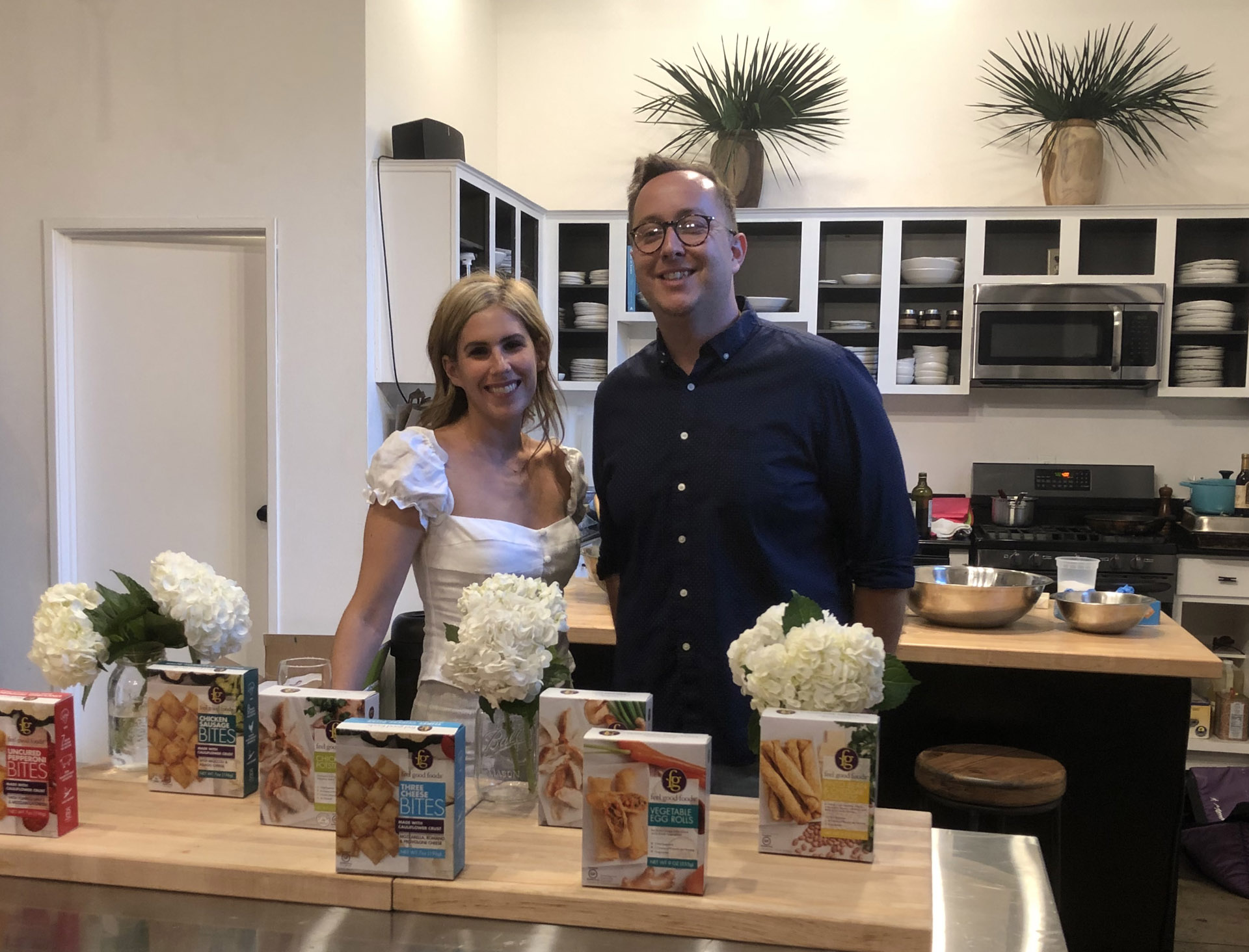
The buyer said yes to 27 stores. Years later, Phillips would be running Feel Good Foods, a company whose potstickers had acquired a sizeable extended family: mozzarella sticks, pizza bagels, breakfast bites. In 2026, she was discussing a business reaching roughly 25,000 grocery stores. But the interesting part of that first acceptance is what it required of her next. A recipe had earned an invitation. Now she needed to learn how to run the business that would deliver it.
An appetite learned in New York
Phillips grew up in New York City around her family’s bagel shops and Chinese restaurants. Dumplings and egg rolls belonged to childhood. Food was also a business she could observe at close range, with its long hours and practical demands. A culinary career felt like a familiar possibility well before she knew what form her own would take.
Her route wandered through public relations. She eventually left that work, then faced a family reunion with the awkward obligation to explain what came next. On the flight, her mother asked what she would like to be doing. Phillips wanted a food company. Her mother suggested telling people that was what she did. Over the weekend, the conversations helped her develop the idea. By the return journey, she felt committed to making it real.
It is an appealingly social beginning for an entrepreneur who would later describe herself as personally reserved. A family gathering supplied an audience before there was much of a business. People’s questions gave the proposal something to push against. Explaining an intention repeatedly can reveal how much you want to pursue it; eventually, going home without trying becomes the more uncomfortable option.
Too much lasagna for one apartment
One early experiment involved lasagna. Phillips had made food for a restaurant menu, and a customer wanted to buy some to take home. An online advertisement brought orders. More followed as word spread. Soon she was preparing trays in a small apartment and delivering food around New York, discovering the logistical limitations of a business whose production floor was also her home.
She stopped taking those orders and regrouped. With chef Tryg Siverson, she helped open Friedman’s in Chelsea Market. The restaurant gave their cooking a different setting: a working kitchen, a menu, and customers making choices with their own money. It also gave recipes time to develop through the ordinary discipline of serving meals.
The idea of reaching people at home stayed with her. Restaurants have an intimacy that is difficult to reproduce, but their tables impose a limit. A frozen product could travel farther. Phillips and Siverson’s potstickers offered a possible route from a New York kitchen to dinner elsewhere. Their partnership combined her attention to the food she wanted with his experience making it. Their frozen dumplings reached Whole Foods in 2011.
The bag, the buyer, the yes
The sample sent to Whole Foods was conspicuously homemade. Phillips had little experience in packaged goods. She could describe a product and demonstrate how it tasted; the machinery of getting it onto a shelf was still unfamiliar. The buyer’s acceptance made the gap between those abilities suddenly consequential. Twenty-seven stores were an opportunity with a delivery requirement attached.
That distinction gives the plastic-bag anecdote its staying power. It is easy to admire the nerve involved in sending the package. The more revealing decision was to keep going after the answer arrived. A retailer can offer a place in a freezer. The founder still has to give shoppers a reason to open the door.
Whole Foods placement
in 2026 interviews
Two milestones, separated by years of building the business.
Phillips’s story is unusually useful when the first pitch and the later store count are held apart. The distance between them contains a different kind of work: repeated demonstrations, decisions about products, and lessons in how strangers actually use what they buy. A friendly email cannot do any of that on its own.
A very practical education
For four months, Phillips and Siverson demonstrated their products in Whole Foods stores twice a day. The schedule ran from 11 a.m. to 3 p.m., then from 4 p.m. to 7 p.m. There is a substantial difference between thinking about a customer and standing in front of one while a pan heats up. Phillips spent plenty of time doing the latter.
“Our only job was to spread the word.”
Vanessa Phillips, on the early store demonstrations
The tastings put her within speaking distance of the people whose choices would determine the company’s future. An unfamiliar name on a box could become something someone had tried. Questions could be answered immediately. The work also let her listen. She has described those encounters as an important education in the consumer, earned during long days on the shop floor.
Another lesson arrived on the packaging. An early production run omitted a cooking instruction about covering the pan. The result was a correction applied to 25,000 cartons by hand stamp. A dumpling that works in the founder’s kitchen has to work in somebody else’s, too. The printed directions carry part of the recipe.
25,000 cartons.
One missing instruction.
It is a story with very little glamour and an excellent sense of scale. Twenty-five thousand repetitions will give almost any small omission a personality. For Phillips, the episode belongs to the practical side of becoming a founder: protecting the meal after it leaves your hands, when you can no longer step over and adjust the stove.
Learning to wait, learning to ask
Company leadership required another kind of adjustment. Phillips had never run a business of this size or attended business school. Fundraising pushed against her reserved nature. She learned to approach the conversation as an opportunity for a potential investor, which helped her make the case with greater confidence.
She has also had to temper the urge to solve everything immediately. Launches require more time than an enthusiastic calendar tends to allow. Product development can take years. Her advice to become comfortable with discomfort sounds especially practical alongside that experience: some decisions improve only after testing, waiting and learning what the first version missed.
The habits behind that outlook reach back further. A fourth-grade teacher gave Phillips a sign encouraging her to celebrate mistakes. She carried it around. Years later, she still described herself as someone who generates ideas readily, collecting possibilities in notes. The combination makes sense: a supply of ideas helps you begin again, and permission to make mistakes makes beginning less intimidating.
Her public conversations leave room for the awkwardness of learning. There are occasions for conviction, and others when a founder has to admit that a schedule, instruction or approach needs changing. The job asks for both. An appetite for possibility becomes more useful when it can survive the details.
The freezer remembers
Phillips’s relationship with food extends beyond the company catalogue. She taught herself to cook with classes, books, magazines and practice. Travel supplied more ideas. She has singled out Thailand for its flavors and ingredients, and described an adventurous childhood palate that included requests for soft-shell crab and caviar. Her taste for a familiar dumpling has never required a lack of curiosity.
That curiosity continues to matter to product development. A dish eaten away from home can prompt an idea; so can something made in her own kitchen. Feel Good Foods now sells versions of snacks with powerful associations: pizza bagels, mozzarella sticks, the small pleasures people remember from earlier kitchens and after-school appetites.
Familiar food has a demanding brief. The person taking a bite arrives with expectations. The crunch, the filling and the balance between them have to feel convincing. Phillips continues to take part in development alongside the company’s team. The work keeps her close to the original question of what she would actually want to eat.
Breakfast comes next
In 2026, the company’s next chapter included a broader breakfast range and a nationwide Target expansion. French toast sticks and pancake-and-sausage sticks brought the same interest in familiar food into the morning. By September, onion rings and crispy stuffed pizza sticks were also reaching Whole Foods shelves.
These additions make the business larger without making its starting point difficult to recognize. Phillips remains interested in food people already have feelings about. She has described wanting to reach more stores and more people, while continuing to develop products. The ambition involves a growing company, but the test still happens one kitchen at a time.
Potstickers remain a personal favorite, something she keeps in her own freezer. That is a pleasing detail to leave with: after the buyer meetings, the packaging changes and the cooking instructions, the first product still earns its place at home. The dumpling got a yes. Phillips has spent the years since giving people reasons to say it again.
Keep the conversation going
Visit Feel Good Foods, follow Phillips on LinkedIn and Instagram, or browse the company’s Instagram.