Before Gabi Lewis put a cereal box on a grocery shelf, he and his future business partner ordered 2,000 live crickets to their college house. Economics and philosophy were his subjects at Brown. The insects presented a rather practical examination: could an idea that made sense in conversation become something Americans would put in their mouths?
The question occupied the next five years. With Greg Sewitz, Lewis built Exo, a company selling bars made with cricket flour. They found investors, learned manufacturing and persuaded early customers to try a food many would ordinarily ask someone to remove from the kitchen. In 2018, they sold the business. Their next venture would require considerably less bravery at the breakfast table.
Magic Spoon launched in April 2019. The bowl was familiar. So were the loops, the bright boxes and the promise of a little morning pleasure. Lewis and Sewitz had kept their partnership while changing the size of the favor they were asking of the customer. Nobody needed to learn how to eat cereal.
A philosopher with a cricket delivery
Lewis grew up in Glasgow and came to the United States to attend Brown. He graduated in 2013 with an education in economics and philosophy, two subjects well suited to arguing that an unlikely enterprise ought to exist. He had also worked at a hedge fund and expected to return to finance. Instead, the small food business he was developing with Sewitz became the job.
That choice had a young person's manageable horizon. He could give the venture a try and still have time to do something else. The two moved to New York. For all the elaborate thinking that can surround entrepreneurship, their immediate commitment was quite plain: live cheaply, make the product, see whether anybody wanted it.
Exo offered plenty to discuss. Its founders wanted to introduce an unfamiliar ingredient through a recognizable bar. A customer could understand the format even while questioning the contents. The company attracted backing from people including Tim Ferriss and Nas. Lewis and Sewitz were named to the 2016 Forbes 30 Under 30 Food & Drink list. The improbable college project had acquired an audience.
It also acquired complications. Finding early enthusiasts and reaching ordinary shoppers turned out to be different assignments. Lewis has described the difficulty of moving beyond the initial customers. The supply side needed attention, too: he spent six months in Thailand helping establish it. A young food company was attempting to construct both the route to the ingredient and the desire to buy it.
When Aspire Food Group acquired Exo in 2018, the relationship had a pleasing circularity. Aspire's founders had met Exo's founders through the Forbes Under 30 community. Recognition had helped put future counterparts in the same room. Lewis and Sewitz could leave the business with an education that no undergraduate syllabus had promised.
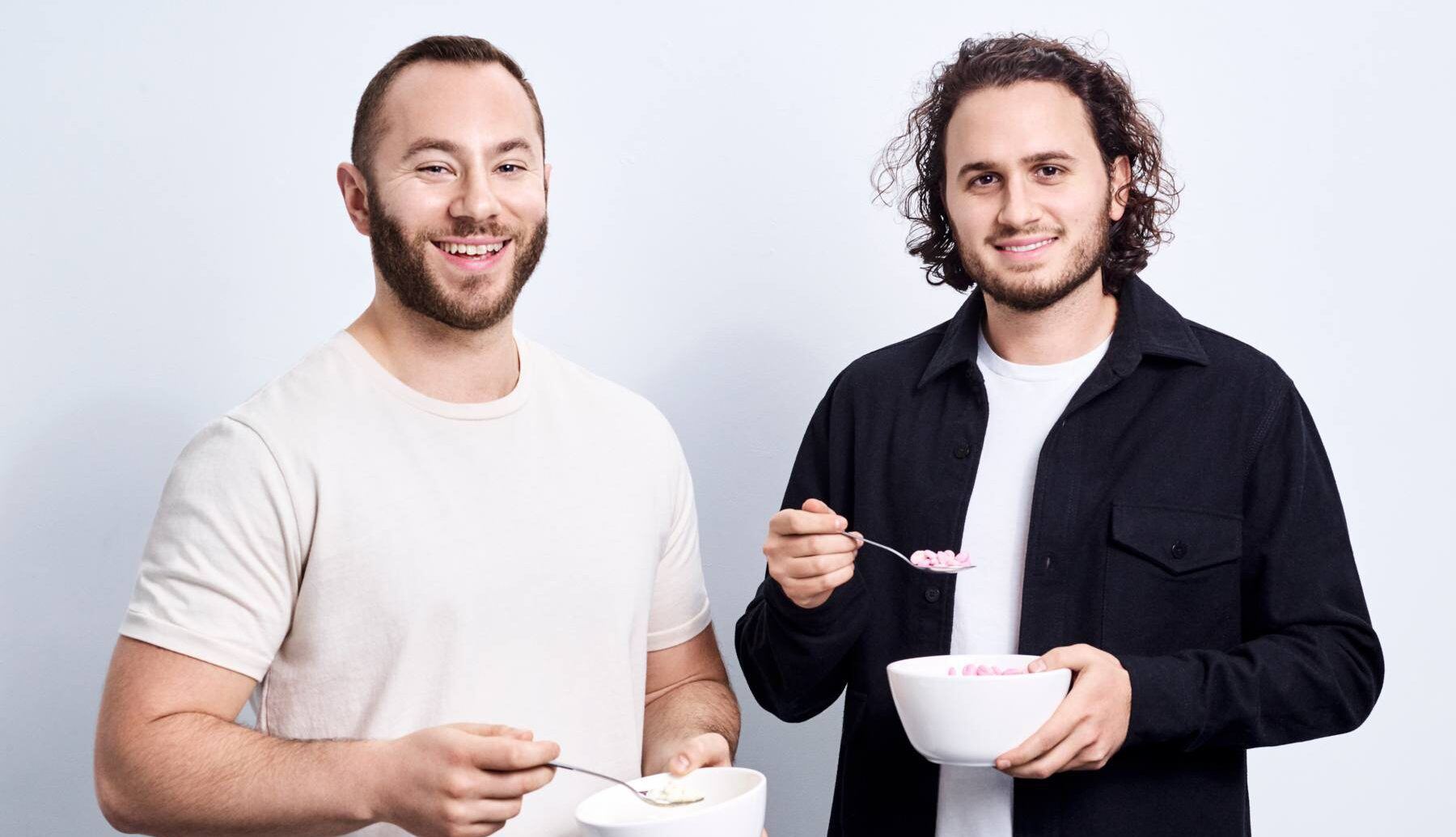
An aisle full of memories
They wanted to build another food company together. This time, they spent months walking grocery aisles, considering what category deserved their attention. There is something usefully unglamorous about that search. The next business was taking shape between products that people were already buying, in a place where strangers had no obligation to listen to a founder's explanation.
Soda and milk had attracted all sorts of new approaches. Cereal looked less changed. Lewis saw an opening in a large, familiar category that others described as unpromising. The objections were easy to collect: established companies controlled the shelves; shoppers expected cereal to be cheap; the category had been declining. He questioned whether those objections settled the matter.
The experience with Exo helped him distinguish a difficult proposition from an impossible one. He had already seen retailers take an interest when customers wanted something. He had seen other everyday products support a higher price. With cereal, there was also an emotional starting point: people remembered enjoying it. An old habit could provide a new business with its first invitation.
“We wanted to identify something that made sense.”
- Gabi Lewis
For the identity, Magic Spoon worked with Gander. The designers built a world of bright colors and improbable adventures, with illustrated adults riding creatures and carrying spoons. The boxes borrowed the pleasure of childhood cereal packaging while giving the characters a new life. There was room for a wizard on a rabbit. Breakfast had apparently declined the invitation to become respectable.
The playfulness had a business purpose. A cereal box is a large surface for a small purchase, and people look at it while doing something else. Characters and colors can carry recognition across that distracted encounter. The design team treated the package as an experience, something that could earn affection as well as explain its contents.
Lewis also made a deliberate choice about the name on those boxes. Instead of creating separate brands around individual flavors, the company put its resources into Magic Spoon as the shared identity. The characters could vary. The brand would remain recognizable. For a young company, that decision concentrated the work of making one name mean something.
The box has to speak for itself
The early business sold online. That allowed Lewis and Sewitz to introduce the product directly, rather than wait for a buyer to make space in a store. They had already learned something about reaching audiences through people those audiences trusted. At Magic Spoon, relationships with influencers became part of the launch, including people prepared to invest their own money in the business.
Lewis's account of that arrangement is more specific than the usual instruction to find someone popular. An investor who likes the product has a different relationship with it from someone hired for a single endorsement. Neither arrangement guarantees a good business. But the distinction explains why the founders thought carefully about the people carrying the message.
They were also careful about how many things to attempt. In 2021, Lewis said, “We’re not entering 20 new categories.” That was a description of the work at that moment. Limited flavors could create variety without requiring an entirely different enterprise. There were enough decisions inside a box of cereal to keep a growing team occupied.
Physical stores eventually became part of the picture. In June 2022, Magic Spoon announced an $85 million funding round alongside its move into Target. A company that had asked people to order breakfast over the internet was entering the place where many of them already bought it.
Retail made the package's job more demanding. Online, a company can keep explaining. In an aisle, its box has to introduce itself while a shopper is comparing products and trying to remember what else is on the list. Lewis has described using the lessons from digital marketing to inform that encounter: what draws attention, what needs explaining, what makes someone choose.
By 2024, his marketing vocabulary included in-store displays and the challenge of connecting online advertising with purchases in physical stores. He was frank about the limits of measurement. The company could see enough to guide decisions without possessing a perfect answer to every question. A growing business still had to act while some of the evidence remained untidy.
The trouble with being right
Running the company demanded another adjustment from Lewis. In the early days, he and Sewitz touched nearly everything. Later, he found himself wanting to comment on details such as the size of a font on a new package. The instinct was understandable. It was also something he had to manage as people with their own expertise joined the team.
The growing team had its own creative record. Dhiya Choudary joined in 2020 to develop the brand and its work with outside collaborators. Over the next four years, her work included eighteen cereal flavors and two new products. Designers, illustrators, photographers and copywriters helped give those launches their particular faces. That list of contributors puts a useful scale on the founder’s adjustment. A company may begin with two people debating every detail. Eventually, the colors, photographs and words involve many people whose judgment has to count. Lewis’s attention to the box now sits inside that larger conversation.
His objection to employees doing something merely because he had suggested it is revealing. A founder's passing thought can arrive at someone else's desk as an order. Lewis wanted colleagues to understand the reasoning, or tell him why the reasoning was wrong. An organization that treats the boss's name as a complete explanation loses a useful chance to think.
“I love a problem to solve.”
Gabi Lewis, February 2026
The product range has meanwhile widened. In October 2026, Magic Spoon's packaging refresh brought cereal and its expanding family of breakfast products into a more consistent visual system. The company worked with Hart Brands on the redesign. The task was familiar: preserve the recognizable pleasure while making the next stage easier for a shopper to understand.
Lewis has described the larger ambition as building a breakfast company for his generation. It leaves him plenty to do without dictating every product in advance. There is a continuity here with the decision to keep working with Sewitz after Exo: experience provides a direction, and the next version still has to earn its place.
The crickets gave him a business education. Cereal gave that education a familiar setting. Between the two sits a change in how much work the customer must do before breakfast. Lewis began with an argument about what people could learn to eat. He returned with a spoon and a memory they already had.