At Port Arthur, Texas, a refinery receives crude oil by rail, pipeline and ship. Next door, another plant takes in animal fats and used cooking oil. Both make transportation fuel. The proximity is the point. Valero’s wager on lower-carbon fuels puts new chemistry beside an industrial system that already knows how to move enormous quantities of liquid.
- Valero makes and markets fuel; the station sign tells only part of the story.
- Its renewable-fuel bet builds on existing industrial skills and infrastructure.
- Feedstock costs and policy can undo the economics of working technology.
You probably know Valero from a sign above a gasoline pump. That is an incomplete introduction. The company manufactures and markets gasoline, diesel, jet fuel and other petroleum products, alongside ethanol and renewable fuels. It sits between raw materials and the distributors, retailers and transport businesses that need dependable supplies. Its most consequential work happens well before a driver lifts the nozzle.
Consider the apparent contradiction: Valero spun off its retail business in 2013, yet its name remains on stations. The distinction is ownership. Branded outlets can buy its fuel without belonging to the corporation. For a station operator, Valero offers supply, branding and marketing support; for a driver, the relationship is mostly a familiar pump. The refinery is the business behind the business.
01A refinery is a machine for making choices
Valero began in 1980 as the corporate successor to a natural-gas pipeline company. Bill Greehey, its founding chief executive, helped build a company whose identity would shift toward refining. Acquisitions became a way to expand: the $8 billion Premcor transaction in 2005 brought four refineries, including Port Arthur. Buying and improving existing plants became part of the operating vocabulary.
What does a complex refinery actually do? It separates crude into components, then uses processes including cracking to turn heavier molecules into lighter, more desirable products. Different feedstocks produce different economics. The useful skill is matching what the plant can process with what customers will pay for, while keeping equipment running safely.
That puts Valero among independent refiners such as Marathon Petroleum and Phillips 66, rather than among companies built primarily around finding and extracting oil. Its competitive case rests on processing capability, operating reliability and access to markets. At Port Arthur, crude arrives through several transport routes and finished products leave by pipeline and marine docks. Distribution gives the chemistry somewhere to go.
02The cooking oil gets a second career
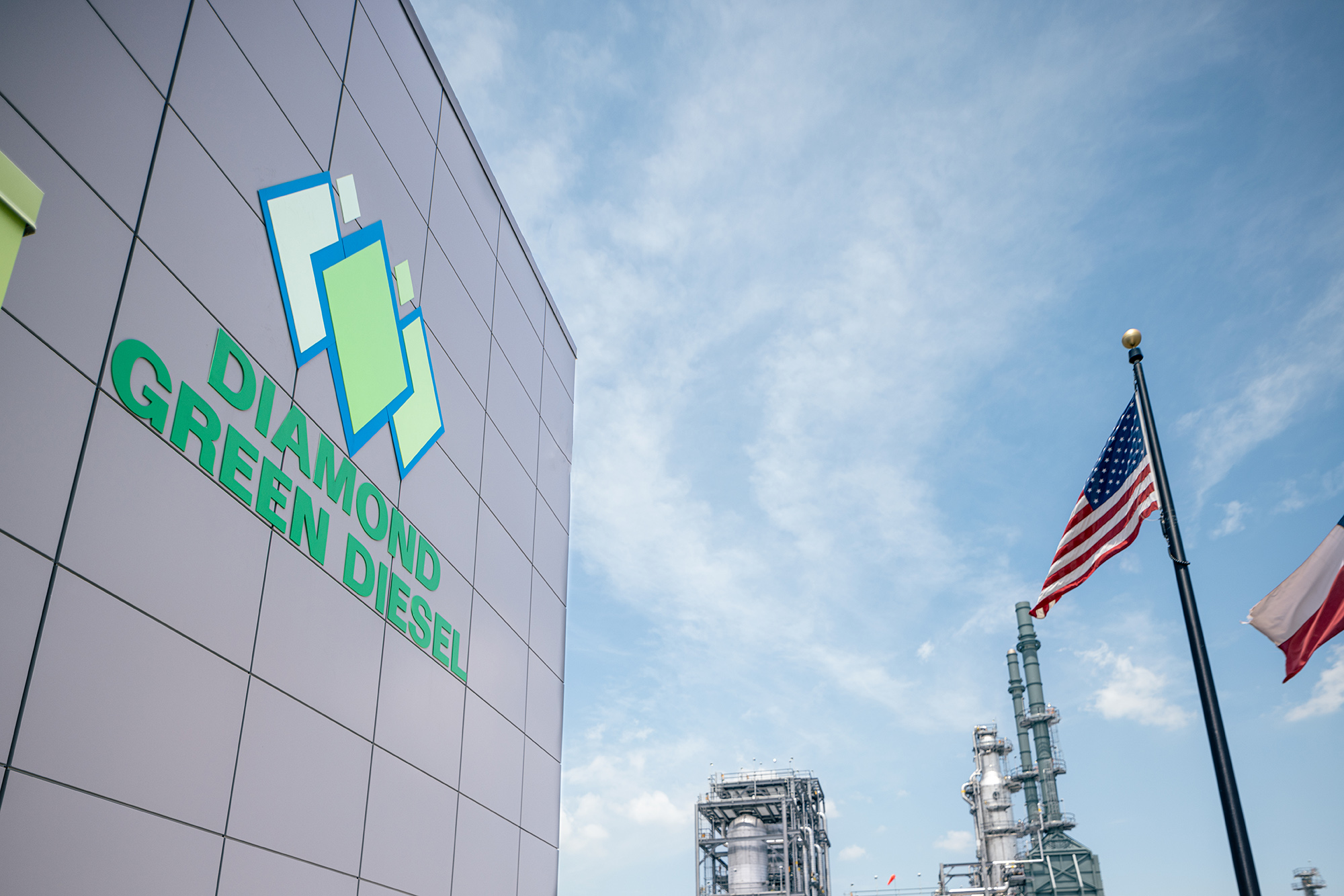
The same logic helps explain Diamond Green Diesel, the 50/50 venture with Darling Ingredients. Darling brings expertise in waste fats and oils; Valero brings refining and commercial experience. Their renewable diesel plants sit beside Valero refineries in Louisiana and Texas. This is a partnership organized around complementary skills and a physical supply chain.
Renewable diesel is chemically compatible with conventional diesel engines and existing distribution infrastructure. That matters to a fleet operator: changing the fuel can require less disruption than replacing the vehicles. Ethanol serves a different market, as a gasoline blending component; Valero’s corn-processing plants also produce livestock feed. These are distinct products, not interchangeable bottles of green liquid.
Then came aviation. In 2023, the partners approved a Port Arthur project with an estimated $315 million cost, shared equally. Completed in October 2024, it gave the plant the option to upgrade roughly half its 470 million gallons of annual renewable-diesel capacity into neat sustainable aviation fuel. That is flexibility within existing capacity, not another 235 million gallons piled on top.
The output still needs blending with conventional jet fuel. A 2024 agreement connected Valero Marketing and Supply with World Fuel Services for ultimate delivery to JetBlue at JFK. The initial arrangement covered one million gallons of neat fuel, with an option for four million more. Here was a specific route from waste feedstock to an airline customer.
03The difficult number is the margin
A successful startup does not guarantee a profitable year. Valero’s renewable-diesel segment moved from $507 million of operating income in 2024 to a $156 million operating loss in 2025. The company’s annual filing points to fuel prices, feedstock costs and low-carbon tax credits as central influences on the margin. Trade and policy changes also hurt results. The economic model was under pressure even though the plants existed and the fuel worked.
Other plans stopped earlier. Navigator canceled the carbon-capture pipeline project in 2023; Valero subsequently recognized a $29 million charge in 2024 for its related obligation. In California, Valero’s reassessment of its refining assets produced a combined $1.1 billion impairment for Benicia and Wilmington in 2025. Benicia’s fuel-production units ceased operating in the first quarter of 2026, with full processing-unit idling completed in April.
Those decisions qualify any easy tale of relentless expansion. A refinery can have useful machinery and still lose its economic case in a particular market. An emissions project can have an industrial purpose and still never become infrastructure. What changed was the assessment of whether particular investments could proceed or earn their keep; the public record supports those concrete decisions more clearly than any tidy conversion story.
“Our Products Fuel Modern Life”Valero’s corporate positioning
04Build beside something that already works
Valero’s culture makes more sense when viewed through that operational lens. Its guiding principles emphasize safety, environment, community, employees and governance. The company reported more than 139,000 employee volunteer hours in 2025. Inside the fence, risk assessment, maintenance and environmental controls are practical requirements for keeping a fuel business useful to its neighbors and customers.
The transferable idea is to identify the expensive system a customer already uses, then make the improvement fit it. Pair missing expertise with a partner. Budget the connections and logistics as carefully as the product. Valero’s renewable fuels illustrate that approach, but their margins also expose its conditions: affordable feedstock, reachable buyers, dependable operations and workable policy economics.
For buyers, the practical entry points are straightforward: fuel distribution and branding for station businesses, bulk products for commercial customers, and renewable fuels through established supply channels. For everyone else, Valero offers a useful question about industrial change. Before imagining an entirely new system, look closely at what the old one can already do.
Follow the fuel
Explore Valero, fuel for your business and company news. Follow on LinkedIn, X, Instagram and Facebook.
↗ Watch: renewable diesel science and process↗ Watch: Valero, a good partner and good neighbor