An employer in the Southeast had already bought the answer. In 2016, it introduced Healthcare Bluebook, the price-and-quality navigation service now owned by Vālenz Health. Employees could use it to find better-value care. Yet the tool went largely unused. By 2020, rising healthcare costs had pushed the employer to reconsider its benefits strategy. The information was available. The habit was missing.
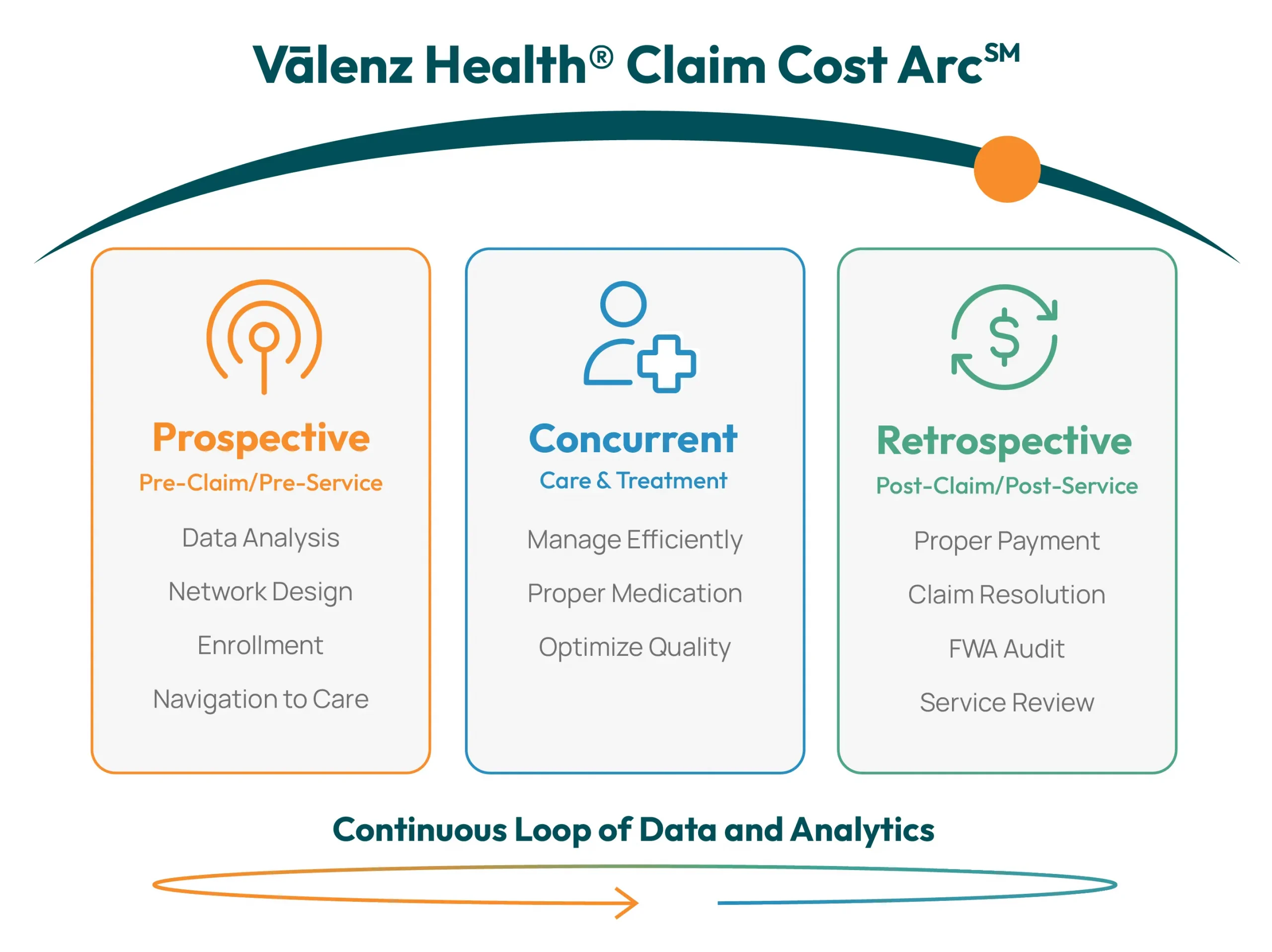
- Before care: make price and quality understandable, then give members a reason to act.
- During care: connect navigation with clinical help and contracted care options.
- After care: check whether the bill deserves to be paid as written.
The response was wonderfully unglamorous: rewards, more messages, learning games during enrollment and emails pointing out missed rewards. Vālenz’s published case study reports $239,000 in savings and a 7:1 return on investment. In the second program year, the employer paid $24,000 across 323 member rewards. The lesson is useful well beyond insurance: giving people an option and getting them to choose it are separate jobs.
The benefit hiding in plain sight
That distinction helps explain Vālenz. The company sells an assortment of healthcare technology and services, principally to self-funded employers and the organizations around them. An employer funding its own health plan has a direct interest in the claims it pays. Its employees have a more immediate concern: finding care, understanding their benefits and avoiding an unpleasant bill. Vālenz tries to connect those interests.
Its customers include health plans, third-party administrators, brokers, consultants, union benefit funds and stop-loss producers. Healthcare providers also buy its quality and compliance services. Members encounter the business through benefits programs rather than by selecting an entire Vālenz platform for themselves. It occupies the space between the plan sponsor’s spreadsheet and the patient’s appointment.
The Southeast example makes a sensible opening because it describes a failure before it describes a result. Low utilization came first. Rising costs prompted a rethink. Communications and incentives changed. The reported savings followed. It would be rash to assume that every employer could reproduce the return, but the sequence gives a benefits manager something concrete to examine: who knows the tool exists, when they hear about it and what happens if they use it.
Program savings, reward spending and ROI describe different things. A buyer needs all three.
A bill-review business moves upstream
Vālenz began in 2004 as United Claim Solutions. Its original territory was medical cost reduction and claims flow management. Over time, the business added the means to influence what happened before a bill arrived. A medical network division appeared in 2015. The 2017 acquisition of INETICO added care management and repricing capabilities; Zebu followed in 2018 with compliance and payment integrity tools. In 2019, the family adopted the Vālenz name.
There is a practical logic to that progression. Reviewing an expensive claim can identify a problem after treatment. Navigation can influence the provider choice before treatment. Clinical support can help while treatment is happening. These activities touch the same patient journey, although an employer might ordinarily buy them from separate suppliers.
In July 2024, Vālenz completed its acquisition of Healthcare Bluebook. That brought an established consumer-facing price and quality service into a business with claims and clinical expertise. The announcement promised integration over time while Bluebook continued operating as usual. The purchase was a strategic expansion; the announcement alone could not establish that every customer’s systems were already seamlessly connected.
Green lights, with something behind them
Bluebook’s job is to make a complicated choice legible. Its Fair Price benchmark uses medical payment data and varies by geography. A green-yellow-red system communicates whether a price is at or below that benchmark, somewhat above it or among the higher-priced options. Quality information provides another dimension: the desirable purchase is appropriate care from a suitable provider at a sensible price.
Behind the colors is a more technical business. Vālenz’s Outcomes Analytics by Quantros uses Medicare and commercial claims to examine provider performance. It adjusts for patient risk and severity, considering outcomes such as mortality, complications and readmissions. A hospital treating difficult cases should not automatically look worse because its patients arrived sicker. The comparison needs to account for the work being done.
Vālenz also offers credentialing and staff sanction monitoring. Those services address whether people and organizations meet the requirements to deliver care. They are a different purchase from a member shopping tool, but both concern the confidence behind a provider selection. This breadth distinguishes Vālenz’s proposition from hiring only a price comparison service or only a claims reviewer. Breadth is useful when the data and the work actually connect.
“engage early and often”
Vālenz’s recurring description of its approach
The appointment needs a path, not another password
Information becomes more useful when it leads to an action. Precision Care offers concierge support and care bundles, including surgical and imaging services and infusion therapy. Clinical Engagement covers utilization management, case management and disease management. Bluebook Rx adds prescription savings navigation. Together, these services can help an employee move from a search result to a conversation, a scheduled service or a medication discussion.
A separate Vālenz case study describes a Southeast wholesaler and retailer with more than 6,000 plan members. Its strategy combined medical and pharmacy navigation, education, rewards and targeted outreach. Over two years, the company reports nearly $1.2 million in savings and a combined 2.8:1 return. The example concerns coordinated changes across benefits, rather than a price tool quietly installed and left to fend for itself.
In September 2026, HealthJoy announced an integration that surfaces Vālenz bundles inside its benefits experience. The partner’s release projects savings above 50% for the covered types of care. That is a projection, not an observed result for every employer. The operational idea is easier to assess: offer the relevant option in a benefits system people already encounter, before the expensive decision is made.
The network discount is only the beginning
Vālenz still does the work its predecessor was built around. Its payment integrity offering includes clean claim verification, clinical bill review, medical necessity validation and repricing. For a plan sponsor, a negotiated network discount does not settle every question about a bill. The charges still need scrutiny.
One published example starts with billed charges of approximately $1.14 million. A PPO discount removed roughly $457,000. Another vendor identified further savings, but without provider signoff. Vālenz says its coding and clinical team, supported by AI, obtained $93,798 in net savings above the PPO discount with provider signoff. That agreement secured the savings and prevented balance billing to the patient in this case.
This detail is more revealing than a large percentage on a sales slide. A reduction that a provider accepts has a different practical meaning from a reduction somebody merely recommends. Benefits buyers can copy the question: were the savings secured, what fees were deducted, and could the member still receive a bill? Those answers make the result easier to judge.
Changing the price the member sees
ValenzONE, launched in June 2025, packages the company’s health plan optimization approach. Variable Copay followed as a launch in March 2026. It maps more than 2,000 procedures to predictable copays tied to provider value. Vālenz says it can work with an existing plan network and can be purchased separately or through ValenzONE. The company estimates overall employer savings of 7-12%; an estimate belongs in a purchasing discussion, not in a guaranteed budget.
The proposition is straightforward. If a member can see what a choice will cost before receiving care, the benefit design can reinforce the navigation tool. A reward arrives after an eligible action; a visible copay can shape the decision beforehand. Both depend on members having suitable options within reach.

Kelso & Company became Vālenz’s private equity partner in June 2023, following Great Point Partners. The investment terms were undisclosed. Vince Cole succeeded Rob Gelb as CEO in June 2026, with Gelb moving to non-executive chairman. The company’s expansion now asks leadership to turn a collection of capabilities into a coherent experience for buyers and members.
What a benefits buyer should borrow
The repeatable idea is to design for behavior as well as information. Start with a service people can compare. Check that the alternative provider is accessible and appropriate. Explain the benefit repeatedly, connect the financial incentive to an action, and use claims to verify what happened. Then judge the outcome after fees and reward spending.
There are limits. Emergency care rarely offers a leisurely shopping window. Bluebook says it does not rate facilities for procedures with little price variation or those typically performed in an office. A local market may offer few realistic alternatives. Integration also requires usable information and administrative cooperation. Under those conditions, a beautiful comparison screen has less room to change spending.
The useful question about Vālenz is therefore quite ordinary: can the member get from the information to the care, and can the employer see the effect in the bill? Its most instructive customer story begins with an unused tool. The subsequent work was persuasion, coordination and follow-through. Even a good answer needs somebody to pick it up.