A price is most useful before you have agreed to pay it. Healthcare has often arranged matters the other way around. The appointment happens, the test happens, the claim travels through an insurance system, and eventually a number arrives. By then, comparison shopping has become a rather expensive hobby.
Castlight Health began with that backwards transaction. Founded in 2008 by physician and entrepreneur Giovanni Colella, healthcare technology entrepreneur Todd Park, and investor Bryan Roberts, it set out to give employees information about the cost and quality of care before they chose it. The customer was usually an employer. The person who needed the answer was an employee or family member.
- The job: connect employees to benefits, providers, cost information, and practical help.
- The turn: add wellbeing engagement and human advocacy to price transparency.
- The deal: a roughly $370 million acquisition in 2022 joined navigation to Vera Whole Health’s primary care.
- The next test: Prism, announced in April 2026, puts personalized benefits answers into a conversation.
The price was only the first mystery
The early proposition had an appealing tidiness. An employer paying for healthcare could purchase software that helped its people make better choices. Castlight assembled pricing and healthcare data, built a cloud application, and completed its first customer sale and implementation in 2010. Its early product family expanded beyond medical care into pharmacy, rewards, and benefit-design tools.
There was evidence that searching could matter. A 2014 study published in JAMA, whose authors included Castlight researchers, examined claims across 18 employers. Searching before care was associated with lower payments for laboratory tests, imaging, and office visits. The largest absolute difference was for advanced imaging, at about $125. An association, however, does not establish that the search caused the saving.
A separate 2016 JAMA study asked a different question: what happened when two large employers offered a price-transparency tool? It found no reduction in outpatient spending. Only 10% of eligible employees used the tool in its first year. These studies examined different populations and questions; they cannot be laid side by side as a product scorecard. They do expose a practical distinction between helping someone who searches and persuading a whole workforce to search.
First-year use in the two-employer 2016 study. Access to a tool did not produce lower outpatient spending across the offered population.
That distinction is the central tension in Castlight’s history. The first weakness to notice is adoption. A price can be accurate and useful while remaining unseen. The subsequent acquisitions and product launches show Castlight widening its approach; they do not prove that any particular study changed management’s mind.
Give people a reason to come back
In January 2017, Castlight announced its acquisition of Jiff, a benefits platform built around wellbeing and engagement. The announcement described employers asking for consolidation and more comprehensive offerings. Jiff brought reasons to visit a health platform that did not depend on being ill: activities, programs, and incentives.
That changes the employer’s problem. Buying another benefit is relatively straightforward. Making the right person notice it at the right time is harder. A diabetes program, a mental-health service, and a musculoskeletal clinic can each be useful while collectively presenting employees with a small administrative wilderness.
Castlight’s ecosystem connects those services through a common experience. Its published Omada integration, for example, includes single sign-on, two-way data exchange, and points for eligible actions such as completing a lesson. The distinction matters: a list of links helps you leave a portal; an integration can help the portal understand what happened next.
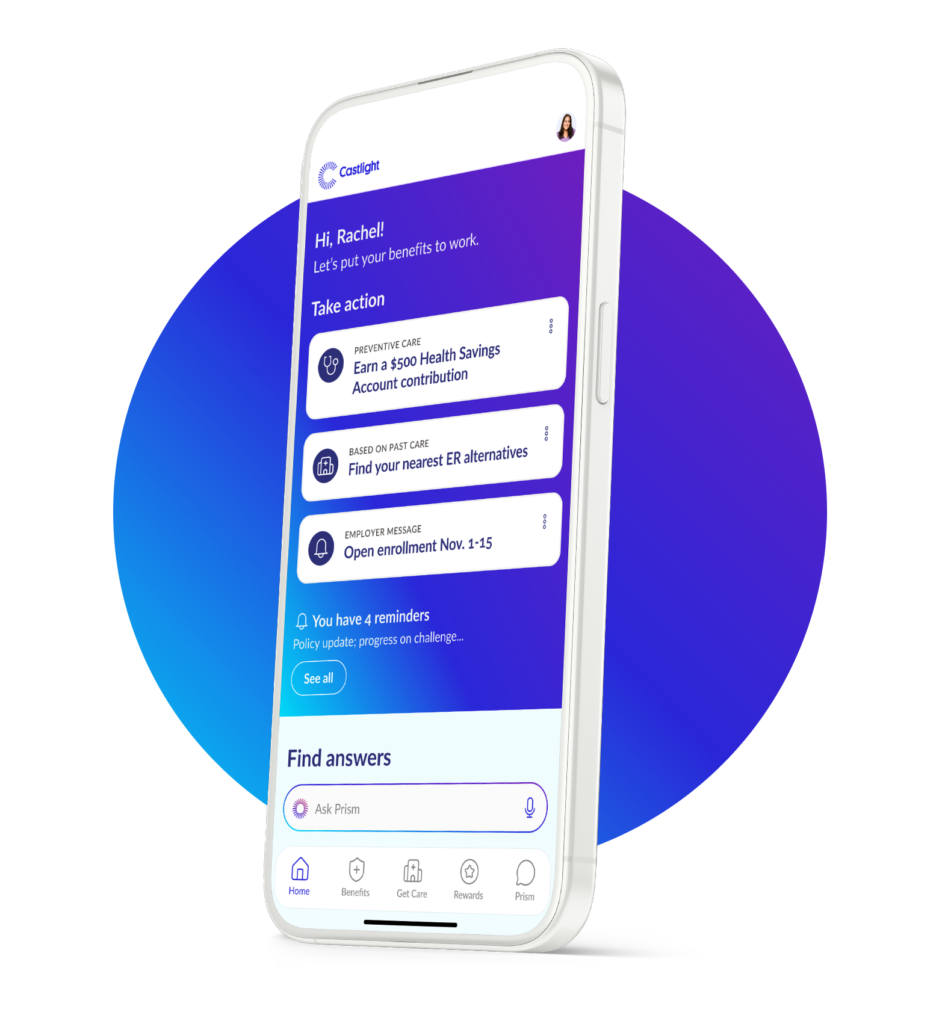
ArcBest offers a useful example. The logistics company had more than twenty benefit programs, alongside its own broader health initiatives. Castlight’s case study reports 86% employee registration and 72% monthly active users. Those are customer-specific results in a company-published case study. They describe a benefits strategy with incentives and existing care resources, rather than a software installation operating alone.
A person at the other end
In late 2019, Castlight launched Care Guides. The human guide works with the same member and benefits context that powers the digital experience. The job can include finding an in-network provider, arranging an appointment, explaining a deductible, or investigating a confusing bill with the member’s permission.
Clinical advocacy adds another layer. Registered-nurse Care Guides can support triage, referral management, chronic-condition coaching, medication education, and care transitions. Software may identify a gap in care. A conversation can reveal why the person has not closed it.
“Digital when they want it, human when they need it.”Castlight’s description of its navigation services
Danone’s published case study makes the distinction tangible. It wanted manufacturing and corporate employees to return to preventive care while addressing chronic conditions. Its approach combined incentives, claims-based targeting, and Care Guides who helped people access benefits and schedule appointments. Castlight reports that 65% of households registered in the first year and 36% of Care Guide users returned for more support. The reported outcomes belong to this customer’s experience.
The company’s expertise sits at the junction of healthcare data, benefit rules, program integrations, and clinical support. Against alternatives such as Quantum Health, Included Health, Transcarent, and health-plan tools, Castlight’s case rests on that combination and its connection to primary care. Different buyers will value different bundles of services.
What the detour cost
This was a capital-intensive education. A $100 million Series D in 2012 brought announced venture funding to $181 million. Castlight’s 2014 IPO, including the overallotment, raised approximately $204.2 million gross, or $185.6 million after underwriting and other offering expenses. The offer price was $16 a share.
The Jiff deal used equity: roughly 27 million shares and options at closing, representing about 20% of the combined company on a fully diluted basis, with additional shares contingent on growth objectives. In 2022, Vera Whole Health agreed to acquire Castlight for $2.05 a share in cash, an announced equity value of about $370 million. The deal closed on February 17 and ended Castlight’s public-market listing.
- 2010Show the choicesFirst customer implementation
- 2017Build the habitJiff and benefits engagement
- 2019Help with the next stepHuman Care Guides
- 2022Connect to careVera acquisition
- 2026Start with a questionPrism announcement
The combined Castlight and Vera business became apree health, now a Mosaic Health business unit. Castlight retains its brand. The primary-care connection gives navigation somewhere to send people, although clinic access and services depend on geography and the purchased package.
The business still has two audiences: employers and health plans that purchase services, and members who use them. Historical SEC filings describe subscriptions priced by eligible employees and adult dependents, plus implementation services. The app’s usefulness to a member and the contract’s value to a buyer must both survive scrutiny. Fiscal 2020 revenue was $146.7 million; that is a dated public financial figure, not today’s sales.
The chat window inherits the hard part
On April 9, 2026, Castlight announced Prism, a conversational AI guide. The company says it draws on member-specific plan information, eligibility, claims history, deductible status, and preferences. Members can ask about coverage and available providers, with a contextual handoff to human Care Guides when needed.
The launch announcement describes a rollout over subsequent quarters. Predictive outreach, longer-term health planning, and additional care-delivery guidance are described as roadmap features. A later product-team interview also places appointment booking among future ambitions. Those distinctions deserve to remain visible: an announced destination is not a completed journey.
The interesting engineering problem is the information behind the answer. A fluent response about insurance is of limited use if it misunderstands the member’s actual plan. Castlight’s opportunity is to bring a benefits conversation into its existing data and service relationships, and preserve context when the conversation moves to a person.
Borrow the handoff
Benefits leaders can copy a practical sequence from this history. Put programs in a place people can find. Make recommendations specific to the person and the plan. Provide help with the step that follows the recommendation. Measure whether people reached care or used the program, alongside whether they registered.
That sequence depends on accurate data, usable local options, and services employees trust enough to contact. It has less room to work when a network offers no meaningful choice, when a benefit is unavailable, or when an urgent situation leaves no time to compare. Navigation can reduce the work of finding care; it cannot manufacture an appointment that does not exist.
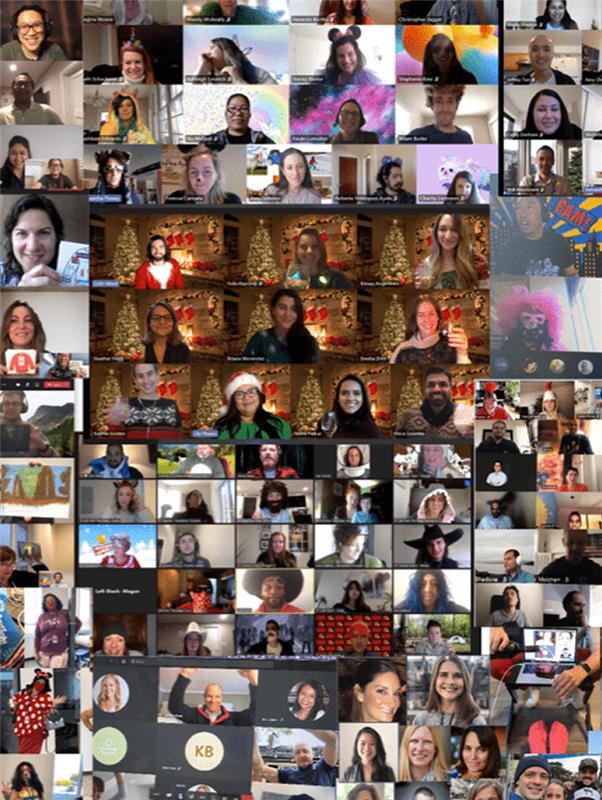
Castlight’s stated culture emphasizes teamwork, accountability, and its healthcare mission, with employee groups and company hackathons among its published practices. The product’s own evolution makes teamwork a concrete requirement: a member may move between data, an app, a nurse, a benefit vendor, and a clinic. Each handoff is another chance to lose the thread.
Castlight’s story is useful because it keeps returning to that small interval between an answer and an action. Showing the price opened the door. Helping someone through it became a much larger business.