A delivery truck can be full and still be carrying the wrong business. In January 2025, UPS gave that uncomfortable idea a customer’s name: Amazon. The company announced plans to reduce the parcels it handled for the retailer by more than half by June 2026. Here was a delivery company deliberately making room in its trucks. The question was what that room might be worth.
- UPS sells transportation, tracking and the work around a shipment.
- Its reset favors healthcare, business customers and more valuable parcels.
- Smaller volumes only help if the cost of the network comes down too.
“Amazon is our largest customer but not our most profitable,” chief executive Carol Tomé said. The distinction sounds obvious until the customer fills a substantial part of your network. Amazon represented 11.8% of UPS revenue in 2024. Walking back that relationship meant changing buildings, jobs and routes, rather than simply declining a few orders at the counter.
The problem with a busy truck
UPS’s business rests on collecting shipments, grouping them, moving them through connected facilities and delivering them to individual destinations. Customers range from someone mailing a parcel to manufacturers, online retailers and pharmaceutical companies. Ground and express shipping sit alongside freight forwarding, customs brokerage, distribution and contract logistics. Each service removes a practical headache: distance, deadlines, paperwork or the need to maintain a warehouse.
The model rewards shared infrastructure. Several shippers can use the same aircraft, sorting facility and delivery route. But revenue arrives one shipment at a time, while much of the machinery must be paid for regardless. A customer can therefore supply impressive volume without supplying attractive returns. UPS’s decision makes that familiar business problem unusually visible. The brown truck is a moving spreadsheet with doors.
By July 2026, Tomé said the Amazon reduction and related network reconfiguration were complete. Second-quarter revenue reached $22.8 billion. Yet the transition remained expensive: after-tax transformation charges totaled $891 million, chiefly employee separations. Reported operating margin was 4.1%; the adjusted figure was 9.2%. Both numbers belong in the picture. Removing transition costs helps explain operations, but those costs were still real.
Medicine changes the calculation
Consider the difference between a replacement shirt and a temperature-sensitive medical shipment. Both need an address. The second may also need controlled storage, specialist handling and intervention when something goes wrong. That extra work gives a logistics provider more to sell than movement. It also gives the customer a reason to choose on criteria beyond the cheapest label.
UPS has been buying that expertise. It completed the approximately $1.6 billion acquisition of Canada’s Andlauer Healthcare Group in November 2025, adding specialized transportation and cold-chain capabilities. Healthcare is part of a wider push toward customers who need an interconnected service. The attraction is easy to understand: a shipment with demanding conditions creates more opportunities to solve a costly problem.
FedEx, DHL and specialist healthcare couriers compete for that work. UPS’s proposition is the combination of its established transport network and specialized logistics. It also occupies an entertainingly complicated market position. USPS competes for parcels while buying air transportation from UPS under a contract awarded in 2024. Amazon is simultaneously a customer and a delivery-network rival. In logistics, the person eating your lunch may also order catering.
The package that raises its hand
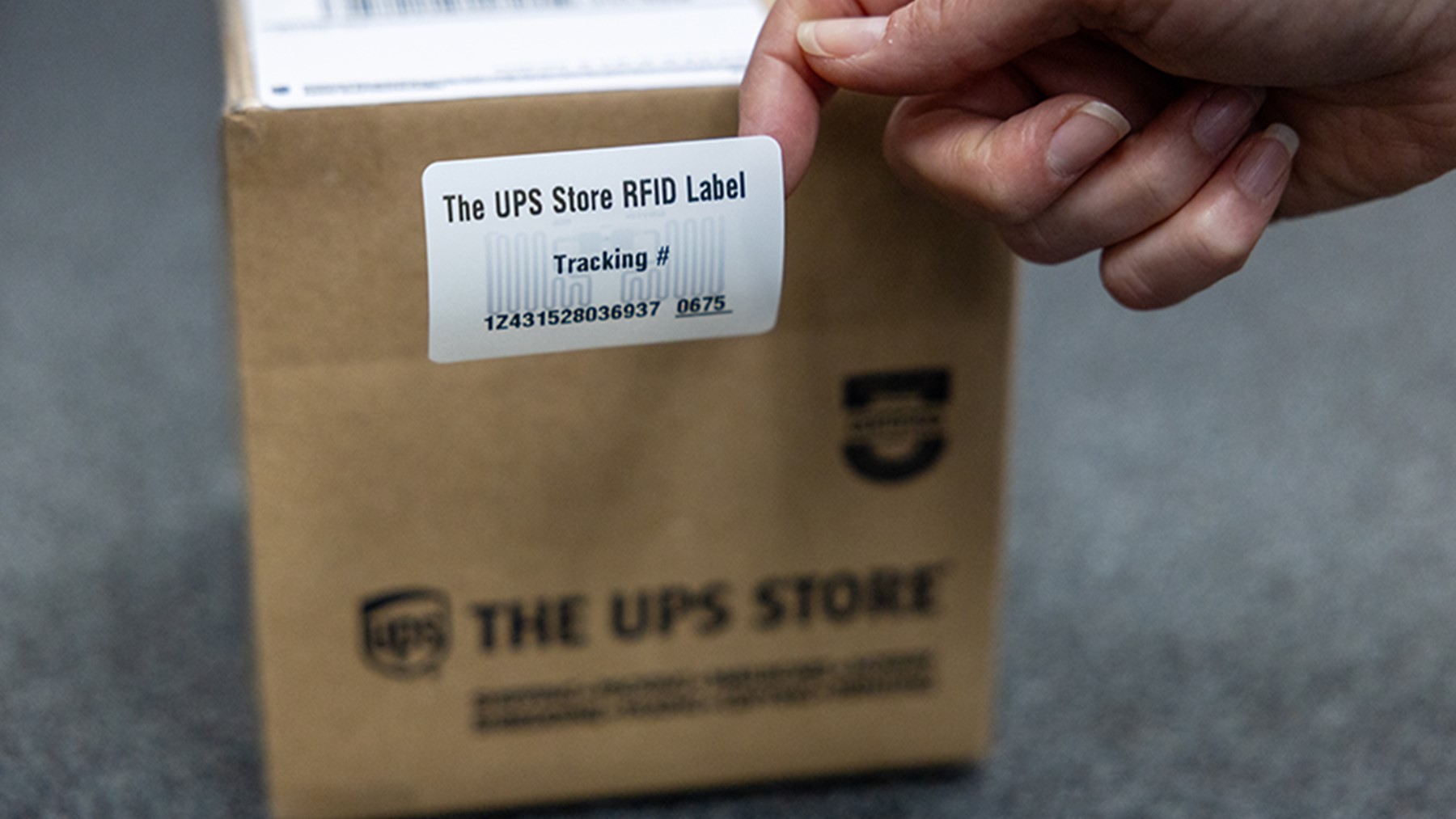
There is another kind of waste hiding inside the network: the package loaded onto the wrong vehicle. A barcode helps only when someone or something reads it. Radio frequency identification, or RFID, allows a tagged shipment to announce itself to a reader without the same line-of-sight requirement. That changes where information can enter the system.
In April 2026, UPS said it had invested more than $100 million in the technology. Readers were in its U.S. delivery vehicles, and RFID labels were on parcels shipped through more than 5,500 UPS Store locations. Broader deployment remained a process, including customer label-printing capabilities. This distinction matters: equipment across a network does not mean every customer shipment already carries the new label.
“Scanning works, but it’s very hands-on.”Nick Basford, UPS U.S. strategy president
UPS later said RFID had reduced misloads by nearly 70%. That is a company-reported result, rather than a promise about every shipment. Its practical appeal is the chance to detect an error early enough to correct it. A useful dashboard tells you what happened. A useful operating system gives someone time to do something about it.
The return trip earns its keep
Happy Returns extends that logic to an awkward retail ritual: taking something back. Participating shoppers bring eligible items and a QR code to a Return Bar, without finding a box or printing a label. Retailers get a managed route back into their operations. In April 2026, UPS and Happy Returns announced a 10,000-location U.S. drop-off network.
September brought integration with TikTok Shop. The relationship is not exclusive, despite early reporting describing it that way. It makes the returns service available within another place people shop. For a merchant, the benefit is practical: fewer packaging chores for customers and an organized process for receiving merchandise back. Eligibility and return choices still depend on the retailer and item.
What fits in a smaller box
UPS began in 1907 when Jim Casey and Claude Ryan used a $100 loan to open a Seattle messenger business. Brown vehicles and the United Parcel Service name followed in 1919. Its reinventions have always involved deciding what to carry. The current one asks which kinds of complexity customers will pay it to manage.
The useful lesson travels well: measure what a customer costs to serve, then change the operation to match the business you want. The conditions matter. Refusing volume while keeping every fixed cost can make the arithmetic worse. Sensing technology needs compatible labels and a response when it flags trouble. Premium services need willing buyers. UPS’s experiment is interesting because all those requirements meet at the same loading dock.
Follow the next delivery
Ship with UPS ↗ · Stories & news ↗ · Company updates ↗ · Developer tools ↗
LinkedIn · X · Instagram · Facebook · GitHub · TikTok
▶ Watch: How UPS RFID tracking works ↗More from UPS on YouTube ↗