At Marriott Aruba, the problem began with a menu. In early 2020, a piece of paper passed between strangers had become an awkward proposition. Marketing executive Noemi Tromp needed guests to reach restaurant information without handling it. Across eight restaurants, replacing disposable menus also meant replacing a recurring printing bill. A QR code offered a small, practical escape.
- Uniqode makes printed codes editable through managed digital destinations.
- Its customers buy measurement and control, alongside the square itself.
- The useful result is a booking, contact or saved printing bill - scans are only the beginning.
Eight restaurants, one changing menu
Uniqode, then known as Beaconstac, supplied the QR system. Guests scanned; menus appeared. The resort subsequently used codes for beach-chair bookings, wedding-property information, loyalty-app links and marketing videos. A workaround became a way to organize guest interactions.
The company’s customer account reports more than 150,000 scans and 80,000 unique customers over a year. It estimates roughly $150,000 in avoided printing, using average expenses and resort footfall. That figure is an estimate, not an audited saving. Still, the mechanism is clear: when information changes frequently, keeping the sign and changing its destination can be cheaper than replacing the sign.
“We now have everything in one place - the Uniqode dashboard.”Noemi Tromp · Marketing executive, Marriott Aruba
There is a business hiding inside that unglamorous sentence. Someone must keep the menus current, the links working and the campaigns organized. Uniqode sells the machinery for doing it.
The phone was willing. The customer was not.
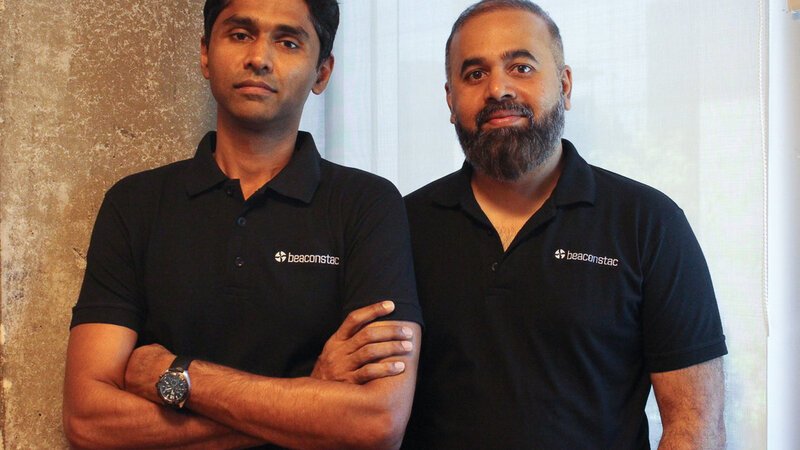
Co-founders Sharat Potharaju and Ravi Pratap Maddimsetty had been looking for that business for years. Their earlier venture, MobStac, began in 2009. The present QR-focused company dates its founding to 2019. Between those dates came experiments in mobile publishing and proximity marketing, including Bluetooth beacons.
In a Founder Thesis interview, Potharaju described the obstacle: consumers needed an appropriate app and enabled wireless settings. The technology could connect a shop to a phone; persuading the phone’s owner to cooperate was harder. He said the earlier business ran for about a decade on a little over $3 million raised.
The QR approach reduced the ritual to something people could do with a phone camera. Pandemic contactless habits gave the category another opening. The lesson is less romantic than a heroic pivot: an extra step can be a formidable competitor.
Printed once. Edited often.
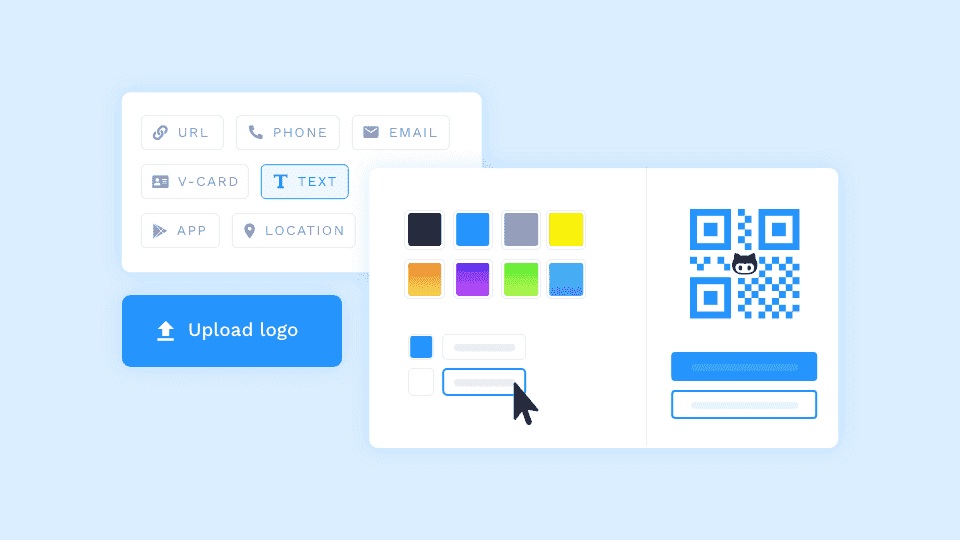
A static QR code holds fixed information, such as a web address. A dynamic one points through a managed redirect. The printed pattern stays put while the destination changes. Uniqode lets teams create those codes, apply brand designs, produce them in bulk and inspect scan activity by time, location and device.
Smart Rules can route visitors according to language, location, device or time. Forms and Linkpages provide places to collect feedback or present choices. Permissions and branded domains address the less photogenic questions: who may change the link, and whose name appears when somebody opens it?
Its expertise sits in that surrounding workflow. A marketer wants attribution. An IT team wants access controls and reviewable security documentation. Uniqode’s Trust Center publishes information on SOC 2 Type II and ISO 27001:2022, with renewed documentation announced in February 2026. Una, its AI assistant, adds questions and explanations to scan analysis.
A square on television
Flipkart faced a different problem during its 2023 Big Billion Days sale: the Cricket World Cup competed for attention. Its response put offers behind QR codes on television and in print, including a gamified newspaper campaign with a free-iPhone incentive.
Across 148 codes, Uniqode’s case study reports more than two million scans and 536,000 unique users. The distinction matters. Repeat scans help explain why the first number exceeds the second; neither number establishes purchases or incremental revenue. A viewer’s camera is evidence of curiosity. The checkout supplies a different kind of evidence.
148 codes across television and print. These are engagement measures, not sales figures.
The subscription behind the paper
Uniqode sells subscriptions. Published QR pricing begins at $9 a month billed annually, or $108 a year. Core is $49, Plus $99 and Business+ $399 per month on annual billing; Enterprise is quoted separately. Code allowances, seats and analytics retention vary. A buyer should count the workload before admiring the design tools.
Digital business cards extend the same logic to introductions. Contact exchange, lead capture, wallet sharing and CRM integrations turn a card into a follow-up workflow. An individual card can be free; Team costs $6 per user per month, billed annually. A ten-person team therefore starts at $720 a year, before any separately priced requirements.
Flowcode and Bitly’s QR Code Generator also offer dynamic codes and campaign tools. Editing a destination is not an exclusive invention. Uniqode’s case is the combination of creation, analytics and organizational controls. For a permanent link with modest needs, a free static generator may be sufficient.

The company raised a $25 million Series A in January 2023, led by Telescope Partners with Accel participating. Its January 2024 rebrand announcement reported more than 50,000 paying customers. Koto later showcased an identity built around stitching physical and digital experiences together. The metaphor is decorative; the recurring payment is quite literal.
Make the first scan worth it
A reader can copy Marriott’s sequence: choose one recurring problem, build a useful destination, then expand where the result earns it. Test the printed code on real phones. Assign someone to maintain the content. Measure the booking, submitted form or avoided print run alongside scans.
Budget for continuity, too. Dynamic codes depend on the managed service, and Uniqode’s help documentation says exceeding the applicable scan limit makes codes inactive. Weak connectivity or an awkward landing page can defeat a perfectly readable square. The satisfying part of this business is its modest test: after someone scans, did you make their next task easier?