A Bitly link is a small door with a surprisingly busy lobby. To the person clicking, it is a quick hop from a compact address to a longer destination. To the company that created it, the hop can reveal when the click happened, where it came from, which device made it, and whether a campaign is working. Bitly's long corporate life is the story of learning to charge for the lobby, not the door.
The company launched in New York in 2008, when Twitter allowed only 140 characters and a sprawling URL could eat half a post. Founders John Borthwick, Peter Stern, Todd Levy, and Nathan Folkman offered a cleaner answer: turn the address into a short bit.ly code and count the resulting clicks. The utility was immediate. The data was the future business hiding in plain sight.
Act IThe wonderful, dangerous gift of distribution
In May 2009, Twitter replaced TinyURL with Bitly as its default shortener. Every shared article, joke, and breaking-news link became a tiny advertisement for Bitly. Adoption surged. Investors followed. But the arrangement created the kind of platform dependency founders enjoy right up to the moment they do not.
Twitter soon stopped using Bitly as its default and moved toward its own link system. That was the first thing to fail: the assumption that borrowed distribution would remain available. By late 2010, Twitter represented about a third of Bitly traffic, down from roughly 60 percent the previous December. Yet Bitly was still growing, recording nearly 6 billion link resolutions that September. The free consumer habit had already exposed a valuable professional one.
The free feature made the link shorter. The paid product made the campaign legible.The Bitly business in one sentence
Publishers and marketers did not merely want fewer characters. They wanted branded domains, reliable redirects, click history, campaign organization, integrations, and proof that a message reached somebody. Bitly began selling those controls to teams. Losing Twitter did not improve the product by magic; it removed the option of confusing distribution with a business model.
The productA redirect wearing three outfits
Today Bitly sells three main surfaces. Bitly Links creates branded short links with editable destinations, custom back-halves, UTMs, bulk tools, and click analytics. Bitly Codes creates QR Codes that can be styled, scanned, measured, and - on paid plans - redirected after printing. Bitly Pages builds mobile landing pages for a bio, event, product, or digital business card. Analytics ties clicks, scans, page views, locations, devices, and referrers together.
The pieces fit because they share a primitive. A dynamic QR Code is essentially a redirect in a square costume. A button on a Bitly Page can be a short link. Change the destination and the printed code or published button can keep working. Measure all three and an online-offline campaign has one reporting layer instead of three spreadsheets glaring at one another.
Act IIThe square that changed the strategy
The major expansion came in December 2021, when Bitly acquired Egoditor, the German company behind QR Code Generator. The purchase price was not disclosed. What Bitly did disclose was revealing: the combined business had more than 325,000 paying customers, 5 million active users, over $75 million in annual recurring revenue, and more than 10 billion clicks and scans each month.
Customer feedback changed the company's mind about the boundary of the product. People wanted one place for “everything link related,” Bitly said when announcing the acquisition and its Connections Platform. QR Codes were not a detour into novelty stationery. They moved the redirect from screens to cereal boxes, restaurant tables, pharmacy counters, retail displays, tickets, and conference badges.
In 2024, Bitly stretched its link-in-bio feature into Bitly Pages, a no-code landing-page builder. The destination was now part of the package. In 2026, the company added conversational integrations for ChatGPT, Claude, Microsoft Copilot, and Perplexity, plus Bitly Assist and Weekly Insights. Users can create links or QR Codes in plain language and ask which channels are generating engagement.
The chat interface is the least interesting part. Bitly's advantage is the mature activity underneath it. An assistant becomes useful when it can answer a real operational question using a company's own links and scan history, then act on the answer without a tour through five tabs.
The moneyConvenience is free; memory costs extra
Bitly uses a classic freemium ladder. As of August 2026, Free cost $0. Core listed at $10 per month when billed annually. Growth listed at $29 annually or $35 monthly. Premium listed at $199 annually or $300 monthly. Enterprise pricing was custom. Limits rise with the bill: more links, QR Codes, pages, redirects, data history, bulk creation, dashboards, API requests, permissions, domains, and support.
This is clever packaging because the basic action is cheap and easy to copy. Shortening one URL has little defensibility. Governing thousands of branded links across departments, preserving years of data, routing by location or device, operating APIs at volume, and keeping redirects dependable creates a different buying decision. Bitly sells confidence to enterprises, feedback to marketers, and speed to everyone else.
Spectrum Equity's $63 million majority investment in 2017 put a price on that enterprise thesis. It followed an $8.9 million Series B in 2010 and a $15 million round led by Khosla Ventures in 2012. Bitly remains private, so current valuation and revenue are not public. The last firm revenue marker is the company's 2021 disclosure of more than $75 million in ARR.
Market mapThe competitors are hiding in different aisles
Rebrandly, Short.io, BL.INK, Dub, TinyURL, and Cuttly compete on link management. Uniqode and QR TIGER compete on QR Codes. Linktree and Beacons compete for the bio page. Marketing suites, native social analytics, and a developer with a cloud function can replace pieces of the stack. Bitly's difference is breadth around a familiar domain: brand, redirect, QR, page, analytics, integrations, permissions, safety controls, and enterprise service in one account.
Recognition cuts both ways. A bit.ly address is familiar, but a shortened destination can also hide danger. Bitly invests in trust and safety checks and joined the Global Internet Forum to Counter Terrorism in 2024. Paid custom domains help legitimate brands show their name before the click. Reliability matters too: when a short-link provider vanishes, every link it issued can become a tiny digital pothole.
The customer range explains the broad product. A creator may need one clean bio page. A neighborhood shop may print a changeable QR Code on a menu. A global marketer may need thousands of links, regional routing, shared UTM rules, and one dashboard across campaigns. Public Bitly product pages display brands including Marriott Bonvoy, The New York Times, Curology, and Rad Power Bikes. The common problem is not company size. It is the gap between publishing an invitation and understanding who accepted it.
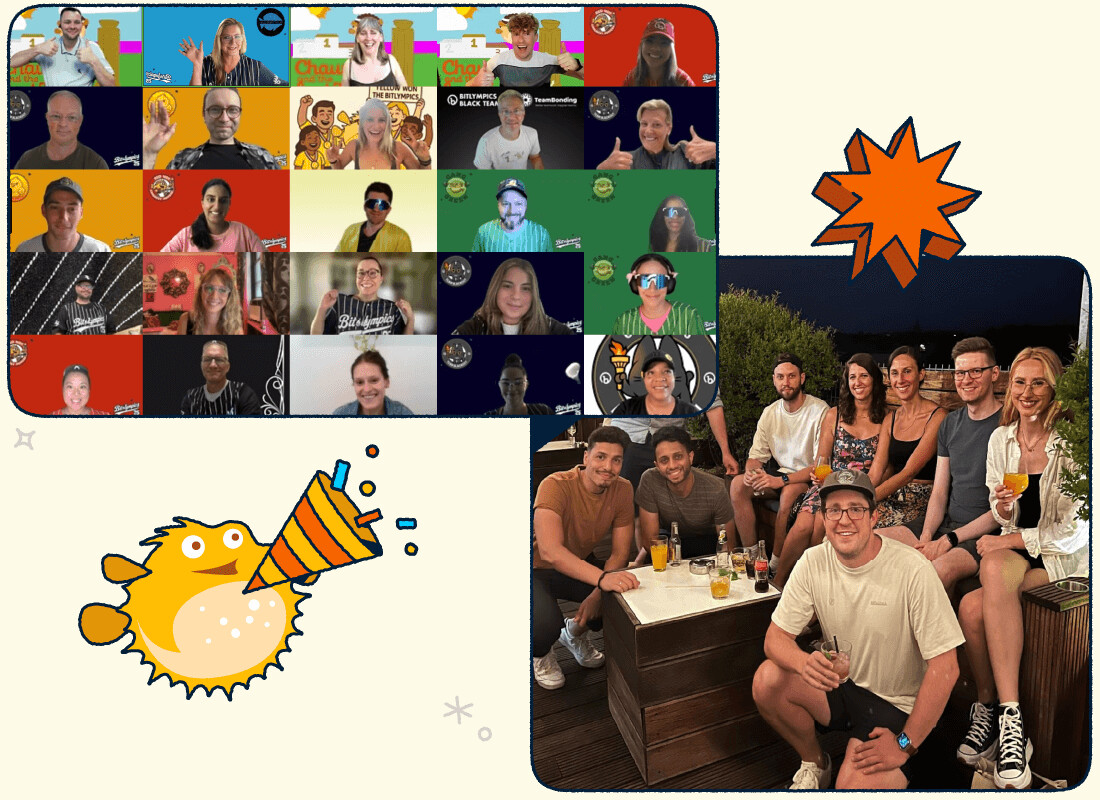
Inside the company, employees are called Bitizens. Its stated values include taking ownership, championing inclusion, having fun, showing integrity, and being a catalyst. Those phrases are corporate wallpaper unless the operating choices support them, but one is unusually apt here: Bitly has repeatedly treated the link as a catalyst rather than a destination.
Steal thisThe utility-to-infrastructure playbook
What can a founder copy? Not the URL shortener. The reusable idea is to find a high-frequency action that creates a useful exhaust trail, let individuals perform it quickly, then charge organizations to manage the consequences.
If the free action happens once a quarter, distribution will be weak. If its data cannot change a decision, analytics will not command a budget. If customers can switch without losing workflows, brand, history, or reliability, pricing power stays thin. And if a dominant platform supplies adequate controls natively, the independent layer may be squeezed again. Bitly escaped one platform dependency; that does not repeal platform risk.
The takeawayThe link was short. The lesson took 18 years.
Bitly began by saving characters and endured by saving context. Its most important assets are not the six or seven symbols after bit.ly. They are the redirect that can change, the record that can be read, the brand that can be recognized, and the workflow that can be governed.
The company did not abandon its original job. It kept asking what lived one step before and after it. Before the link is a campaign that needs order. After the link is an interaction that needs explanation. Around both is a team that will pay to avoid guessing. That is how a free internet trick becomes a software company.