Walk into almost any office restroom and the supply chain is invisible but total. There is soap. There are paper towels. There is, without fail, toilet paper - stocked, free, inside the stall, no questions asked. One category has always been missing from that quiet infrastructure: period products. If they exist at all, they are usually behind a coin slot in a common area, in a machine that is broken, empty, or nowhere near where a person actually needs it. UNICORN in every stall was built to close that gap by treating tampons and pads the way buildings already treat toilet paper.
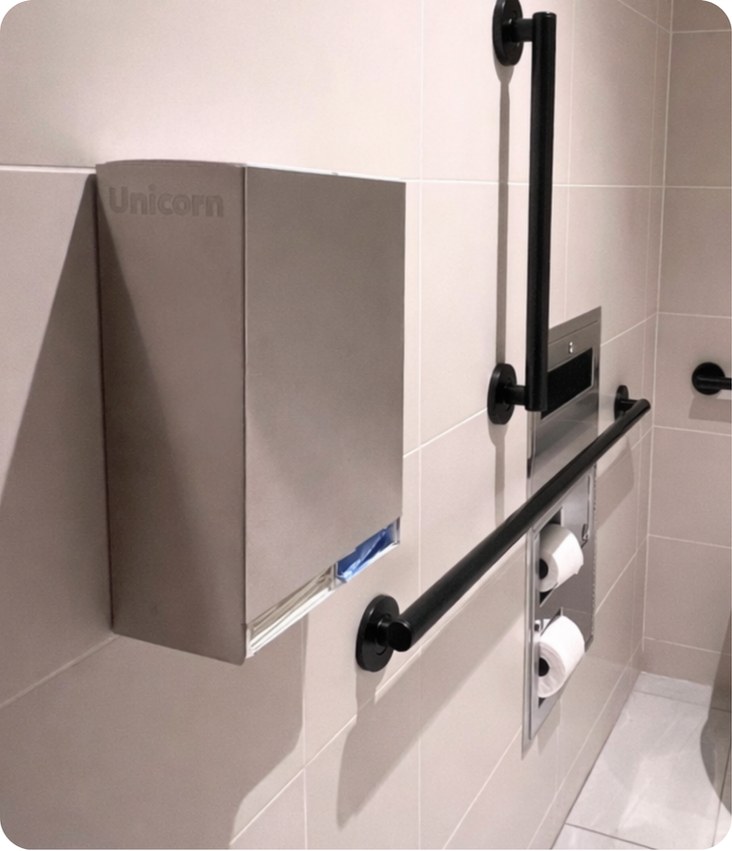
The Boston-based company makes a patented stainless-steel dispenser that mounts directly inside the stall, above the toilet paper, and stocks it with organic tampons and pads that are free to whoever opens the door. Employers, campuses and building owners pay for the hardware and the refills; users pay nothing. It is a small mechanical idea with a large behavioral one behind it - that access should happen at the moment of need, not after a hunt for quarters.
Two cousins, two corner offices, one exit
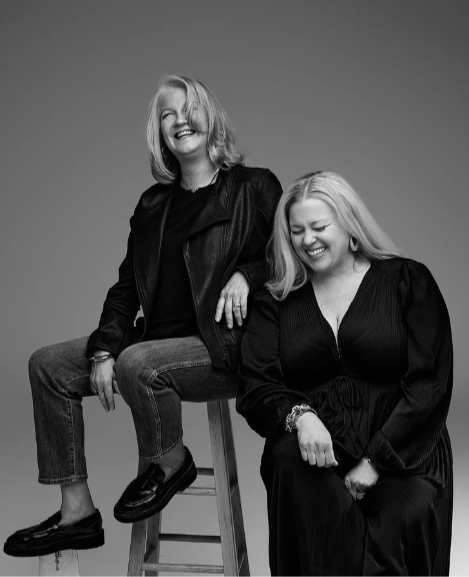
UNICORN's founders, Denielle Finkelstein and Thyme Sullivan, are cousins who had not seen each other in about 30 years before reconnecting. Both were breadwinners with the kind of resumes people do not usually walk away from. Finkelstein spent 22 years in fashion, most recently as a C-suite executive. Sullivan spent 27 years in consumer packaged goods - a career that started, improbably, with her driving a Frito delivery truck and ended with senior roles across Coca-Cola, Nestle and Pepsi. Each initially thought the other was a little crazy for leaving.
The spark was mundane in the way good origin stories often are. Sullivan's daughter asked for organic lip gloss, which sent the cousins down the rabbit hole of what is actually in the products marketed to women and girls. Period products, they found, were both opaque about ingredients and - more urgently - simply not available where people needed them. The statistic that stuck with them: roughly one in four people who menstruate miss school or work at some point because they lack access to products.
The retail business they built - and then left
Their first move was not the dispenser. It was retail. Under the name Atop the Organic Project, they spent about three and a half years getting organic period products onto shelves at Wegmans, Sprouts, Target and Erewhon, among others. By most measures it worked. But it did not solve the problem they had set out to solve, and they knew it.
Shelf space reaches the people who already plan ahead and can pay at the register. It does nothing for the person caught off guard in a workplace bathroom. So they made an uncomfortable call: walk away from a profitable, growing retail business to chase an unproven infrastructure model. That meant designing hardware, and it meant convincing everyone - including themselves - that the harder path was the right one. The product that came out of it is deliberately simple: a low-profile dispenser with no moving parts to jam, installed in about 30 seconds and refilled in about 10. Crucially, they designed it with input from janitorial staff, the people who would actually live with it every day.
How UNICORN works in a restroom
The Summer of Unlove
Then came the money, or rather the absence of it. The cousins took the pitch to roughly 50 venture capitalists and raised, from that group, nothing. Two older women pitching period-care hardware was not the profile most funds were looking for. They nicknamed the stretch the “Summer of Unlove.” What eventually moved was angel capital - predominantly women who understood the problem from the inside and opened their networks along with their checkbooks. The founders have been pointed about who they let onto their cap table, screening investors for values alignment rather than taking any dollar on offer.
The cocktail party that changed everything
The turning point was a room, not a pitch deck. At a small gathering in Boston hosted by JPMorgan Chase chief executive Jamie Dimon - about 40 founders present - Sullivan and Finkelstein walked up and asked him whether he carried toilet paper around with him. From there they connected the dots: employee wellness, equity, and a workforce that skews heavily female. Dimon's reported reply was direct: “I get it. I've got a wife, I've got daughters, and I've got granddaughters.” Within two days, JPMorgan reached out. Within two weeks, UNICORN dispensers were being piloted in every New England branch bathroom stall.
That single deployment became the reference customer that unlocked the rest. A bank does not casually put a startup's hardware in every branch bathroom, so once JPMorgan did, the conversation with the next facilities team changed. UNICORN stopped being an idea that needed explaining and became a decision another large employer had already made. Today its dispensers are used by a long list of Fortune 500 employers and campuses across North America, from consumer giants to banks to universities.
Why buildings actually buy it
The quiet genius of UNICORN's business is who it sells to. It does not really sell tampons to consumers; it sells facilities managers and building owners an upgrade. The dispenser is pitched as a labor-saving device (fewer trips, faster refills), an ESG and tenant-experience line item, and a way to earn recognition under standards like the WELL Building Standard, which credits hygiene support and universal design. The company is WBENC-certified as a women-owned business and is approved on the GSA Schedule for federal purchasing - both of which matter to institutional buyers with procurement rules.
Distribution follows the same logic. Alongside a direct website and an Amazon storefront, UNICORN moves through the janitorial-supply channel buyers already use - BradyPLUS, HD Supply, Staples, Imperial Dade, W.B. Mason, Quill - and through facility-management firms like JLL, CBRE, Cushman & Wakefield and ABM. In other words, it slots into the exact same ordering system that restocks the toilet paper.
Figures per company product materials. Bars are illustrative, not to a single scale.
There is a second, quieter reason the model works: the product removes a recurring headache instead of adding one. Common-area vending machines break, jam and require someone to manage coins and complaints. A free in-stall dispenser with no moving parts turns period care into the same low-drama restock as paper towels - order the cartridges through the usual supplier, refill in seconds, move on. For a facilities team judged on uptime and labor hours, “one less thing that breaks” is often a more persuasive pitch than any mission statement.
The organic argument
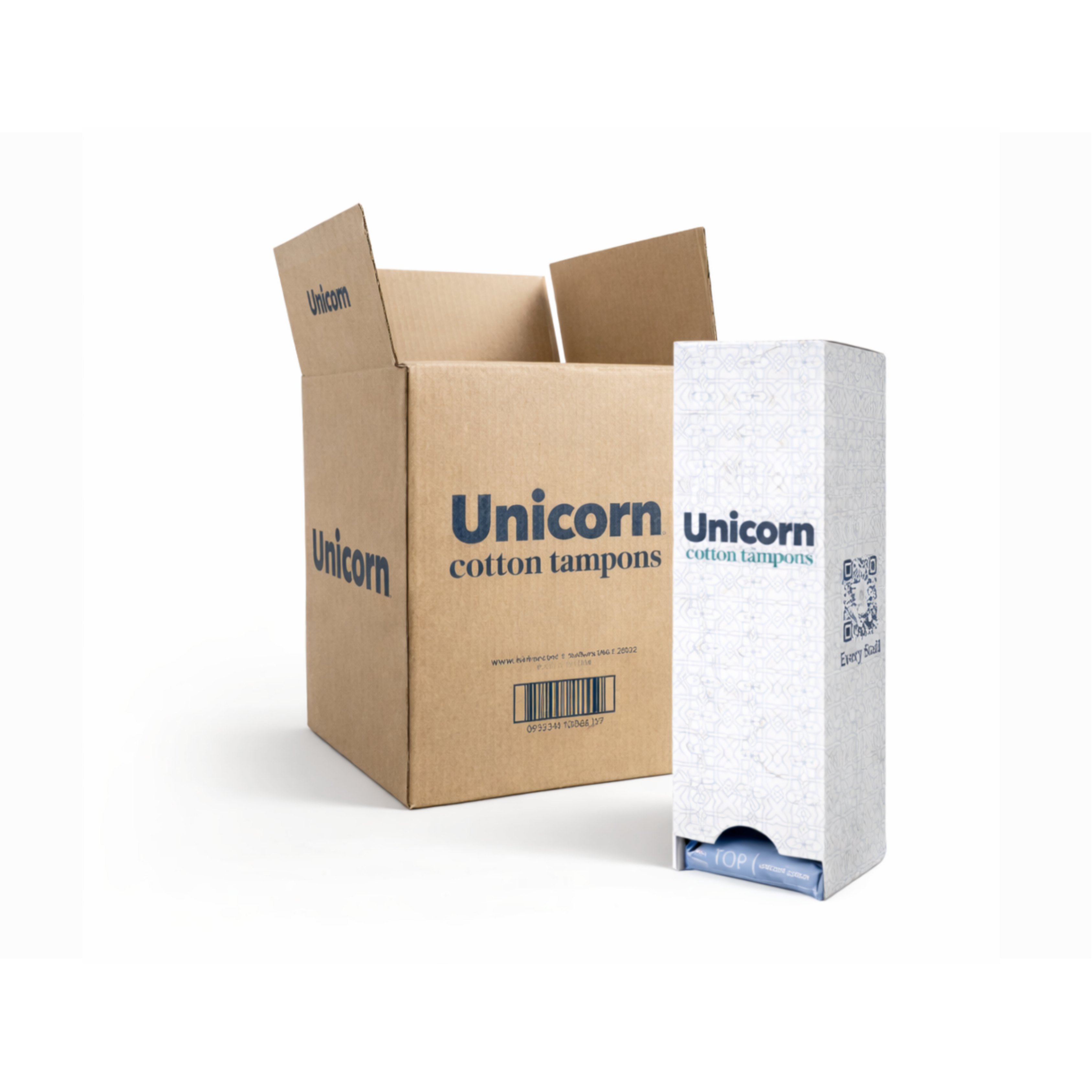
UNICORN's refills are made with GOTS-certified organic cotton and plant-based applicators, and the company points to meaningfully reduced packaging per piece compared with conventional alternatives. For a corporate buyer building a sustainability story, that combination - organic materials, less waste, a credible certification - turns a bathroom supply into something that can be reported on. It is also a genuine product difference from the plastic-applicator, conventional-cotton products in most vending machines.
Where it fits in the market
The competition is mostly the status quo: legacy coin-operated feminine-product machines parked in common areas, free-basket honor systems that run dry, and generic facilities-supply products ordered without much thought. UNICORN's wedge is placement plus economics - inside the stall, free to the user, on organic products - packaged for the person who signs facilities invoices. The tailwind is policy. When the founders started, no U.S. state required period products in schools; by their own account, 28 states now mandate them in K-12 schools, and Canada has passed a federal rule for products in federally regulated buildings. Every one of those mandates expands the market UNICORN was built to serve.
The honest limits are worth naming too. This is a small team - roughly ten people - competing for facilities budgets against far larger incumbents, and its disclosed outside funding is modest, in the tens of thousands via a convertible note rather than a big venture round. The model depends on institutional buyers choosing to pay for something they were never billed for before. What UNICORN is betting is that once a building treats period care as infrastructure rather than an afterthought, going back feels as strange as charging a quarter for toilet paper.