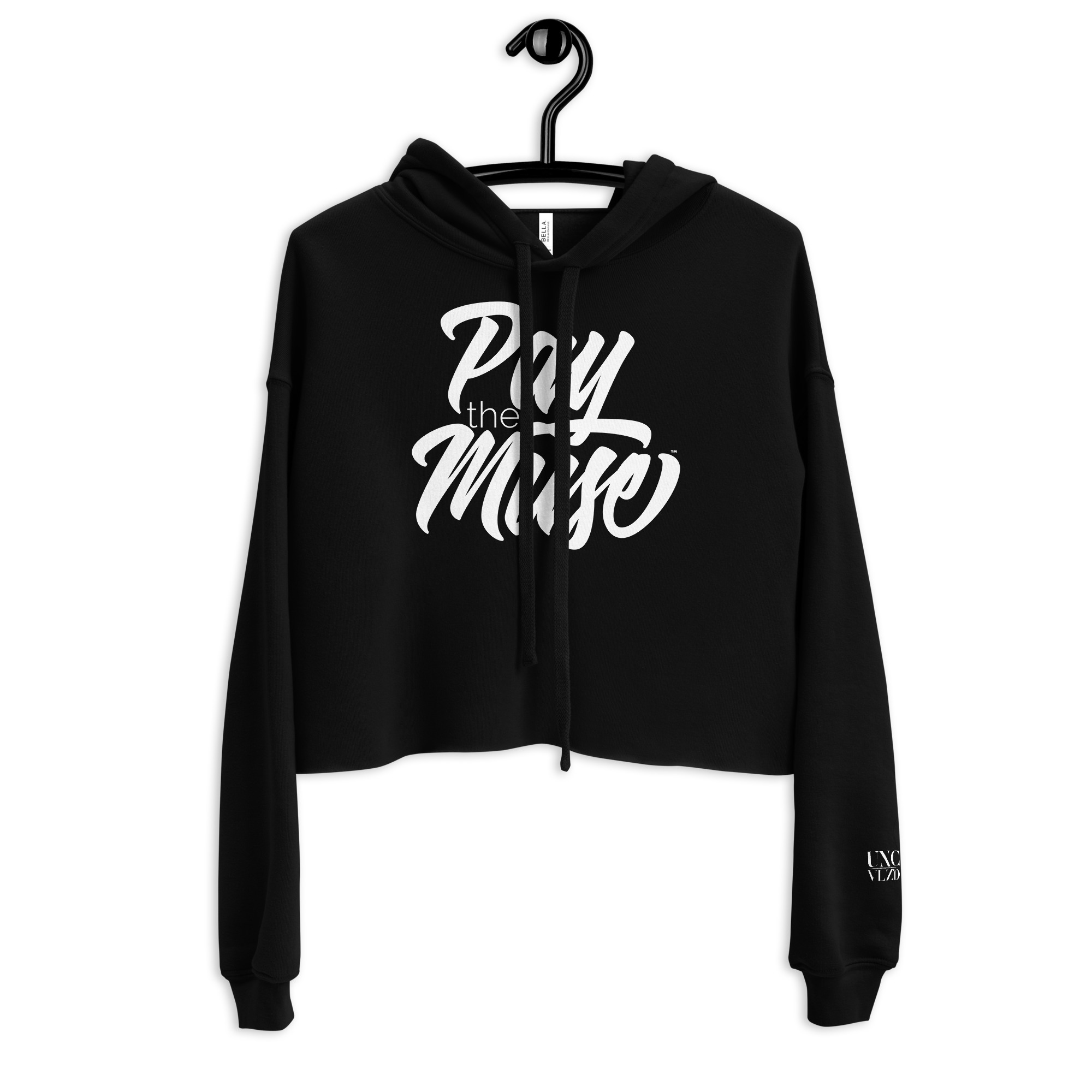
On a black cropped hoodie, three words arrive in a sweep of white lettering: Pay the Muse. The drawstrings interrupt the message. The raw hem gives it somewhere to stop. It is a pleasingly practical place to put an opinion about creative work: on an object with a price attached. In Uncivilized’s catalog, that price is $50.
The accompanying copy is less coy. “You’re the icon. You’re the art. You are the muse. You deserve your coins.” A design company has turned the matter of compensation into something you can wear. Inspiration, apparently, would like to be paid.
That little transaction is a useful way into Uncivilized. Its professional description ranges across corporate identities, personal branding, websites, photography, graphic design, music and marketing. Its merchandise gives that broad description a few objects to stand beside. Here are the letters. Here is the garment. Here is the joke. You can decide whether the sensibility is yours.
The client brief has more than one surface
Uncivilized’s company profile puts its beginning in 1998 and its headquarters in Huntington Beach, California. It calls the business an umbrella company. The wording is revealing: photography sits beside web development, and music sits beside marketing. Packaging and audiovisual production extend the list beyond the usual logo-and-website pairing.
The customers addressed by that description have two recognizable needs. A company wants a corporate identity. An individual wants a personal brand that works on social networks. Both involve decisions about how someone is recognized, although the deliverables can be very different. A package has edges and dimensions. A website has pages and interactions. A photograph has a frame. Audio has timing.
Read as a service proposition, the attraction is coordination. A buyer can bring several connected creative needs into the same conversation. That is an interpretation of the offering, rather than a promise about a particular project. The useful question is whether the photographic treatment, typography and digital presentation belong together when the work is finished.
For someone commissioning that work, the alternatives include hiring a branding studio, a web developer and production specialists separately. Uncivilized occupies the multidisciplinary part of that market. Its catalog adds another dimension: the company also sells finished objects carrying its own graphics. A service client purchases work toward a brief; a merchandise customer chooses an already expressed point of view.
places to go.
& graphics
branding
& packaging
production
Capability map, not a prescribed project sequence.
The birds are in on the joke
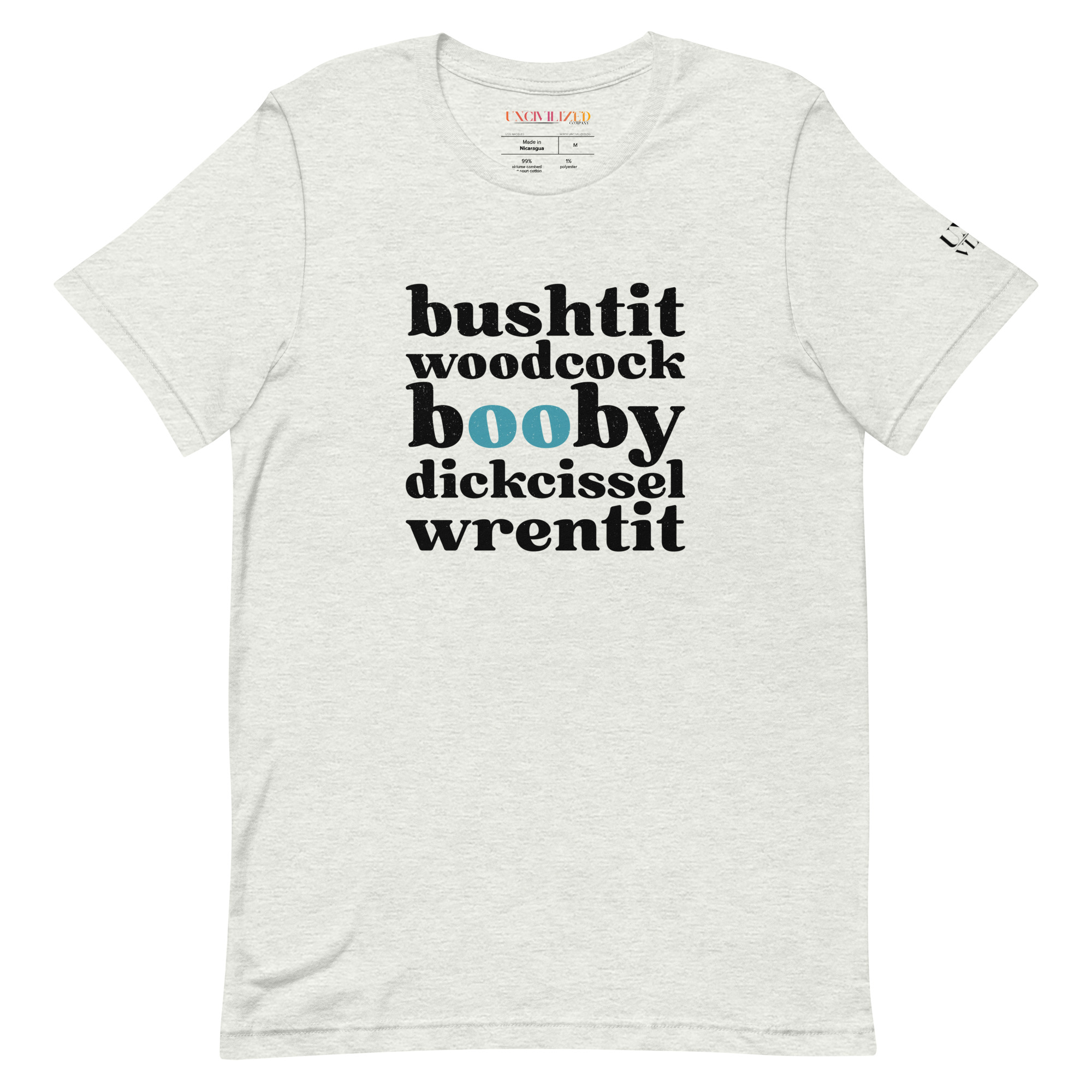
Consider the Cackle Birds Unisex Tee. Its front is occupied by a stack of bird names: bushtit, woodcock, booby, dickcissel, wrentit. The type is heavy and black, except for the two teal letters in the middle of “booby.” This is a shirt that allows ornithology to take the blame.
The design works through selection and arrangement. There is no illustrated flock competing with the words. The names carry the mischief, the weight of the lettering makes them readable, and the color change provides a small extra nudge. It is an unusually legible example of what a graphic designer can add to language that already exists.
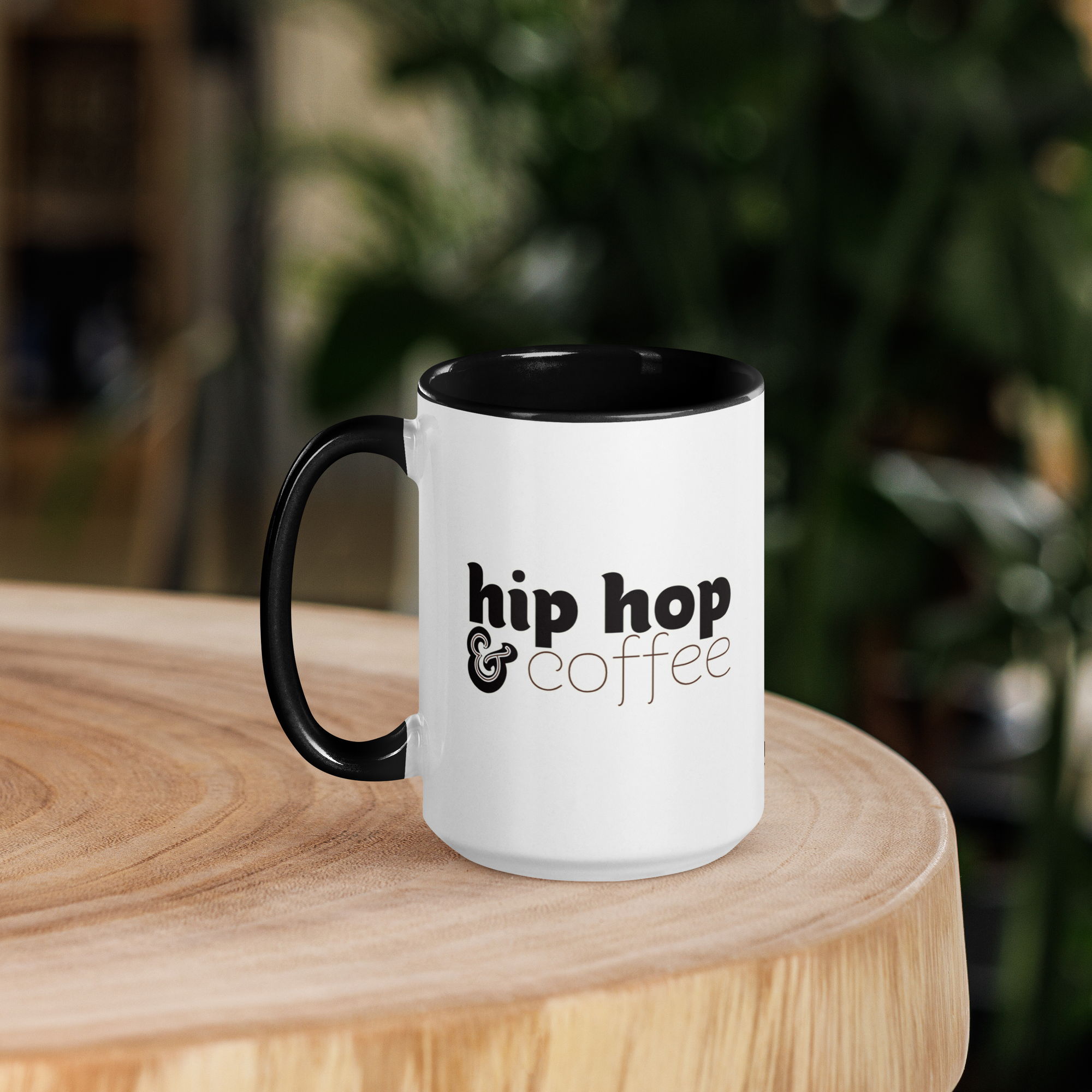
Elsewhere, the Hip Hop & Coffee mug joins chunky lettering to thin, airy type. The two interests share a white ceramic surface with a black handle and interior. The catalog lists the mug at $15-$20 across its variants. The clothing names keep the conversational register going: Ole Razzle Dazzle and Hell Heal sit alongside Pay The Muse.
The signature accessories are quieter. A beanie and a tough iPhone case carry the UNC/VLZD identity, each listed at $30. Together, the products suggest a merchandise range organized around graphics, phrases and recognition. The appeal is specific enough to let a buyer say yes quickly, or move on. That selectivity is part of having a recognizable voice.
USD catalog prices checked September 12, 2026. Shipping and tax are separate considerations.
First the order. Then the object.
The product descriptions contain a production decision worth pausing over. The hoodie, tees and signature accessories are described as made especially for the customer after an order is placed. The company explicitly connects that arrangement with a longer wait for delivery and with reducing overproduction.
For a reader considering a similar approach, the tradeoff is easy to picture. Producing ahead of demand means deciding what to make before knowing which sizes or designs people will choose. Producing after an order changes that sequence. It can reduce exposure to finished goods that never find buyers, while giving the customer a production wait to absorb. That is the economic logic of the arrangement, not a measured claim about Uncivilized’s savings.
- 01Customer orders
- 02Product is made
- 03Delivery follows
The waiting time moves into the customer’s experience.
The model asks for a particular kind of purchase. A shirt bought because its message feels right can tolerate a different timetable from a shirt needed for an event next Friday. If immediate dispatch is essential, production after ordering may be a poor fit. The sensible thing to copy is the explicit explanation of the delay, alongside the production choice itself.
Borrow the brief, not just the lettering
Uncivilized’s mix of services and merchandise offers a useful exercise for anyone preparing a creative commission. Start with the object or encounter. Is the first meeting a social profile, a package, a website or a garment? Write down what the person encountering it needs to understand. Then decide which pieces of production will carry that message.
Next, ask the awkwardly concrete questions. Who supplies the photography? Where will the lettering appear at its smallest? Does the brief include sound? What happens when an approved design reaches a physical product? These are editorial suggestions prompted by the company’s range, and they turn a general request for branding into something a designer can actually work with.
The hoodie provides a neat closing test. Its message survives the move from a sentence to a piece of clothing. The type has a voice; the shape gives it room; the price completes the thought. You do not need to commission a whole identity to understand what the object is saying. The muse would like her coins.
Meet the work
Explore Uncivilized’s website, Pay The Muse hoodie, Cackle Birds tee and Hip Hop & Coffee mug. Find the company on LinkedIn and Facebook.