An insurance premium is an unlikely place to look for a childhood memory. Tyrre Burks looks there anyway. In May 2026, he put a number on one part of the cost of youth sports: insurance, he said, represents roughly 15 percent of a parent’s registration fee. Lower that expense, and a family might have an easier time saying yes. The founder of Players Health had arrived at a familiar question by a decidedly unfamiliar route. Who gets to join the team?
Burks grew up on Chicago’s South Side. Football carried him to college, then to professional teams in Germany and Canada. Years later, his work involves insurance capacity, software, and the operations of sports organizations. The vocabulary has changed considerably. The subject remains close to home. He knows what joining a team did for him, and he wants more children to have that opportunity.
There is something pleasingly awkward about this career progression. A wide receiver is supposed to find open space. An insurance executive spends a fair amount of time finding exclusions. Burks has occupied both worlds, and his business sits where the pleasure of playing meets the arrangements that make playing possible.
A receiver learns another route
His college football route began with two years at Harper College in Illinois before he transferred to Winona State. The 2008 Warriors roster lists a senior wide receiver from Chicago, number 11, standing 6 feet 5 inches. It is a compact description of a person at a particular moment: hometown, position, measurements. The future rarely fits in those little columns.
At Winona State, Burks played in 2007 and 2008, helped win an NSIC championship, and earned a degree in organizational psychology. He also met his future wife, Jennie Miller. His recollection of the university emphasizes the people around him. He remembered invitations to dinner before home games and a community interested in him beyond what he could contribute on the field.
Professional football followed, first in Germany and then in the Canadian Football League. Saskatchewan was among the stops. The distance from Chicago was geographical and personal: sport had supplied an itinerary, a place to put his effort, and people who expected him to show up. His later description is brief enough to leave little room for interpretation. “Sports saved my life.”
That sentence helps explain why the business kept returning to sport. He had other ambitions, including providing for his family, but the game had already given him a concrete example of opportunity. He could remember what it felt like to be inside it. Building a company meant learning how to make something useful from that experience.
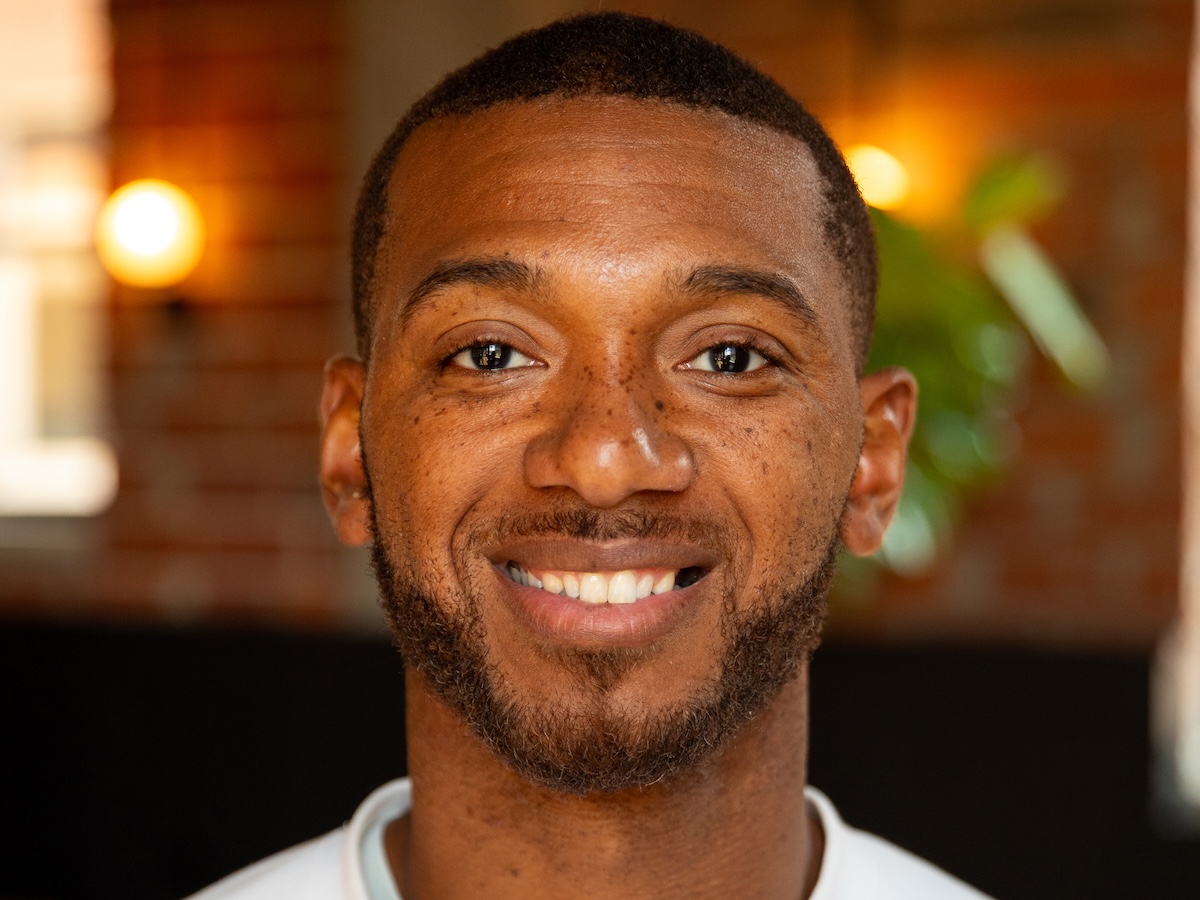
The agent who changed the subject
Burks’s sports agent became an early investor in his startup. When Burks explained the idea, the agent matched his contribution dollar for dollar. It was a useful vote of confidence from someone who had known him in another profession. Their conversation had moved from representing a player to backing a founder.
In February 2012, Burks described himself as the founder and CEO of Audience of One Meetups, a communication portal for individual sports teams. In a personal essay titled “Why Not Me?”, he credited his mother, Gwen King, with believing he could affect the lives of people around him. He wrote about work, faith, perseverance, and creating a different future for his family.
The ambition was expansive. Seven generations of financial freedom appeared on his list of questions. A team communications business was an early attempt to give that ambition a practical form. There is a considerable distance between wanting to change the world and getting a group of people to use your software. Burks was beginning to travel it.
His learning included startup accelerators. Players Health participated in gener8tor’s Milwaukee 2015 cohort. He also moved the fledgling company from Chicago to Minneapolis to join an accelerator run by SportsEngine. These were places to acquire the business knowledge that a football career had not automatically provided.
The public milestone came in May 2016, when Players Health won the top prize at Google Demo Day in San Francisco. Back in Northeast Minneapolis, a watch party cheered the pitch. A founder’s presentation in California had become a local event in Minnesota. For someone building a new professional identity, that is a useful kind of home crowd.
“I didn’t have a business model. I had an idea, and I refused to give up.”
Tyrre Burks, 2022
A volunteer’s view of the business
Another role put Burks closer to the administrative side of sport. He volunteered as a coach on his son’s association board and became its director of risk management. The view from an association board is different from the view from a playing field. Someone has to organize the adults, maintain the records, and make the decisions that allow a season to proceed.
Burks saw organizations needing better infrastructure. Players Health developed a model combining risk services with insurance. The company’s proposition connected what an organization did day to day with the coverage it bought. Coaches’ credentials, training, and background checks became part of a larger operational picture.
He also described a business built through relationships. Brokers could introduce the company to organizations; integrations with registration providers could reach clubs already using those systems. In sport, he said, word of mouth mattered. During 2020, the company went from no state soccer association clients to nine.
There is no roar from the stands when an administrator completes a background check. The task still matters to the people relying on the organization. Burks’s work gives these modest procedures a business home. The work asks him to understand the volunteer as well as the insurer, and the club as well as the software.
- PlayerExperienced the game from the field
- VolunteerCoached and served on an association board
- FounderConnected sports operations with insurance
Putting a price on participation
In 2022, Players Health addressed access directly through its Mother’s Day and Father’s Day microgrant campaign. The company awarded 75 children grants of $693 each, reporting a total of $51,975. Recipients lived in 20 states. The grants covered costs associated with playing the sports they loved.
A grant has a different scale from a funding round. It meets a family at the point of a particular expense. The company described $693 as the average per-season cost for one child to play one sport at the time. For the recipient, that is a season rather than an abstract market opportunity.
$51,975 awarded toward participation costs
The same concern appears in Burks’s more recent insurance work. Speaking at an industry meeting in Dallas in May 2026, he linked better risk management with lower premiums and greater access. “Sports isn’t for poor kids anymore,” he said. It is a blunt statement from someone whose own route depended on being able to play.
His reported 15 percent figure describes an expense he wants to reduce. It should be read as his account of the market, rather than a promise about every family’s registration bill. The goal is clear enough: improve the economics around a sports organization so participation becomes easier to afford.
That aim brings the founder back to the child he once was. He has spoken about choosing football, wrestling, and other sports as ways to stay occupied and out of trouble. The adult business has to handle contracts and pricing. The reason for bothering reaches back to an ordinary, consequential choice: joining in.
The quiet work behind a funding round
In December 2024, Players Health announced a $60 million Series C led by Bluestone Equity Partners. The round brought total company funding to more than $100 million. Its plans included product development, acquisitions, and adding staff. These are substantial company figures; they describe capital raised by the business.
By then, its customer list included USA Softball, the American Youth Soccer Organization, RCX Sports, and 3-Step Sports. Growth had required Burks to become fluent in businesses around the game as well as the game itself. Insurance was central to the commercial model, supplying a way to sustain the services he wanted organizations to use.
His operating lessons can be less dramatic than a funding announcement. In an October 2022 podcast appearance, he discussed starting processes manually and automating them later. That is a sensible order for a founder still learning exactly what a customer needs. A computer can repeat a process very efficiently. It is helpful to establish that the process deserves repeating.
In a 2025 interview, Burks described more investment in advisory and remediation services, with organizations receiving practical support alongside insurance. The theme was continued involvement in how clients operated. A contract begins a relationship with a club; the club still has a season to run.
By May 2026, Burks reported that the company wrote just over $100 million in insurance premium and supported more than 40,000 sports organizations. Premium measures the insurance business being written, a different measure from venture funding. At that Dallas meeting, he was also seeking capacity for a golf program. His field of work was continuing to widen.
The practice worth crashing
Burks now speaks publicly about purpose beyond his company. His personal framework, Ty the Mission, asks leaders to consider their roles, the needs they can address, and the gifts they bring to that work. Father, husband, Christian, and leader appear among the roles he names. It is a way of discussing a life with several obligations rather than one job title.
There is a lighter expression of the company’s purpose, too. In June 2026, Players Health became the presenting sponsor of Crashin’ Practice, a Youth Inc. series featuring Coach RAC and Coach Ballgame. The two visit youth baseball teams for surprise practices, instruction, and giveaways. Greg Olsen’s media venture provides the stage; children getting to enjoy the afternoon provide the point.
The sponsorship fits alongside the grants and insurance work without making all three identical. One helps cover a bill. Another works on the arrangements behind participation. The show puts attention on the experience itself. A child should have something worth joining once the adults have finished arranging it.
Burks’s story keeps circling back to that child. The wide receiver has become a founder with investors, insurance partners, and several markets to consider. Somewhere beneath those responsibilities is the memory of a team making room for him. He has spent his second career working on what it takes to make room for someone else.
More from Burks’s world
- Ty the Mission: Burks’s personal site
- Players Health · Company profile
- LinkedIn · Twitter/X · Instagram
- Watch: Burks with Will Lucas on Black Tech Green Money
- Watch: the Match Relevant founder interview
- Listen: By All Means, August 2022
- Read: Burks’s 2012 essay, Why Not Me?
- Watch: his May 2026 business interview
- Read: the December 2024 funding announcement
- Watch: Crashin’ Practice on Youth Inc.