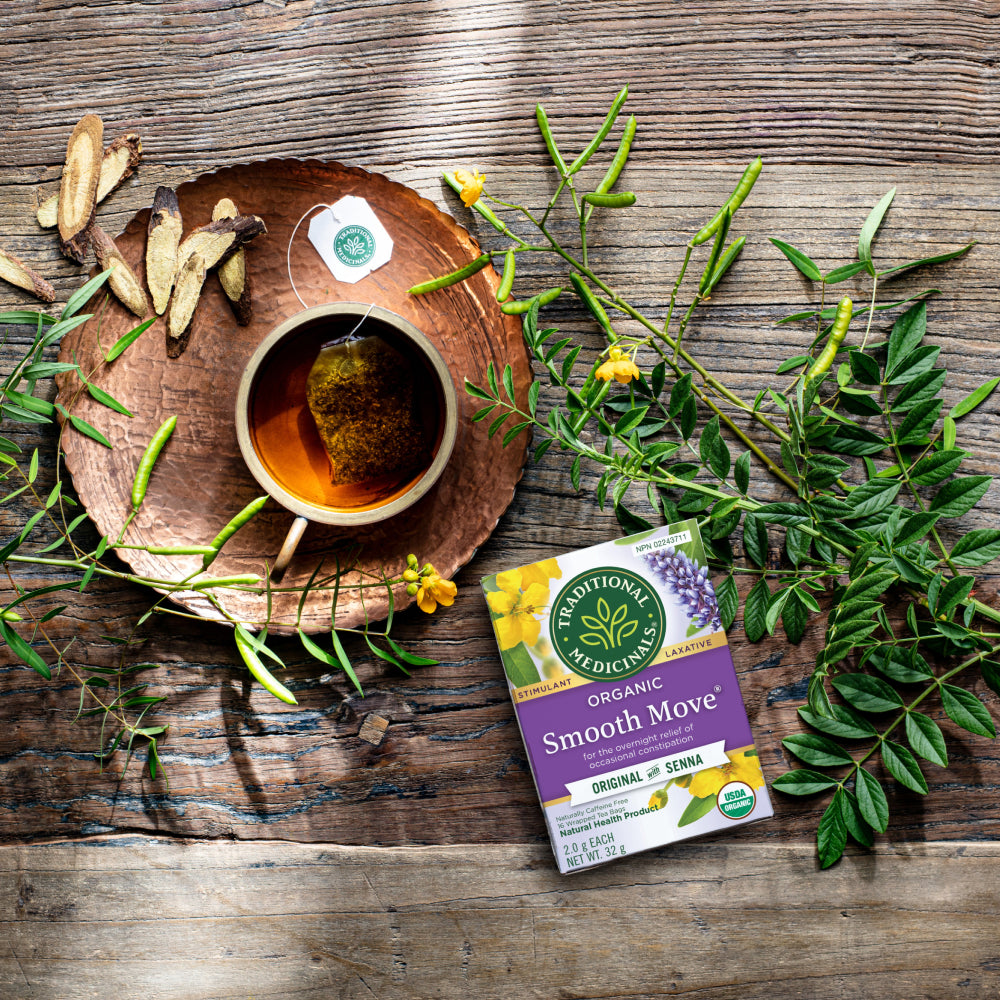
Smooth Move is a wonderfully unembarrassed name for a product. In a wellness aisle crowded with abstractions, it tells the shopper exactly which conversation they are having. Throat Coat is similarly direct. Traditional Medicinals has spent decades turning the complicated business of herbal formulation into little boxes that people can understand without taking a botany class.
Behind those friendly names sits a decidedly less homespun operation. The company brings together herbalists, plant scientists, international growers and wild collectors, then sells the result through retail stores and its own website. Its promise depends on what happens long before a customer boils the kettle: identifying plants correctly, buying herbs of consistent quality and keeping the people who supply them in business.
That approach has acquired considerable scale. A company spokesperson told Cardinal News that 2024 revenue reached $170 million, up 15% from the previous year. The interesting question is how a business born in Northern California's back-to-the-land culture can grow that large while keeping its attention on the contents of a two-gram tea bag.
01The first hurdle was the taste
Rosemary Gladstar and community activist Drake Sadler founded Traditional Medicinals in 1974. Its beginnings were intimate: an herb shop near the Russian River, formulas blended for friends and customers, and the practical needs of a local community. The company later established its first in-house laboratory in 1982. Between those two points lies the central transformation: a neighborhood practice becoming a repeatable product.
Gladstar's recollection punctures the idea that the founders had mapped out a national empire. She was responding to the people in her shop. In a company-published anniversary interview, she described an early discovery: customers were unlikely to drink a blend they found unpleasant, however useful they believed it might be. Taste was an adoption problem before it became a marketing subject.
She also supplied a pleasingly earthy footnote. Easy Now, the blend later called Cup of Calm, took its name from the words she used to settle her high-strung horse. It is hard to imagine a focus group improving on that. The underlying lesson travels well beyond tea: watch where people stop using the product, then fix that particular friction.

THE TASTE TEST“if a tea didn’t taste at least somewhat drinkable”Rosemary Gladstar, recalling why customers would pass on a blend
02Chamomile has to prove it is chamomile
The modern company's quality process begins with an almost comic-sounding question: is this herb actually the herb we ordered? Plants have lookalikes. A familiar name does not guarantee the desired composition. Traditional Medicinals says its scientists examine shipment samples under a microscope and assess identity, purity and composition. Depending on the plant, quality markers may include essential oils, bitterness or specified compounds.
Its separate testing guidance also describes checks for heavy metals and microbial contaminants. That matters because organic certification and ingredient testing answer different questions. One concerns production practices; the other examines the material that has arrived. A sourcing story alone cannot tell a manufacturer whether a particular batch belongs in a particular formula.
The expertise extends beyond a laboratory bench. Chief Science Officer Taryn Forrelli oversees innovation, research and development, and quality. The company's herbal experts include formulator and educator Guido Masé. Their work connects traditional recipes, botanical identification and the instructions printed on a consumer package. For a shopper, much of the value is avoiding the need to assemble that expertise personally.
This is a credible basis for differentiation, though it is not proof that every blend works equally well for everyone. Manufacturing consistency, ethical certification and clinical effectiveness are separate subjects. The brand's strongest argument is the specificity of its process. A reader can inspect that argument without accepting every promise attached to the broader wellness industry.
- 01IdentityThe right plant
- 02PurityUnwanted material
- 03CompositionQuality markers
03A shopping list of everyday predicaments
Throat Coat Original combines ingredients including licorice, slippery elm and marshmallow root in a caffeine-free tea marketed for throat health. Smooth Move uses senna and is sold for occasional constipation. Mother's Milk is positioned for breastfeeding support. Alongside these familiar formulas are single-herb teas, sleep and stress blends, herbal lozenges and Smooth Move capsules.
The formats reveal how the business thinks about customers. A tea drinker can make a deliberate ritual of preparation. A lozenge fits a pocket and an occasion when a kettle is inconvenient. Capsules offer another way to buy a familiar product family. These are packaged consumer goods for people seeking particular benefits, with retailers and distributors providing access to those shoppers.
The economics are approachable at the point of trial. At the time of research, the U.S. website listed a 16-bag box of Throat Coat at $7.49, roughly 47 cents a bag before tax or shipping. Multipacks and recurring deliveries encourage repeat purchases. Subscription is an ordering option within a physical-products business; the company still has to procure, manufacture and deliver every box.
The closest shelf alternatives include Yogi and Celestial Seasonings, with other tea brands competing for flavor, price and habit. Traditional Medicinals puts specific uses prominently in its product names and backs its positioning with detailed ingredient and sourcing information. That combination gives a shopper reasons to choose it beyond an attractive botanical illustration.
For consumers, the practical starting point is the label: intended use, ingredients, preparation and restrictions. Smooth Move's occasional-use positioning matters; it is not simply interchangeable with an everyday refreshment. The company's product pages pair benefit claims with supplement information and brewing directions. Convenience removes some work from choosing herbs, but the product still asks the user to pay attention.
04The farmer is part of the formula
Sadler's visits to sourcing communities exposed a mismatch between the value of medicinal plants and the poor living and working conditions of many people gathering them. B Lab's account connects that discovery to the company's development of longer trading relationships and investment in grower communities. The supply relationship became something the company needed to improve, rather than take for granted.
Traditional Medicinals became a certified B Corporation in 2010. B Lab currently lists an impact score of 138.3. In September 2025, the company announced Fair for Life certification as a brandholder, adding another form of scrutiny to its sourcing arrangements. These designations have different jobs: a company assessment is not the same thing as certification of an ingredient supply chain.
The numbers keep the story honest. Its FY2025 impact report puts organic herbs at 99.7% of purchased herb volume, while fair-certified herbs account for 48%. That second figure leaves substantial work to do. The same report records $383,727 in development funds paid beyond crop prices. Ethical sourcing has an expenditure attached to it, not just a seal for the carton.
There is a useful business lesson here: choose measurements that expose unfinished work. Reporting the share of purchases covered by a standard tells readers more than counting the logos on a website. For a manufacturer considering a similar approach, the requirements are concrete: traceable purchases, supplier cooperation, time and money. A buyer who constantly changes suppliers to chase the lowest quote would struggle to reproduce it.
Two standards. Different coverage.
05From the herb garden to the concert lawn
The customer relationship does not end at the grocery shelf. In 2023, Traditional Medicinals partnered with Dave Matthews Band and the environmental nonprofit REVERB on the band's summer-tour Eco-Village. According to the announcement, Matthews already used Throat Coat. Concertgoers could receive tea samples and learn about slippery elm sourcing in Appalachia. The fit was unusually literal: a throat-care brand in a place where people sing.
The 2025 Herbs for All initiative took another route. Its Planting Wellness program offered $20,000 grants, with Oko Farms in Brooklyn and Sonoma County's Botanical Bus named as anchor partners. A free video platform, Plant Wisdom Collective, added an educational entry point. Someone curious about herbalism could begin learning before deciding what to buy.
Internally, the company describes a culture built around learning, collaboration and community involvement. Its FY2025 report says 72% of employees volunteered with a nonprofit partner. That is a more tangible expression of workplace priorities than a wall of inspirational language. It also shows how education and community activity operate alongside the commercial work, rather than existing only as packaging copy.
New products keep the original herbalist connection visible. In September 2025, the company introduced Rosy Mood and Stress Ease Calm. Gladstar contributed inspiration to Rosy Mood, whose butterfly pea flower and hibiscus pigments produce different colors depending on brewing-water pH. The company markets the blends for mood and calm. The color change, at least, is a benefit you can see in the cup.

06The $47 million question is now in Virginia
Expansion has required outside capital and experienced management. In 2022, Grounded Capital took a minority stake alongside the Sadler Trust and continuing investor The Builders Fund. The investor's announcement described support for expansion and the company's purpose. CB Insights reports a $50 million round that October; the partnership announcement itself does not give an amount.
Joe Stanziano became CEO in 2024 after 27 years at J.M. Smucker. His arrival brought a long consumer-goods career to a company preparing for another manufacturing site. In July 2025, Traditional Medicinals broke ground on its $47 million, 125,000-square-foot facility in Franklin County, Virginia, with plans for 57 jobs over three years.
The schedule had already encountered reality. The project was originally announced in January 2020. Stanziano attributed the long delay to the pandemic and time spent getting the plan right. In its May 2026 update, the company said operations were scheduled to begin that fall. The intended benefit is straightforward: manufacture nearer customers east of the Mississippi and shorten distribution routes.
That makes the next chapter a test of execution. A second factory needs enough demand to justify its capacity, dependable ingredients and consistent output. The sourcing model takes years to develop, according to the company's quality account; capacity cannot conjure suitable herbs into existence. More machinery increases the importance of everything upstream.
What other businesses can copy is the sequence: understand a specific customer need, make the product pleasant enough to use, define what quality means and invest in the relationships required to deliver it repeatedly. Traditional Medicinals began with people telling an herbalist what they needed. Its industrial future still depends on answering them with something they will actually finish drinking.
Planned Virginia investment
125,000 square feet · 57 planned jobs
Keep steeping
Explore the products, meet the herbalists and follow the next chapter.