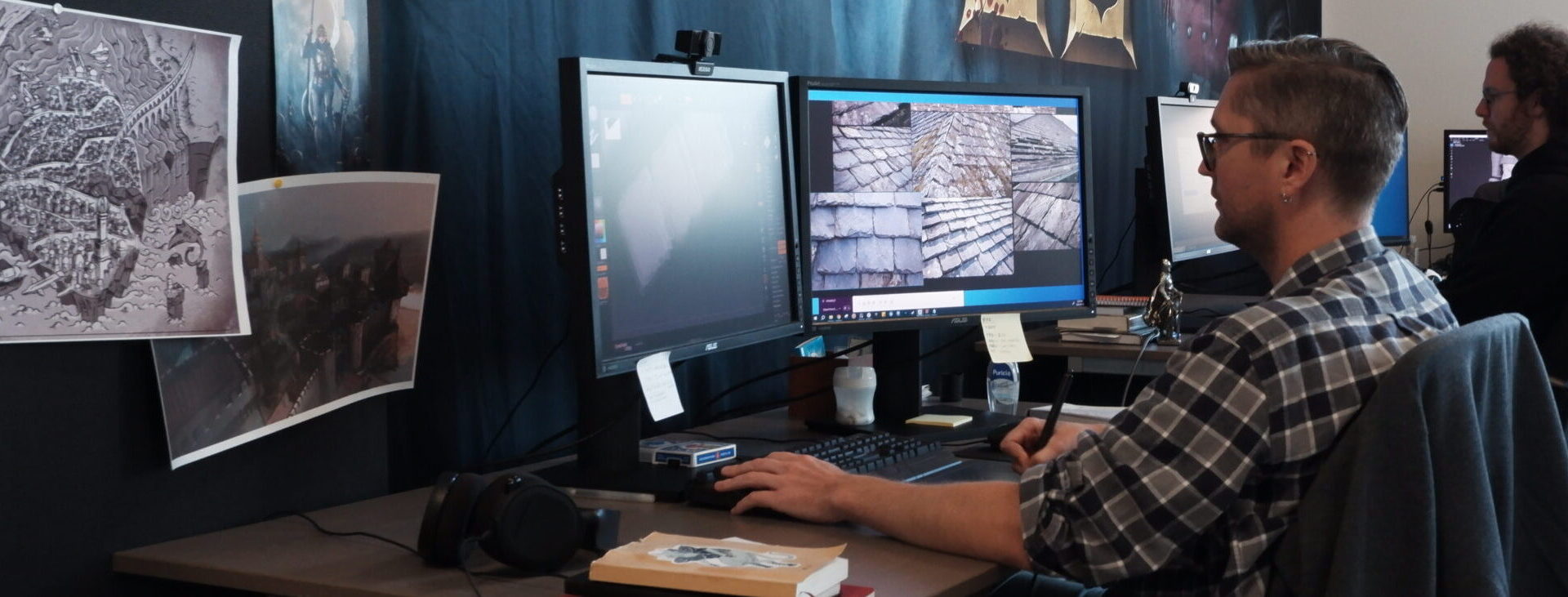
The first Torn Banner office was the internet, and by the studio's own later accounting, the lease terms were terrible. Nobody was paid. Contributors vanished. People in Europe bent their lives around North American hours because Skype was the meeting room. The team had gathered around Age of Chivalry, a free 2007 mod for Half-Life 2 that asked a question with more force than polish: what if a first-person shooter replaced the rifle with a sword and made every swing matter?
That question became a company in 2010, a Kickstarter in 2012 and then Chivalry: Medieval Warfare. A total of 2,027 backers pledged $85,934 against a $50,000 goal. The commercial game arrived that October and became Steam's top seller during Christmas week. More than a decade later, the Chivalry franchise has sold over 10 million copies across major platforms. Not bad for a group whose early retention plan was, more or less, hoping volunteers did not disappear.
The joke is the distribution
Torn Banner makes premium multiplayer action games for people who like their learning curves steep and their deaths theatrical. Chivalry 2 stages 64-player medieval battles full of feints, counters, castle gates, cavalry and weapons that include the occasional chicken. Newcomers can contribute by standing near an objective and swinging at the correct color. Experts can read animations, control distance and turn a crowded duel into geometry.
That range is the studio's sharpest advantage. Ubisoft's For Honor frames intimate, technical fights. Mordhau chases exacting melee simulation. Torn Banner sells the sensation of being an extra in a medieval movie who has accidentally wandered into a starring role. The combat supports mastery, but the battlefield constantly manufactures small comedies. A clean sword parry feels good. Being flattened by a flaming cart is something a player sends to three friends.
“At a certain point I ended up becoming the leader just because over time, I was the one most interested in it.”Steve Piggott, on the mod team's beginnings
The customers are players, not corporate buyers: duelists, friend groups, console crowds and PC regulars looking for a social combat sandbox. Torn Banner charges upfront for its games, then adds paid editions, cosmetic bundles and optional campaign passes. Chivalry 2's passes have no expiration timer, a small but telling rejection of the anxiety mechanics common to live games. Continued maps, modes and balance work keep the servers useful and the catalogue selling.
The corpse on the company timeline
Then came Mirage: Arcane Warfare in 2017. It applied the studio's melee fluency to a bright fantasy world of magic and acrobatics. Reviews found ideas to like. Customers mostly stayed away. In a multiplayer-only game, low sales are not merely a disappointing revenue line. They empty the room the product needs in order to function. Torn Banner gave the game away for a day, cut its price and later removed it from sale.
The revealing detail is where the failure sits now: on Torn Banner's own corporate history, between the office opening and Chivalry 2. The caption says Mirage was not a commercial success and taught the team about production and managing creative vision. Most company timelines behave like royal portrait galleries. This one leaves a body on the floor.
The recovery was not a pivot into something fashionable. It was a return to the company's strongest promise, rebuilt for a larger audience. Chivalry 2 launched in 2021 across PC, Xbox and PlayStation, sold one million copies in two months, and kept expanding. Five Team Objective maps became 13. Mounted combat arrived. So did a third faction, rotating modes, eight weapons and hundreds of armory items. The eleventh major content release, Regicide, finished the war between its two kings in 2024.
Distribution mattered as much as design. Creative Export Canada support helped pay for a trailer, localization into a dozen languages, influencer campaigns, PR and trade shows. Chivalry 2 sold in 214 markets, drove a more than twentyfold increase in export revenue and generated 10 million Twitch views around launch. The useful distinction is easy to miss: Kickstarter money helped prove and finish a product; export money helped that product travel.
The Torn Banner loop
A second rough room
In 2024, Torn Banner acquired fellow Toronto developer Lever Games and brought most of its sequel team inside to make No More Room in Hell 2. The new game swapped cavalry charges for eight-player zombie survival: responders start apart in the dark, find one another, gather scarce tools and risk permanent character death while pushing toward a shared objective. It preserved Torn Banner's favorite ingredients - physical action, social pressure and stories created between players - without painting another castle.
The Early Access launch was rough. Players reported bugs, performance problems, balance issues and disappointment about differences from the beloved original mod. Torn Banner delayed the full release into 2026 and changed what it was optimizing. Big feature additions gave way to difficulty tuning, enemy spawning, progression, performance and clarity. An economy assembled in layers was rebuilt, requiring a progression reset. The team also ruled out child zombies, arguing that the feature could limit showcases, platform approval and sales in some regions.
That last decision angered some longtime fans because the unsettling enemies belonged to the identity of the first game. It also shows where the volunteer-mod romance ends and a commercial studio begins. A free project can accept narrow distribution. A roughly 100-person company selling on four storefront ecosystems cannot casually surrender regions, showcases or console certification. Community-led does not mean community-vetoed.
The result reached 1.0 on August 11, 2026, with Green Man Gaming supporting a simultaneous PC, PlayStation 5 and Xbox Series release. Full cross-play joined the player pools. Solo training gave newcomers somewhere to learn without permadeath. Survival mode added a faster horde defense. Torn Banner counted more than 8,000 bug fixes and performance improvements between Early Access and launch. Nine days later it said the game had passed one million players, half of them arriving from 1.0 onward.
“Early Access launch was rough.”Torn Banner's community Q&A, with no decorative fog
What another builder can steal
Own a verb, not a genre
Torn Banner's durable asset is not “medieval.” It is readable, physical, first-person combat that produces social stories. Find the repeated behavior customers would miss, then deepen it.
Show work before asking for faith
The mod recruited collaborators and proved demand before the Kickstarter. A visible, functioning prototype attracts better help and makes financing a continuation rather than a guess.
Fund distribution as its own product
Localization, creator campaigns, platform access and launch PR are not garnish. Torn Banner's move into 214 markets required a separate plan and separate money.
Publish the reason, not only the patch
Its best update notes connect player feedback and match behavior to a specific change. Explanations will not eliminate anger, but they let customers audit the logic.
This playbook breaks under predictable conditions. A public prototype cannot help if network effects require a large crowd before the game becomes fun. Community feedback can steer a studio into incoherence when loud regulars are mistaken for the whole market. A premium live game also needs enough sales to finance years of servers, testing and new content. And radical transparency becomes theater if the roadmap repeatedly outruns the team's capacity.
Torn Banner still carries those risks. It ended new Chivalry 2 content while some players wanted more. No More Room in Hell 2 must hold the 1.0 audience while delivering its promised post-launch work. The company is neither a frictionless hit factory nor a tiny mod crew anymore. Its interesting position is in between: independent, publisher-assisted, technically specialized and large enough that a miss has payroll consequences.
Yet the old mod habit remains visible. Build the dangerous thing. Put it in players' hands. Notice where the fun survives contact with reality. Torn Banner's castles, failed magic arenas and dark Pennsylvania roads all reduce to that loop. The discipline is ordinary; doing it after public disappointment is the uncommon part. The studio has learned that listening does not spare you from a bad launch. It gives you a chance to make the next version worth entering.
Keep exploring