Before a player could buy a DuskBreakers character in 2021, METATHEORY asked them to play. They rode a space elevator toward a dormant alien ship, gathered resources, dodged creatures and competed for a place in a mint. The sale of a digital collectible had become a small arcade game. It was a clever first impression: a company promising a game world offered a game before it offered a receipt.
- METATHEORY began as a Web3 game and story studio founded by Twitch cofounder Kevin Lin and partners in 2021.
- Its DuskBreakers mint sold 10,000 Genesis characters in six days; a $24 million Series A followed in 2022.
- Lin later said reward-seeking players exposed a problem with the play-to-earn thesis.
- Today its Taiwan studio is making Gido Gido, a 4v4 kaiju game built around friends sharing control of one monster.
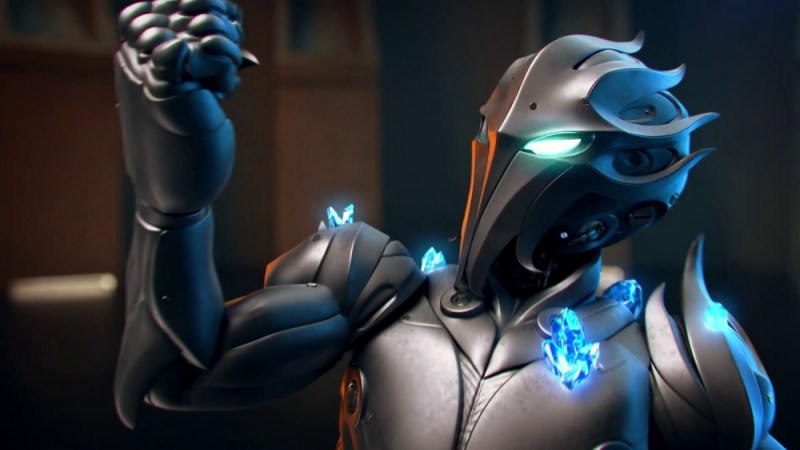
The premise of DuskBreakers was large enough to swallow a studio. A mysterious ship called the Dusk hung over a future Earth. Human explorers, the Breakers, would climb aboard; their exploits could unfold in games, comics, animation and digital characters owned by players. In the first mint, the game qualified people for a chance to buy one of those characters. A high leaderboard score could secure a mint slot, while other players entered a draw. The invitation was unusually direct: try the activity before you buy into the universe.
The first 10,000 Genesis Breaker NFTs sold out in six days. By August 2022, the company said it had published seven full-color webcomic issues, released another arcade mode called Beast Battler and grown to 57 people across 14 countries. Andreessen Horowitz led a $24 million Series A that May. Those are real accomplishments. They also answer only the easy question - whether an audience would show up for a scarce collectible at the height of a boom.
01 / The arcade game inside the checkout
Kevin Lin had spent years at Twitch, where a game could become the center of a social gathering. That experience helped explain METATHEORY’s first bet: the community would help build the lore, not merely watch a studio publish it. Cofounders and early leaders brought together game development, design, technology and interactive storytelling. The team even began with a different concept - an augmented reality world - before platform delays nudged it toward the cyborg art that became DuskBreakers.
The play-to-mint mechanism tried to solve several problems at once. It gave a buyer a taste of the world, made automated participation harder, and rewarded time or skill alongside luck. For a prospective player, the benefit was immediate: the first interaction was an activity, not a wallet instruction. For the studio, it was a test of whether a fictional universe could attract people through something they actually enjoyed doing.
The original participation loop
Play a short arcade run aboard the Dusk.
Qualify for a mint chance through play; strong leaderboard results could secure a slot.
Buy a Genesis Breaker character and join a wider story community.
That mixture made the early result difficult to read. The studio could count sales and community membership. It could not assume that a successful mint predicted a successful game. A person might be enthusiastic about a character, the prospect of resale, the game itself, or all three. The distinction matters because a game must keep earning attention long after the mint closes.
02 / The reward was working. Was the game?
METATHEORY was already questioning the economics in 2022. In an August update, it said many play-to-earn games were not fun and that a standard two-token model did not work. The team chose to spend more time evaluating sustainable token designs while concentrating on core game experiences. That is the point at which the attractive business model began to look like a design constraint. Tokens might grant identity or ownership, but they could also invite players who treated every minute as a route to a payout.
DuskBreakers kept developing. A 2023 community playtest reported positive feedback from 83 percent of survey respondents, while the studio singled out movement speed, dodging and cooldowns as frustrations. In 2024, METATHEORY promoted an open alpha for a free-to-play roguelite shooter with competitive leaderboards and collectible elements. These steps describe a team testing combat and balance, rather than simply extending a mint roadmap.
Lin’s later account was sharper. After three years of experimentation, he told Tatler Asia, the original play-to-earn vision had not come to fruition. Many users wanted the quickest earning action rather than a deeper game. He said he had moved away from digital assets and toward making games while exploring how to develop them faster with fewer resources. It is an unusually plain diagnosis from a founder whose venture had been funded during Web3 gaming’s exuberant moment.
03 / Four players walk into one monster
The next public game is a different sort of social experiment. Myth & Mortar, METATHEORY’s Taiwan-based internal studio, revealed Gido Gido: Kaiju Battle Party in January 2026. It is a 4v4 online brawler set in a destructible city. Each player picks a creature with its own ability. Teammates can then fuse their creatures into a larger kaiju and control the shared body together. That last detail is the hook: cooperation stops being a polite suggestion and becomes the controls.
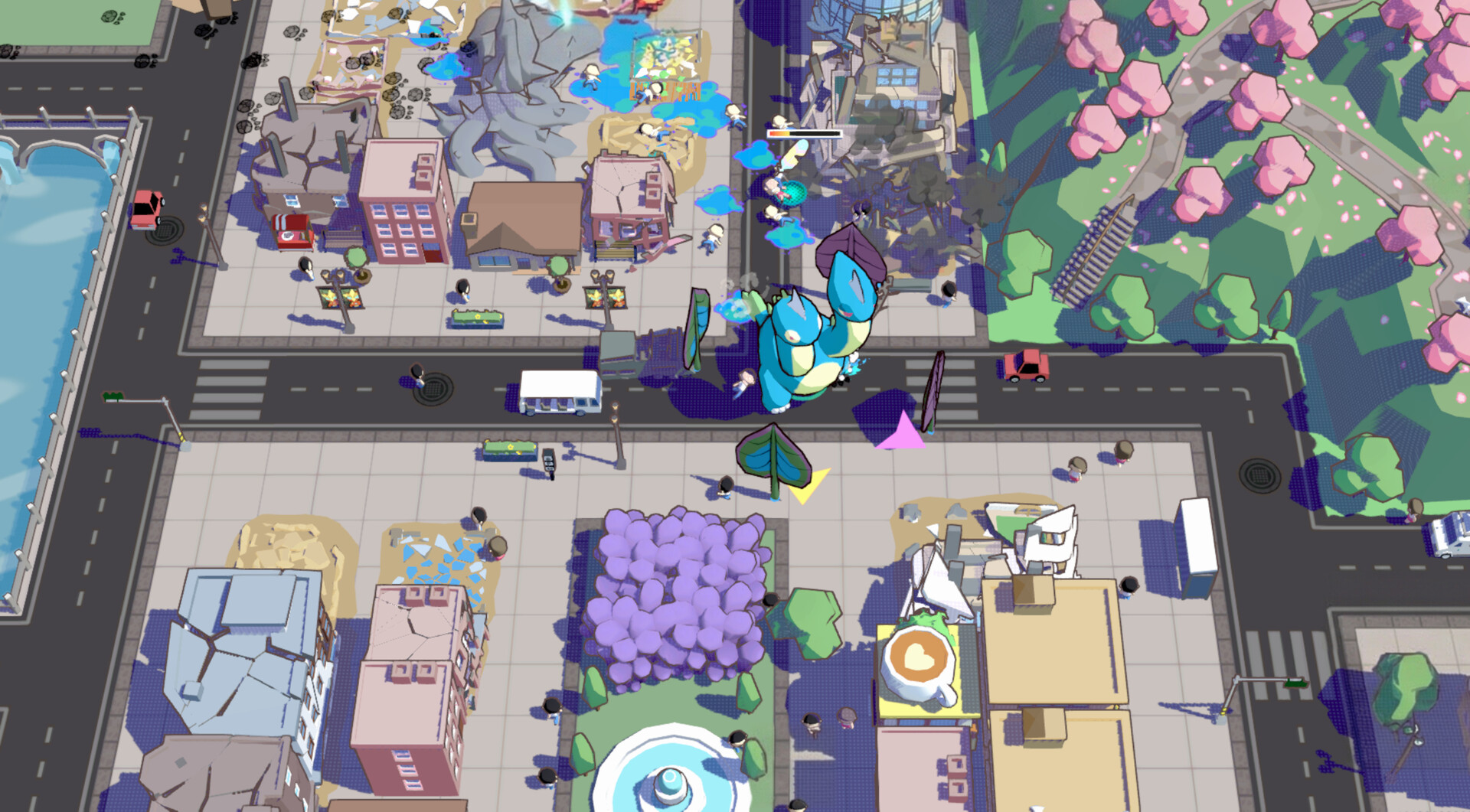
The Steam listing calls for short matches, online co-op and a growing roster of monsters. It lists a release date of “to be announced,” so wishlisting is the clear public action for interested players. Its appeal sits closer to a party game than a sprawling token economy. A group has to coordinate in real time, and a failed merge could be as entertaining as a successful one. The comedy comes from the mechanic, not from a promise of future ownership.
This is where METATHEORY now fits in the games market. DuskBreakers tried to make ownership and audience-shaped lore central to a new franchise. Gido Gido competes for the much older prize of a good game night. The studio also says it is applying its game-making craft to an early AI-led software division for makers. Its current website offers no named software product or price, so that effort remains a stated direction rather than a product people can buy today.
04 / The useful part of the experiment
There is a lesson here for anyone building a community product. METATHEORY’s play-to-mint put the core action before the transaction, which is a sound way to show people what they are joining. But the sale mixed together several motivations. When a reward can be valued separately from the experience, strong acquisition numbers can hide weak attachment to the thing being built. The copyable move is to test repeat play after the reward is gone - and to ask what players do when the shortest route to earning is closed.
That approach has limits. A scarce collectible can draw people quickly, but it also changes their reason for arriving. A cooperative party game needs enough friends online at the same time and enough variety to make the next match worth playing. An AI tool needs a clear job to do. METATHEORY’s public history does not settle those future tests. It shows a studio willing to replace one question with a better one: when nobody is paying players to stay, do they still want another round?