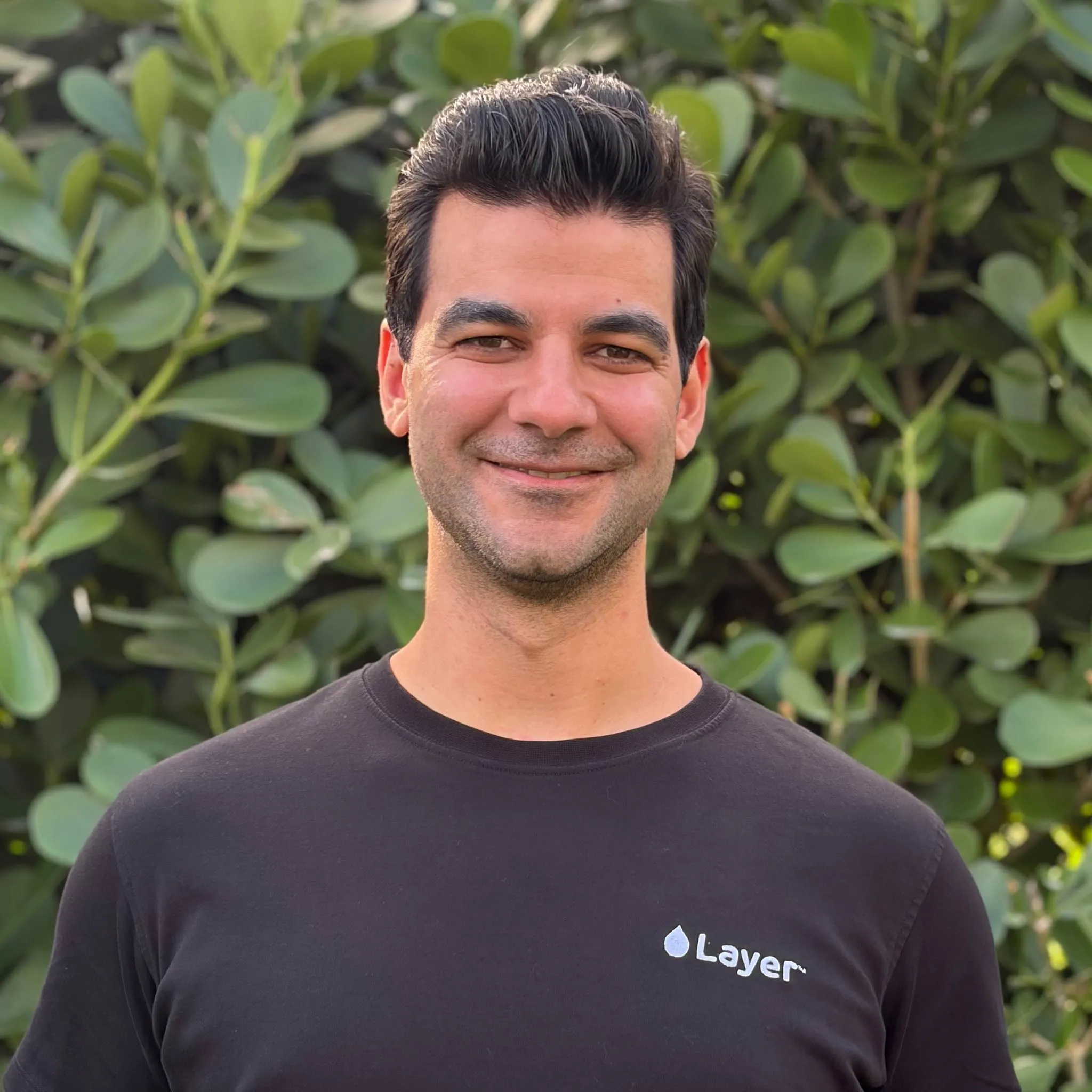
The quiet engineer behind gaming's loudest problem
Every game studio faces the same arithmetic. A live mobile game eats creative the way a furnace eats coal - thousands of ad variations, seasonal events, store icons, trailers, in-game items, all of it, all the time. The old answer was more headcount or more agencies. Volkan Gurel built a third answer.
That answer is Layer, the company he co-founded in 2023 and runs as CEO. He calls it the AI operating system for creative teams. The promise is unglamorous and exact: turn an idea into live, performance-ready content - images, video, 3D models, audio - without scaling the org chart or shipping the work overseas. Studios train custom models on their own style, batch-edit across formats, and wire up agentic workflows that handle the multi-step grind. Then they export straight into Unity, Blender, or Photoshop, where the artists already live.
The thesis underneath it is a single sentence the company repeats like a vow: AI should supercharge creativity, not replace it. That is not marketing softener. It is the product constraint. Layer is deliberately model-agnostic, refusing to lock a studio into any one engine, because the people Gurel is selling to - art directors, producers, growth teams - have been burned by tools that promise magic and deliver sameness. Keep the human in the chair. Automate the tedium around them.
"AI should supercharge creativity - not replace it."
Layer's founding principle, the line Gurel keeps returning toA tour of hard, unglamorous problems
Read the resume backwards and a pattern shows up. Gurel does not chase categories. He chases infrastructure - the load-bearing systems other people would rather not build. It started at MIT, where he took a dual degree in Electrical Engineering and Computer Science between 2005 and 2009. He came out an engineer's engineer: machine learning, distributed systems, databases, the plumbing.
His first serious stop was Hunch, the machine-learning recommendation startup co-founded by Flickr's Caterina Fake. Hunch tried to predict what you would like before you knew it yourself, and the bet on ML-driven recommendations sat at the center of everything. eBay bought the company in 2011, and Gurel went with it, carrying that taste prediction work into one of the largest marketplaces on earth.
Then the swerve that makes his story memorable: drones. At Airware, the commercial-drone company, he directed engineering operations during the years when autonomous flight was the frontier everyone wanted and almost nobody tamed. His name landed on four UAV patents issued in 2016 and 2017, covering flight planning, sensor activation, and the unglamorous-but-critical problem of keeping an aircraft inside a pilot's visual line of sight. It is an odd line item for a creative-AI CEO, and it is exactly the kind of thing that explains him. After Airware, he moved into engineering management at Coinbase, building rails for a different kind of frontier.
"Recommendation engines. Drone autonomy. Crypto rails. Creative pipelines. Different decade, same instinct - go where the hard systems are."
The through-line across four companiesWho is paying attention
You can judge a gaming startup by its board, and Layer's reads like a who's who of people who have already built the thing once. These are not passive checks. They are the founders of the studios whose problem Gurel is solving.
The math of a live game
To see why people who have sold studios for hundreds of millions want in, look at the production load Layer absorbs. These are the creative tasks a modern game pumps out continuously - the work that used to mean another agency invoice or another five hires.
Illustrative view of the creative load a live mobile game generates - the surface area Layer is built to cover.
"Turn ideas into live, performance-ready content without scaling headcount or outsourcing."
The pitch, stripped to one lineA small joke that explains the whole company
On Layer's own site, every team member ships with two portraits: a real photograph and an anime-styled version of the same face. It is a throwaway flourish, and it is also the entire product in miniature. Take a real thing. Restyle it, instantly, at quality, without losing the person underneath. Gurel's headshot included. He runs a company whose deepest belief is that the human stays in the frame - so of course the team page lets you toggle each human into a cartoon and back.
Drone patents - an unusual credential for a man now obsessed with game trailers and store icons.
Languages. Turkish and English fluently, with some French.
Layer is San Francisco-headquartered; Gurel himself is based in Miami.
The year a recommendation-and-drones engineer decided his next frontier was art.