Breaking
MAR 2026: Qodo raises $70M Series B, led by Qumra Capital TOTAL FUNDING: ~$120M raised since 2022 CUSTOMERS: Nvidia · Walmart · Red Hat · Intuit · Texas Instruments QUOTE: "The era of unverified AI software development is over." PRIOR EXIT: Co-founded Visualead, acquired by Alibaba
Profile · Founder · AI & Developer Tools

Itamar
Friedman

Co-founder and CEO of Qodo. He isn't racing to make AI write more code. He is building the layer that decides whether the code is any good.

CEO, Qodo Ex-Alibaba Technion Tel Aviv · New York
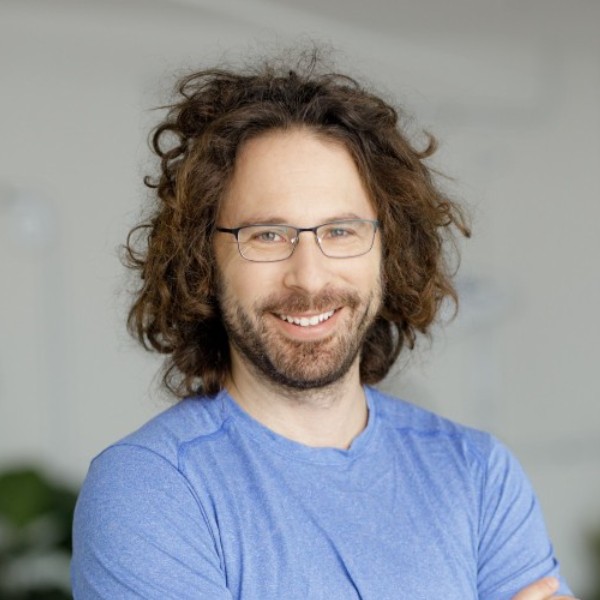
Itamar Friedman, co-founder and CEO of Qodo

Itamar Friedman, co-founder & CEO of Qodo (formerly CodiumAI)

The Story

Building the referee for AI's code

Most of the AI industry is obsessed with generation - writing more code, faster. Itamar Friedman is working the other side of the problem. His company, Qodo, checks the work.

In March 2026, Qodo closed a $70 million Series B led by Qumra Capital, pushing the company's total funding to roughly $120 million. The round drew in enterprise-software specialists and a pair of notable angels: Peter Welinder of OpenAI and Clara Shih of Meta. For a company founded in 2022, it was a fast climb - and a clear signal that the market was starting to worry about the same thing Friedman had been warning about for years.

The worry is simple to state. AI assistants now write a large and growing share of the code inside modern software. Someone still has to confirm that the code is correct, secure, and consistent with how a given company already builds things. Friedman's argument is that the tools built to generate code are the wrong tools to judge it. "Generating systems and verifying systems require very different approaches," he says. "Code generation companies are largely built around LLMs. But for code quality and governance, LLMs alone aren't enough."

That distinction is the whole company. Qodo builds AI agents that review, test, and govern code rather than produce it. Its multi-agent review system, Qodo 2.0, learns an organization's standards and past decisions, then applies them to new code. It ranked first on Martian's Code Review Bench with a 64.3% score, and it now runs inside enterprises including Nvidia, Walmart, Red Hat, Intuit, Texas Instruments and Monday.com.

Friedman keeps returning to a word that sounds almost philosophical for a developer-tools company: context. "Quality is subjective," he says. "It depends on organizational standards, past decisions, and tribal knowledge. An LLM can't fully understand that context." The pitch to a bank or a retailer is not that Qodo writes better code. It is that Qodo remembers what "good" means at that specific company, and holds every change to it.

He frames the moment as a shift in what AI is for. "Every year has had a defining moment - from Copilot to ChatGPT to full task automation," he told TechCrunch. "Now we're entering a new phase: moving from stateless AI to stateful systems - from intelligence to 'artificial wisdom.'" Intelligence generates. Wisdom knows whether it should. Qodo, in his telling, is infrastructure for the second thing.
By The Numbers
$120M
Total Raised
$70M
Series B (2026)
2
Companies Founded
#1
Code Review Bench
Funding Trajectory

From a seed round to $120M

2022 Seed
$10M
2023 Series A
$40M
2026 Series B
$70M
Cumulative
~$120M
"For me, anything short of making a huge impact on the world is a failure." — Itamar Friedman, on why he started over after Alibaba
The Long Road

Windows, QR codes, and a decade of machine vision

Friedman's origin story has a small joke buried in it. As a teenager in Israel, a teacher asked the class something about "Windows." He looked at the actual windows in the room. The confusion, as he tells it, kicked off a fascination with computers that led him to build his high school's network and start writing web applications in the 1990s.

He studied at the Technion - Israel Institute of Technology, earning a BSc and then an MSc in Electrical Engineering, summa cum laude, focused on machine learning and computer vision. Early on he worked at chipmaker Mellanox on design and verification - an unglamorous discipline about making sure complex systems actually do what they claim, a theme that would resurface two decades later.

In 2012 he co-founded Visualead as CTO. The company built machine-vision technology and visual QR codes for mobile devices, and it grew fastest in Asia. In 2016, Alibaba Group acquired it. Friedman stayed on for about four and a half years, eventually serving as Director of Machine Vision and head of Alibaba's machine vision lab in Israel, working within the company's DAMO Academy on foundation models.

He is candid that the exit felt incomplete. The returns were good, but the acquisition was a detour from the original ambition. That restlessness is what pushed him back to zero in 2022 to co-found CodiumAI, later renamed Qodo. His advice to founders who try to do everything at once comes from lived experience juggling a master's degree and a startup: "Choose one and run with it fast, deep."

Career Timeline

The path to Qodo

1990s

A network in high school

Teaches himself computing, builds his school's network, and writes early web applications.

Technion

BSc & MSc, summa cum laude

Electrical Engineering with a focus on machine learning and computer vision.

2000s

Mellanox Technologies

Works on chip design and verification - systems that must do exactly what they claim.

2012

Co-founds Visualead

CTO of a machine-vision and visual QR-code startup that scales across Asia.

2016

Acquired by Alibaba

Joins Alibaba, later leading its machine vision work in Israel within DAMO Academy.

2022

Founds CodiumAI

Raises a $10M seed round before the product has a single line of code.

2024

Becomes Qodo

Rebrands alongside a $40M Series A, expanding into a full code integrity platform.

2026

$70M Series B

Led by Qumra Capital, bringing total funding to roughly $120M.

In His Words

On code, culture, and wisdom

The era of unverified AI software development is over.

Quality is subjective. It depends on organizational standards, past decisions, and tribal knowledge.

We're moving from stateless AI to stateful systems - from intelligence to artificial wisdom.

Generating systems and verifying systems require very different approaches.

Choose one and run with it fast, deep.

Culture drinks execution for sport.

Off The Clock

A skipper who reads science fiction

Friedman is a licensed sailing skipper, and he talks about the water the way some founders talk about scaling teams. Preparation, reading conditions, trusting a crew, moving before the wind shifts - he draws the parallels between sailing and running a company on purpose, not as a metaphor he stumbled into.

His reading leans toward hard science fiction. He has cited AI 2041 and The Three-Body Problem as the kind of books that shape how he thinks about where AI is taking humanity, which helps explain why a developer-tools CEO reaches for a phrase like "artificial wisdom." He also favors a planning habit he calls ABZ: know where you are now (A), know your next move (B), and keep the endgame (Z) in view. It is a small framework for navigating a lot of uncertainty.

Fun FactHe raised his first $10M for Qodo before the product had any code written.
On The WaterA licensed skipper who compares crewing a boat to running a startup.
Reading ListReaches for hard sci-fi like The Three-Body Problem to think about AI's future.
HandleHis GitHub username is "coditamar."
What's Next

Software you can trust by default

The endgame Friedman describes is a world where AI-generated software can be deployed safely without a person babysitting every line. He pictures a product manager at a large retailer asking for an AI-built feature and shipping it with confidence, because a system of record has already verified it against the company's standards, tests, and intent.

That "system of record for code quality and trust" is how he frames Qodo's ambition as enterprises move from experimenting with AI to putting it in mission-critical places. The $70 million will go toward expanding enterprise operations, growing the engineering and product teams, hiring in Tel Aviv, and building more of the governance tooling that the thesis depends on.

FAQ

Common questions

Who is Itamar Friedman?

He is an Israeli technology entrepreneur and machine learning engineer, the co-founder and CEO of Qodo (formerly CodiumAI), an AI platform for code review, testing, and governance.

What company did he sell to Alibaba?

He co-founded Visualead, a machine-vision and visual QR-code startup, which Alibaba Group acquired. He then spent several years leading Alibaba's machine vision work in Israel.

How much has Qodo raised?

Qodo has raised roughly $120 million in total, including a $70 million Series B led by Qumra Capital announced in March 2026.

What does Qodo do?

Qodo builds AI agents that review, test, and govern code, helping enterprises verify that AI-generated software meets their quality standards, security requirements, and intent.

Where did he study?

He earned BSc and MSc degrees in Electrical Engineering from the Technion - Israel Institute of Technology, graduating summa cum laude with a focus on machine learning and computer vision.

Find & Follow

Links

Website
qodo.ai
LinkedIn
in/itamarf
Twitter / X
@itamar_mar
GitHub
coditamar
Google Scholar
Publications
News
TechCrunch: $70M Series B
Blog
Artificial Wisdom
Interview
The founder's journey
Podcast
Not Another CEO
Share on LinkedIn Share on X Share on Facebook Instagram