Tomer Levy was trying so hard to keep a plane in the middle of a runway that he kept steering it from side to side. Learning to fly, he watched the ground immediately in front of him and corrected, then corrected again. His instructor offered a less busy solution: look at the white markings at the far end. Give your eyes somewhere useful to go.
Years later, in December 2014, Levy turned the memory into an observation about running a startup. Changing priorities can feel like excellent management from the manager’s chair. For the engineers receiving the changes, it can mean repeatedly abandoning one train of thought to board another. A founder can make an impressive number of decisions while preventing anything from getting finished.
Levy admitted that letting a team continue with something below his immediate top priority had felt counterintuitive. The flying lesson gave him a reason to tolerate the discomfort. Sometimes the helpful thing was to stop fiddling with the controls.
Three brothers, three entrepreneurs
Business was familiar territory long before Logz.io. Levy grew up with a father who owned a business and an older brother who was an entrepreneur. Conversation at home kept returning to business and technology. By his account in 2022, all three brothers had become entrepreneurs; two were CEOs, and another had helped found a company that was sold.
That upbringing supplied a habit of looking for gaps someone might be paid to fill. It also helps explain why his career reads as a succession of engineering problems pursued into businesses. The market was something to examine, rather than a distant institution that occasionally interrupted the coding.
His preparation combined a computer science degree with an MBA from Tel Aviv University. At Check Point Software, where he spent six years, he worked on the Intrusion Prevention System product from concept to market. The experience put him close to the work of turning an engineering project into something customers would buy and use, before he had a startup of his own to run.
Before Logz.io, he co-founded Intigua and served as its chief technology officer. Its enterprise container technology brought him close to a problem that would outlast that particular company: understanding what software was doing once it was running. A system can be clever enough to impress its builders and still be thoroughly uncooperative when asked why it has stopped working.
A second company, with the door open
Levy’s experience at Intigua also changed his view of open source. He had seen it disrupt an existing business. When considering his next company, he wanted to work with that movement. There is a certain economy in learning from the thing that has made your previous job more difficult.
In a later discussion of Logz.io’s origins, he described finding open-source tools he wanted developers everywhere to be able to use. Running and maintaining those tools was the obstacle. The opening for a business lay in taking care of the machinery around them.
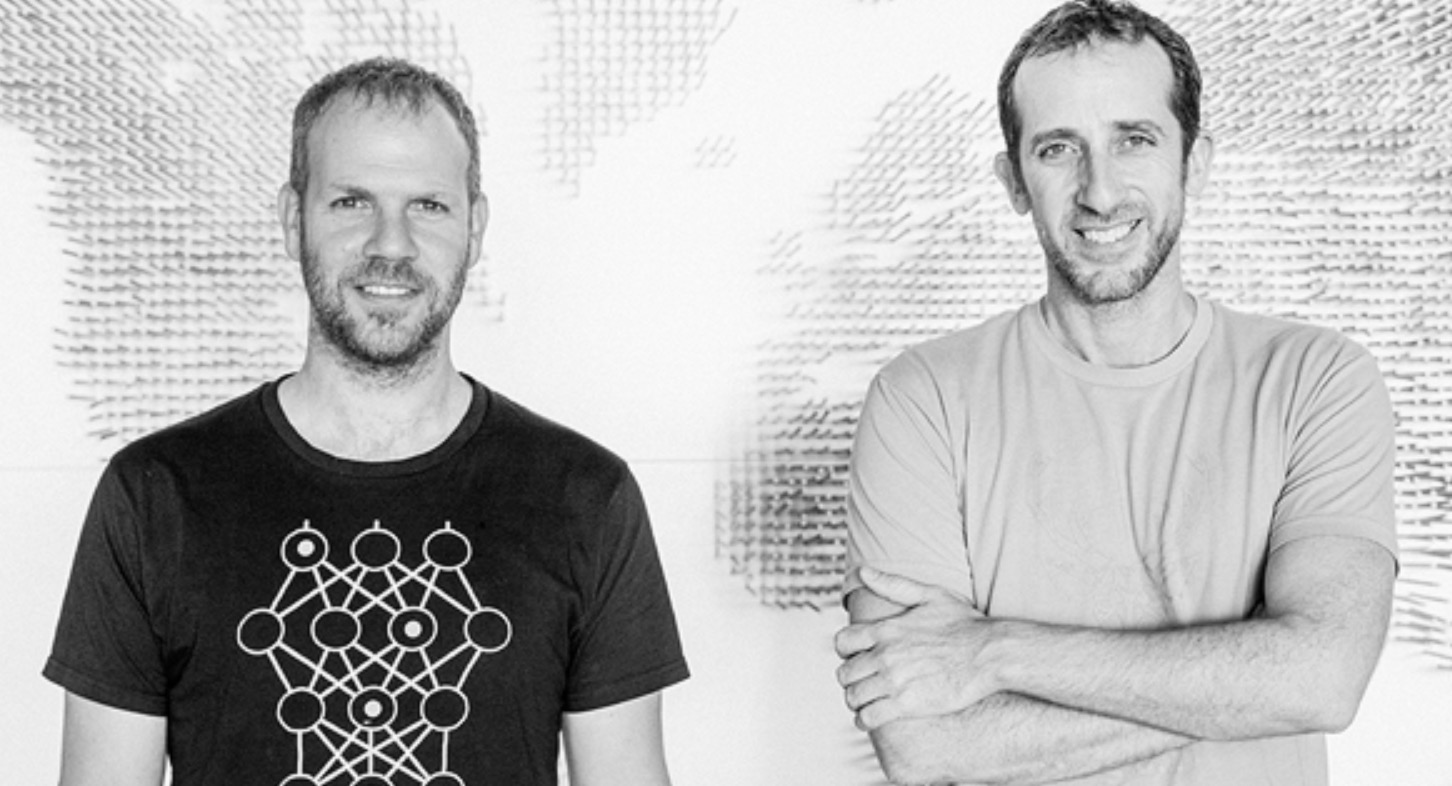
He and Asaf Yigal founded Logz.io in 2014. The company launched log management in 2015, initially around Elasticsearch, Logstash and Kibana, collectively known as the ELK Stack. Logs are the records software leaves of its activity. They can explain a failure, provided someone can collect, search and interpret them without acquiring a second occupation in database maintenance.
The division of labour was the proposition: developers could use familiar open-source tools while Logz.io managed the service. Over time, the company added metrics, traces and security capabilities. Each addition widened the picture available to an engineer investigating a problem.
By May 2019, Levy was announcing a $52 million Series D led by General Catalyst. His announcement described 700 customers and a team of 175. Those are dated milestones in the company’s development, rather than present-day headcounts. They show how far the idea had travelled from two founders’ frustration with managing logs.
Series D led by General Catalyst, announced alongside 700 customers and a 175-person team.
When the licence became the argument
In January 2021, the open-source commitment became a public dispute. Elastic changed the licensing of new Elasticsearch and Kibana releases away from Apache 2.0. Levy objected, arguing that organisations needed to be able to rely on the foundations on which they had built their software.
He had previously admired Elastic’s people and business. That made the criticism personal in the professional sense: the disappointment of someone who had expected a particular kind of relationship to continue. He challenged the company to compete through the quality of its cloud service. The disagreement put business incentives and community expectations in the same room, where they did very little to improve one another’s manners.
Levy proposed working with other organisations on an open distribution. Two days later, he described responses from businesses as different as Fortune 100 companies and a small IT shop in Brazil. He also disclosed collaboration with AWS toward a single distribution. The practical response was taking shape alongside the argument.
In April, he announced Logz.io’s support for OpenSearch, the fork of the Elasticsearch and Kibana codebases. He described work with AWS engineering teams on changes and project planning. For Levy, an open-source position had become a product and partnership decision with consequences for the company he ran.
- 2014Levy and Yigal found Logz.io.
- 2021Logz.io backs OpenSearch after the licensing dispute.
- 2024Levy introduces the AI Agent beta.
- 2026OrionIQ becomes available to all Logz.io customers.
The bill arrives with the dashboard
Another recurring irritation was cost. By June 2023, Levy was explaining why looking at logs alone could only tell part of the story, and why collecting ever more telemetry could leave customers with an expensive computing footprint. More information brought its own invoice.
Open 360 brought log, metric and trace analysis together. His argument included paying attention to low-value data, converting logs into metrics where appropriate, and using different storage approaches. It was an unusually unromantic ambition for a technology business: help customers be more selective about what they keep.
He was similarly blunt when introducing App 360 in December 2023. Traditional application performance management had been expensive, intrusive and laborious in his experience as a software engineer. App 360 aimed to connect information from applications, infrastructure and Kubernetes in a shared view, using OpenTelemetry and open source.
These decisions reveal a consistent preference in his public work. He keeps returning to the burden surrounding a tool: deploying it, paying for it, maintaining it, and eventually trying to leave it. Features have an afterlife in someone else’s working day. Levy seems particularly interested in the bill for that afterlife.
An engineer changes his mind about AI
His interest in automating investigation predates the current wave of generative AI. At the 2020 OpenObservability conference, he discussed machine learning, structured telemetry and a future in which engineers would teach systems to identify problems. The ambition was already to move some routine analytical work away from people.
When introducing Logz.io’s AI Agent beta in October 2024, he acknowledged initial scepticism about the newer approach. Seeing correlations and insights changed his assessment. That admission matters more than a perfectly straight line drawn backwards through every product announcement. Engineers are allowed to need convincing, including engineers with a company to sell.
“I was skeptical of this concept at first”
Tomer Levy, introducing the AI Agent, October 2024
The beta moved beyond asking questions in natural language toward automated investigation of root causes. Levy also acknowledged that missing data or context could produce an imperfect response. His expectation was that multiple agents would eventually cooperate, resembling people with different technical specialities working through an incident.
By June 2025, he was discussing observability designed for AI agents as users of the platform. That changes an old software assumption. A dashboard is usually arranged for a person to inspect; an agent needs access to information it can investigate and use. The interface starts to serve a different reader.
His October 2025 announcements included dashboard analysis by agents, custom playbooks and a Model Context Protocol server. The latter made observability data accessible from AI development environments. The movement was toward letting engineers work with operational information in the tools they were already using.
The investigation gets a colleague
On April 9, 2026, Levy announced that OrionIQ was available to all Logz.io customers following six months in beta with dozens of customers. He set out a straightforward tension: software development was becoming more automated, while investigating production failures still required people to assemble context by hand.
OrionIQ was designed to combine telemetry with organisational context and playbooks so agents could investigate incidents and take actions. The aim was to recover hours spent reconstructing what had happened. The old frustration had acquired a new technical answer.
A conceptual view of OrionIQ’s intended workflow, rather than a performance benchmark.
The subsequent releases make that intention more concrete. In May 2026, Logz.io added coordination between specialised agents and an incident-triage agent that follows operational playbooks. In August, the company announced connections to more than 600 platforms, extending the information available beyond telemetry into the systems where teams keep business and engineering context.
October’s release notes describe investigation instructions, chosen integrations and recipients configured directly from an alert. Such details are less theatrical than a prediction about autonomous operations. They are also where the prediction has to earn its keep: an actual team deciding what an agent should examine and where its findings should go.
Levy’s work keeps returning to the same question: how much of an engineer’s attention does the surrounding machinery deserve? From hosted logs to open-source infrastructure to agents following playbooks, his answers have changed with the available tools. The question has proved durable.
The student on the runway wanted to correct everything immediately. The founder learned to give the team a destination and allow the work to continue. Years of building software have furnished him with another version of that lesson: even a useful instrument can demand too much looking after. There is work to do beyond watching the instruments.