The Story
The Man Who Reads Founders, Not Spreadsheets
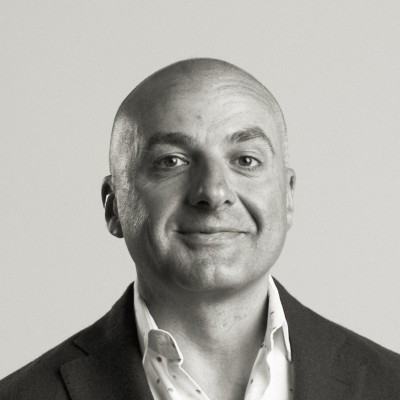
In 2020, when Bogomil Balkansky joined Sequoia Capital as a Partner, he didn't bring a model or a thesis. He brought two decades of scar tissue: the kind you earn shipping product at Siebel when CRM was still a radical idea, grinding through eight years at VMware turning server virtualization from a niche curiosity into the backbone of every datacenter on earth, and surviving the particular chaos of a startup bought mid-flight by Google for nearly $400 million.
His investment process is unusual. He calls himself a "feeler." When a founder walks in, he isn't running discount cash flows or benchmarking ARR multiples. He's pattern-matching against every operator he has ever hired, every bet he has made, every iconoclast he ever dismissed too soon. The spreadsheet comes later, if at all. The gut comes first.
This is not a philosophy born in a lecture hall. It's built from watching what happens when you bet on the obvious - you get the obvious outcome. Bogomil's edge is a very specific intuition: he can smell the founders that the crowd hasn't caught up to yet.
Great entrepreneurs are first ignored, they're on the margin, they're not popular - then when they start a company with some seemingly crazy idea, they're really ridiculed - and then, they finally win.
- Bogomil Balkansky
Origin
Born Behind the Curtain, Built for Silicon Valley
Bulgaria, late 1980s. The wall is still up and Bogomil Balkansky is finishing high school in a country where leaving - really leaving, not just to a neighboring socialist state - isn't an option. Then 1989 arrives. The wall comes down. And Bogomil is on a plane to the United States.
He lands at Cornell, studies mathematics. Not computer science, not business - mathematics. The discipline of proof, of building from first principles, of knowing when an argument holds and when it only looks like it does. It's the kind of training that doesn't show up on a pitch deck but surfaces every time he sits across a table from a founder trying to sell him a future.
From Cornell, Stanford GSB. From Stanford, McKinsey. From McKinsey, into the teeth of the early enterprise software world - Siebel Systems, where Tom Siebel was inventing the idea of CRM before the acronym existed. Then CrossWeave, a smaller bet on application integration that showed him what building without a safety net actually feels like.
He would go on to spend more than twenty years in Silicon Valley before sitting on the other side of the table at Sequoia. But those first years - leaving Bulgaria with almost nothing, arriving in America on the far side of a language barrier, doing mathematics for sport - shaped the investor he became more than anything that followed.
VMware Years
Operator Era
Eight Years, 10x Revenue, 295,000 New Customers
If you want to understand why Bogomil Balkansky is credible with enterprise founders in a way that most investors aren't, start with the VMware chapter. He joined as the company was turning an interesting idea - running multiple operating systems on a single physical server - into an industry standard. He stayed for eight years as Senior Vice President, building the server virtualization product line into something that sat in almost every serious datacenter in the world.
The numbers are clean: revenue grew 10x. Customers went from 5,000 to 300,000. The product went from a clever tool deployed by forward-thinking IT departments to a default assumption. When a founder pitches him on cloud infrastructure or developer tooling today, he isn't nodding politely. He has been the buyer, the builder, the SVP making the call at scale. He knows what sticks and what doesn't because he lived the procurement side of every deal he now funds.
The VMware years also gave him something less quantifiable - a network so deep in enterprise technology that almost every investment he has made at Sequoia traces back to someone he already knew, or someone recommended by someone he already knew. Cold outreach from founders he's never heard of doesn't land often. His deals flow through trust built across twenty years of operator relationships.
Investment Philosophy: The Four Filters
Iconoclastic Thinking
Not contrarian for its own sake - founders who have a specific, well-reasoned reason to ignore the conventional playbook.
Courage to Break Paradigms
The will to keep building when the crowd, the press, and sometimes the data all say stop.
Defiance of Common Wisdom
Common wisdom compounds losers. The best investments are the ones that made other VCs nervous.
Network Trust Over Cold Outreach
Every Sequoia investment he has made started with someone he already knew or a recommendation from a trusted friend.
The Portfolio
Companies That Were Ignored, Then Won
Bogomil's bets at Sequoia aren't random. They cluster around the infrastructure layer of the next wave - security, observability, developer workflows, open source monetization. These are spaces where his VMware and Google muscle memory is most useful: he knows what a Fortune 500 actually buys and why, and he knows what makes an infrastructure product sticky enough to outlast the hype cycle.
Vanta
Compliance & Security
Wiz
Cloud Security
Temporal
Developer Infrastructure
Chainguard
Supply Chain Security
Pydantic
Developer Tools / AI
Mutiny
Revenue Infrastructure
Cyera Security
Data Security
MongoDB
Database
Traversal AI
Observability
When Vanta was first pitching automated compliance, the category barely had a name. When Chainguard started, software supply chain security was an academic concern. Bogomil's track record suggests a pattern: he finds the problem before the rest of the market has finished arguing about whether it's real.
Creativity loves constraints, and necessity is a powerful teacher and motivator!
- Bogomil Balkansky
Google & Bebop
The $397M Interlude
Between VMware and Sequoia, there was Bebop. A startup, a bet, and then a $397 million acquisition by Google in 2015. Bogomil was an early employee. He stayed through the integration, leading go-to-market for Google Cloud's Recruiting Solutions until 2018.
The Google years gave him something operators rarely get: a view of what enterprise sales looks like at global scale, inside the machine. Google Cloud in 2015-2018 was still learning how to sell to enterprises - how to translate technical advantage into commercial motion. Bogomil was inside that learning process. It's the kind of experience that makes him a different kind of board member than a partner who has only ever written checks.
He joined Sequoia in January 2020 - three months before the world changed. The best companies, he would later observe, are started during downturns. His timing was either impeccable or ironic, depending on how you look at it.
The Bridge Builder
Bulgaria & Beyond
Silicon Valley's Bulgarian Ambassador
Bogomil sits at an intersection most investors never occupy: Silicon Valley at its highest level and Eastern Europe's emerging tech ecosystem. He served on the board of Telerik, the company that defined what a successful Bulgarian technology startup could look like. When Telerik was acquired by Progress Software in 2014 for $262 million, it became a proof point for an entire generation of Bulgarian founders.
His position in both worlds is deliberate. He hosts Sequoia's Open Source Fellows program, partly because he believes in open source as an infrastructure foundation and partly because it is a natural way to find the kind of builders who aren't yet on the mainstream VC radar. The program surfaces engineers before they become founders - the exact moment in the arc when his pattern recognition is most valuable.
The America for Bulgaria Foundation calls him Silicon Valley's most influential Bulgarian. That's a title with real weight: not just because of his position at Sequoia, but because of the number of founders he has introduced, the deals he has surfaced, and the ecosystem he has helped legitimize through two decades of showing up on both sides of the Atlantic.
I'm looking for iconoclastic thinking, the courage to break paradigms, defiance of common wisdom.
- Bogomil Balkansky, on what he seeks in founders
History shows that some of the best companies are started during downturns and recessions.
- Bogomil Balkansky
Legal tech is shaping up to be a very interesting and a very large software market.
- Bogomil Balkansky, January 2026
All my investments are either from people I know from previous companies or recommendations from trusted friends.
- Bogomil Balkansky, on deal sourcing
What Makes Him Different
The Feeler in a Room Full of Analysts
Most venture capital is pattern-matched by spreadsheet. There's a template: ARR growth, net dollar retention, payback periods, comparable multiples. The inputs are clean. The model spits out a signal. The partner presents to the partnership.
Bogomil's process is noisier and, he would argue, more honest. He describes himself as a "feeler" - someone who makes investment decisions primarily through intuition built from operator experience. He has sat in enough boardrooms, run enough product reviews, hired enough engineers, and killed enough features to know what it feels like when a company is really working versus when it's working on paper.
This isn't anti-intellectual. It's a different kind of intelligence - the kind that took him from a mathematics degree at Cornell to one of the most demanding seats in venture capital. His analytical rigor comes out in how he stress-tests founder assumptions, not in how he builds his own financial models. He makes the founder do the work. He reads the response.
His nickname at Sequoia, among the founders who know him, might as well be "Bogie" - the handle he uses on X. Warm. Direct. Distinctly not what you'd expect from a partner at the firm that backed Apple, Google, and Oracle. The human texture of his relationships is the infrastructure his portfolio runs on.