Toby Hughes began his career in sound engineering. Years later, he was explaining why a person’s bank accounts, investments and financial plans ought to be visible together. Later still, his work involved a television company whose credits included The Baby Club. A career counsellor might have requested a more orderly progression. Hughes kept finding businesses to build.
The route becomes easier to follow when you look at the work between the job titles. There are production companies, a financial dashboard, investors, technical colleagues and television makers. Much of it is rooted in Bristol. Moneyhub made his name in financial technology; Wonderborn carried his career into family entertainment. The distance between those businesses is part of what makes him interesting.
Before the dashboard, a sound desk
Hughes’s early working life was in sound engineering, followed by small production and television audio service companies. That background puts media near the beginning of his story. His later involvement in children’s television brought him back to an industry he had encountered from the production side, with a different set of responsibilities.
By the time he appeared as Moneyhub’s CEO at FinovateEurope in 2015, he had accumulated more than a decade of experience in digital marketing and technological innovation in financial services. The financial software venture therefore had a longer working history behind it than an app launch alone could convey. Industry labels are useful for conference badges. They are less reliable as complete biographies.
One financial life, several disconnected accounts
The Moneyhub project’s roots date to 2011; the app launched in summer 2013. Hughes’s starting complaint was recognisable: existing products did not give him and his colleagues the complete view they wanted. A person might have money in several places, with each institution providing its own account of the world. Adding the accounts together remained somebody else’s problem.
Moneyhub brought those fragments into one view. Its purpose included tracking spending, budgeting and planning ahead. The point of collecting information was to help someone use it. A balance could be read alongside a goal, a commitment alongside an ambition. That sounds modest until you consider how much ordinary financial administration consists of opening another tab.
“No-one had yet developed a product that we’d use ourselves.”
Toby Hughes, 2015
A 2015 policy case study described a business built around customers choosing what to share and when to seek help. It presented aggregation as the first step toward making advice and support easier to access. Giving somebody a usable overview could also spare them the task of repeatedly reconstructing their circumstances for different organisations.
That thinking also appeared in Momentum Financial Technology’s response to the competition regulator’s banking investigation in 2016. The business supported open banking interfaces and described an unmet need for tools that helped people manage money and plan for the future. The product question had become an industry question: how should financial information move between institutions and the people it describes?
The acquisition that kept the work going
In 2014, YourWealth.co.uk won Best of Show at FinovateEurope. Moneyhub belonged to the same business. In May, an acquisition by Momentum UK was announced; the deal included Blue Speck Financial, YourWealth.co.uk and the Money Hub app. SETsquared records the sale in July. The announcement and the sale belong to the same year, at different points in the transaction.
Momentum UK was part of South African financial services group MMI Holdings. For Hughes, the transaction offered a way to accelerate development. The team had been raising a Series A when the acquisition intervened. A familiar startup milestone gave way to a different arrangement: continuing the work with the resources of a larger owner.
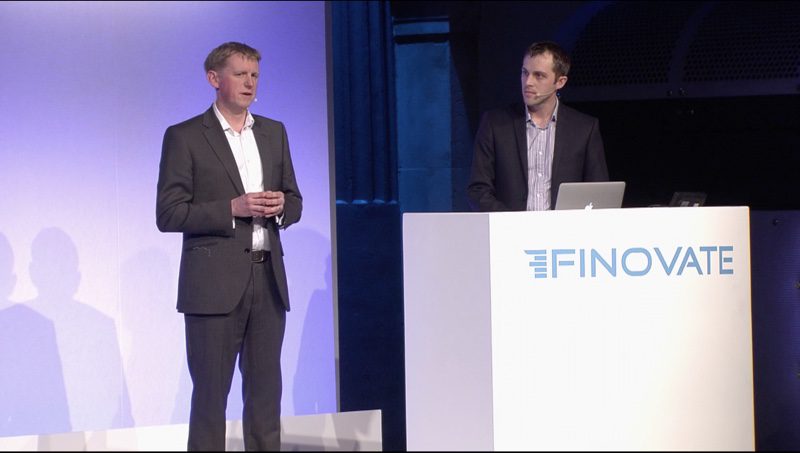
Hughes and CTO Dave Tonge returned to the Finovate stage in 2015. The demonstration’s company profile listed 40 employees and more than £3 billion in consumer assets tracked daily. Those assets were information flowing through the platform, rather than company revenue or money belonging to Hughes. The distinction matters when a large number starts doing the work of a biography.
Consumer assets tracked daily by the platform at that point in its development.
That September, Samantha Seaton joined as commercial director after leading financial forecasting business eValue. Her appointment added another experienced financial technology executive to the team around Hughes. The story was acquiring the less photogenic ingredients of growth: commercial leadership, additional infrastructure and enough organisational capacity to support the product.
Bristol, with a return ticket to London
For Hughes, Bristol had practical advantages. In 2015 he described development costs there as roughly half those in London, while the capital remained reachable for meetings. He also pointed to the South West’s creative and technical talent. These were his reasons at the time, and they make a useful corrective to the idea that a founder’s location must be a statement of identity.
He had a more entertaining proposal for improving the arrangement. Asked which technology he wished he could have developed, he chose Hyperloop, imagining Bristol to London in about half an hour. Even an ambitious transport system could be assessed by whether it made the meeting easier to reach.
His participation in the OpenCo event in 2014 gave local people a chance to hear about Moneyhub’s work. He described a responsibility to contribute to the surrounding technology community. SETsquared mattered from the other direction: access to experienced people gave him someone to discuss the challenges of building a business with. The public founder and the founder who needs advice can occupy the same chair.
“I feel that it is important to put something back.”
Toby Hughes, on taking part in OpenCo, 2014
From a minority stake to the television credits
In 2017, Hughes took a minority stake in Three Arrows Media and joined its board as a non-executive director. The producer had been established in 2015 by Jon Hancock and David Hallam. Its developing slate included Treasure Champs, commissioned for CBeebies. Hughes brought experience in financing and growing businesses to a team with its own television expertise.
The relationship grew. Wonderborn acquired Three Arrows in 2020, when Hughes was Wonderborn’s group CEO. Hancock and Hallam stayed with the business, which continued under the Three Arrows name. By then its co-production credits included The Baby Club and Andy and the Band. The transaction preserved an existing creative operation within a wider group.

Hughes’s stated intention was to invest in Three Arrows’ capacity to create children’s and family content. That is a different contribution from devising a programme or directing an episode. The distinction gives the partnership its shape: experienced programme makers working within a business that could support more of their work. Television involves plenty of imagination, followed by a considerable amount of organisation.
The business beyond the programme
Wonderborn Distribution, founded by Hughes in 2018, added another part of that organisation. Its catalogue represents both third-party programmes and its own originals, serving mainstream and faith-based broadcasters. Developing something worth watching and getting it in front of an audience are separate jobs. A group involved in both has to attend to what happens after production ends.
The wider career includes board work in other technologies. Hughes joined cloud-rendering and power-management company YellowDog as a non-executive director in 2016. In November 2020, video technology company One Big Circle announced his appointment to its board. These roles extended beyond the Moneyhub and Wonderborn businesses through which his story is most readily told.
More recent company appointments keep the television connection visible. He became a director of Three Arrows Productions in December 2023 and of Andy and the Band Limited in August 2024. Paperwork lacks the charm of a programme credit, but it shows the responsibilities continuing behind the scenes. The same career can contain a demonstration stage, a production business and an appointment entered on a register.
A different way to keep score
Christian faith is an explicit part of Hughes’s account of business. In a 2023 speaking appearance, his interests included businesses that solve problems and provide a vehicle for sharing that faith. Wonderborn’s present studio work spans family, educational and faith-based entertainment. Its stated ambitions give the media chapter a purpose more specific than simply entering another market.
A December 2025 account of Hughes and Paul Taylor’s experiences at Wonderborn explored how faith sat alongside cash forecasting, contractual obligations and difficult decisions. It described purpose being tested in the daily running of a company. Their account makes room for conviction and for the mundane requirement that commitments still have to be met.
Across these chapters, Hughes has occupied different positions around the work: technician, founder, executive, investor and director. Moneyhub asked how to make a financial life easier to see. Wonderborn deals in stories made for audiences and communities. The change of channel is real. So is the accumulation of practical experience behind it, from making a production work to helping a business continue.
Follow the thread
Explore Hughes’s work, his public profile and the conversations behind this story.
Wonderborn Studios ↗Wonderborn Distribution: meet the team ↗Toby Hughes on LinkedIn ↗Watch the 2015 Moneyhub demonstration ↗The 2015 Moneyhub interview ↗The Three Arrows acquisition announcement ↗Hughes and Paul Taylor on faith and entrepreneurship ↗