Chase Gilbert managed to get married, raise $21 million for his company and buy his first home within ten days. Most people would have considered the seating plan sufficient work. The compressed calendar, described in a 2018 profile, offers a useful introduction to the Nashville entrepreneur: several consequential commitments, made almost at once, with the complications to be worked through afterward.
The company was Built. Its subject was construction finance, a business in which almost nothing happens simply because somebody is ready. A builder can finish work and still need documents checked, progress verified and a lender’s approval before the next portion of a loan is released. The building proceeds in stages. So does the money. Gilbert had found a career in the awkward space between them.
Today he is Built’s co-founder and CEO. The funding round that valued the business at $1.5 billion arrived in 2021. That is the sort of number that makes a company easy to describe at dinner. The more revealing story starts with an impatient developer, a restaurant connection and a willingness to ask banks some elementary questions.
A restaurant, then a question
Gilbert’s early career was in restaurants, as an owner-operator. He studied finance and international business at the University of Tennessee, where he participated in the Global Leadership Scholars Program and served on student leadership and advisory groups. The combination matters: his public biography begins with operating a business and learning the value of systems, well before it arrives at software for lenders.
Restaurants offer an unsentimental education in whether a process works. A system can be impressive on paper and still leave somebody waiting. Gilbert’s later work would concern a different set of participants and much larger sums, but the operating question remained familiar: how do you organize people whose individual tasks must add up to a result?
The immediate prompt for Built came from Andrew Sohr. While involved in multiple construction projects, Sohr encountered lenders with different application processes and a slow route to financing. He brought those frustrations into conversations with Gilbert and Scott Sohr, a serial entrepreneur whom Gilbert regarded as a mentor. Andrew supplied the irritation. The three founders supplied the investigation.
They talked with the people around the transaction: lenders, inspectors and others who helped a project move forward. Built was founded in 2014 and launched its platform in May 2015, after development and the security work necessary to serve banks. Its first year was spent with three bank customers. It was a modest beginning for a company attempting to rearrange how an industry paid its bills.
Start where the cheque starts
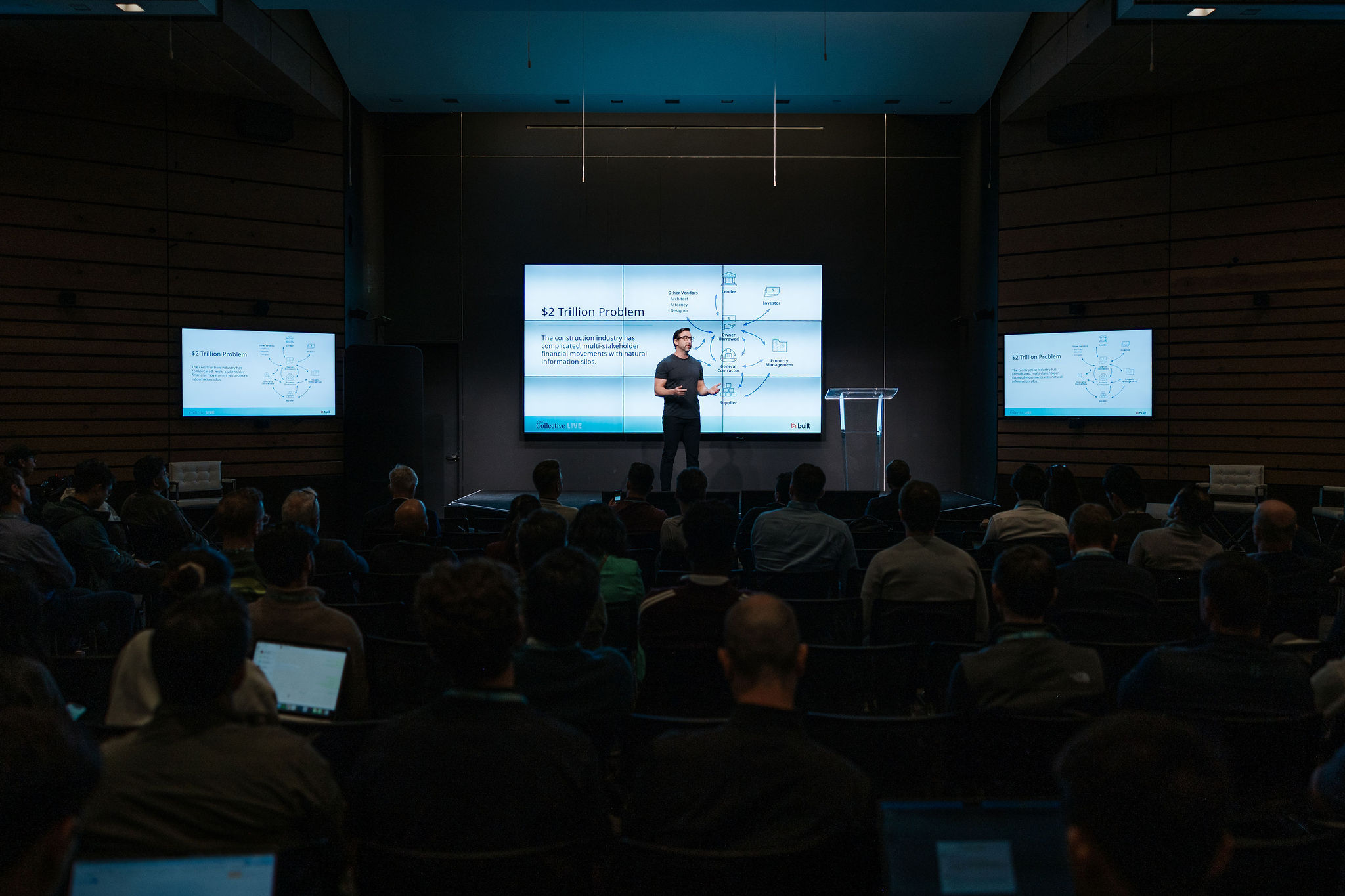
Construction has plenty of visible problems. Gilbert and his co-founders chose one that could hide in an inbox. In their account of the business, the movement of information and the movement of money had become entangled across organizations. A delay at one desk could turn into waiting elsewhere, even when everybody involved wanted the project to succeed.
The decision to begin with lenders gave Built a specific place to work. In Gilbert’s explanation, debt supplies the capital behind much of the industry. A lender’s requirements therefore travel through the project. Help the lender administer a loan and you reach borrowers and the other participants who need that administration to function. A bank might look like an unlikely starting point for construction software. It is quite a reasonable place to look for construction money.
Money moves through several hands.
Information has to keep up.
Built organized loan budgets, requests for disbursement, inspections and related information into software that participants could use together. The attraction was practical. People could work from a shared picture instead of reconstructing the project through messages and disconnected files. The loan’s next payment is called a draw, a small word that contains a considerable amount of checking.
In 2016, ten more banks became customers. The slow initial pace is part of the story. A product for a bank needs to survive scrutiny as well as a demonstration. Gilbert was selling into institutions that have reasons to be cautious, while promising a better experience to the people whose work their caution affects.
The spreadsheet has tenure
By 2018, Built’s lender clients were managing more than $15 billion in construction loans on the platform, and its customer base included over 50 banks. HousingWire recognized Gilbert with a Vanguard award that year. The $21 million Series A in 2017 had supplied resources to expand the team and product. These were institutional milestones, reached through a distinctly unglamorous task.
Asked about competition in 2021, Gilbert identified customized Excel spreadsheets as Built’s biggest competitor. The observation gives the work its proper scale. A spreadsheet already exists, its owner understands it, and replacing it means persuading people to change a routine they can perform without thinking. Software has to earn that inconvenience.
“Our biggest competitor remains customized Excel spreadsheets”
Chase Gilbert, 2021
There is a certain dignity to the spreadsheet in this account. It has been doing a job. Gilbert’s challenge was to make a connected system useful enough that the familiar workaround became less attractive. His career is easier to understand through that contest than through a valuation: a founder asking an established organization to reconsider a perfectly ordinary working day.
In January 2020, Built acquired lienwaivers.io and created a contractor-focused division led by its CEO, Geoff Arnold. The deal extended Built’s work into payment processes and lien waiver management. Its direction followed the original ambition to improve money movement beyond the lender’s desk. Each additional participant brought another set of documents, responsibilities and reasons to hesitate.
The investor he did not need
Gilbert’s approach to financing his own company supplies a more personal example of how he thinks about connections. In 2019, Built’s Series B was already oversubscribed. He was turning prospective investors away. Then Neil Underwood and Walker Forehand visited Nashville, and a dinner changed his calculation.
He found room for Canapi, which had not yet formally launched its fund. Recalling the decision in March 2026, Gilbert emphasized banking relationships and operating experience. Capital was available. Credibility with the people who buy bank software was harder to reproduce. Built became Canapi’s first investment.
His account is unusually specific about what an investor can contribute: introductions to senior bank executives, discussions about organizing sales and advice about assigning general managers to customer segments. The attraction was access to people who had dealt with comparable problems. Even with money offered from several directions, he wanted colleagues who understood the room he was trying to enter.
The September 2021 Series D brought $125 million, led by TCV, at a $1.5 billion valuation. TCV’s Woody Marshall joined the board. In 2023, Citi invested through its SPRINT initiative, adding a relationship with another financial institution. The scale had changed considerably from three banks. The requirement to convince financial institutions remained.
A colleague with an unusual name
When HousingWire asked Gilbert in 2022 which habit had made a crucial difference in his success, his answer was brief: “Stay focused on the customer.” It is easy advice to print and harder advice to keep applying once a company has investors, acquisitions and a growing collection of products competing for attention.
Built’s Draw Agent, launched in November 2025, put that principle into a new setting. The product applies AI to construction draw reviews, with different levels of authority: recommending actions, handling routine steps with people retaining decisions, or executing when configured policies are satisfied and flagging exceptions. The choices acknowledge that a lender needs control over how it adopts automation.
Gilbert shared a curious response from early adopters: they had given the agent human names. He seemed amused by the development, describing the product as becoming a teammate. After years spent connecting organizations through software, he was watching customers make the software itself a colleague. The office had acquired somebody new without needing another chair.
Built reported early-adopter reviews completed in as few as three minutes. Those were company-reported results from particular programs, with outcomes varying by lender and configuration. Review time also measures a different interval from the complete journey to funded money. The interesting question for Gilbert’s original project is what happens to the person waiting after the review finishes.
The next desk along
In April 2026, Gilbert brought in Jason Woods as chief financial officer, pointing to Woods’s experience across software, payments and marketplaces. His stated ambition was a durable platform for financing and managing real estate. The appointment connected a broad aspiration with an operating requirement: someone has to manage the company’s own financial machinery as its products expand.
By July, Built and its collaborators had described an AWS-based document intelligence engine designed to handle more than 250 document types. Its design includes routing uncertain results to human reviewers. The detail is a useful reminder of the world Gilbert chose: documents vary, context matters and a confident answer still needs to withstand examination.
The restaurant operator, the founder courting three banks and the CEO discussing AI belong to the same career. Across those stages, Gilbert has kept returning to coordination: who knows what, who needs to act and who is waiting. His company acquired a billion-dollar valuation along the way. The work still comes down to helping somebody get the next part of a project paid for.
Follow the conversation
More from Gilbert, plus interviews and reporting on the decisions along the way.