Founder Profile / Biocatalysis
Tina Boville
The biochemist teaching enzymes to build the amino acids nature never got around to making.
Co-founder & CEO, Aralez Bio · Berkeley, California
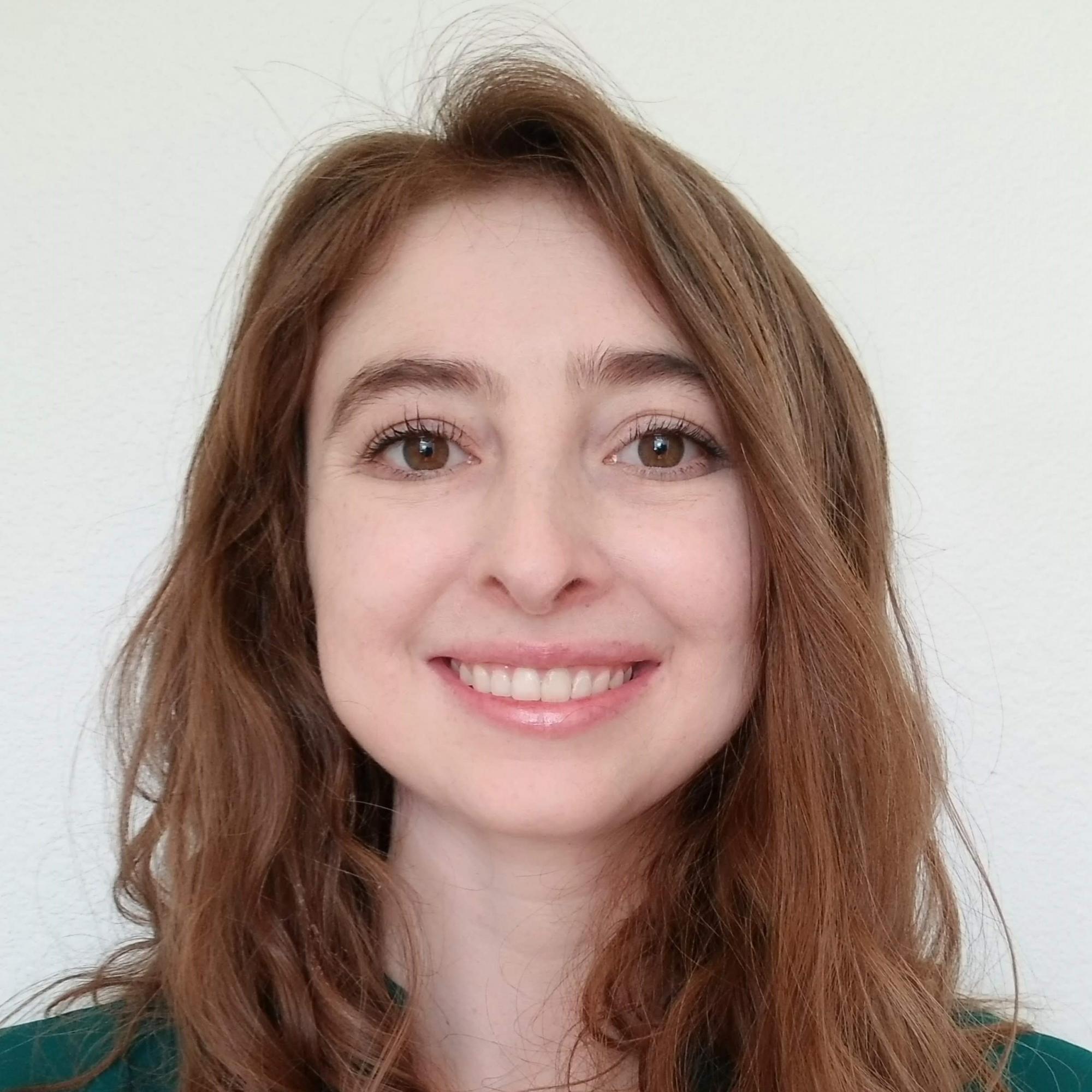
Christina "Tina" Boville, Ph.D.
The biochemist teaching enzymes to build the amino acids nature never got around to making.
Nature spent about four billion years settling on 20 amino acids. Tina Boville decided that number was too small - and built a company around fixing it.
In a lab in Berkeley, a set of engineered enzymes is quietly doing something that used to take chemists months of solvents, heat, and waste. They are stitching together noncanonical amino acids: molecular building blocks that do not exist in nature but turn up, increasingly, inside the medicines people take every day. The person behind that platform is Christina Boville, who goes by Tina, the co-founder and CEO of Aralez Bio.
Boville's pitch is disarmingly simple. "Nature was built using 20 amino acids, and now our enzymes can make hundreds more," she has said. "Drug ingredients normally take five to 10 steps to make, but we can do it in a single step." That single-step promise is the whole company in one sentence - and it is why some of the largest pharmaceutical companies in the world have become customers.
Boville traces her scientific ambition to an unlikely source: Anne McCaffrey's Dragonriders of Pern novels, science-fantasy stories she read growing up that planted a belief that science could engineer better lives. She calls herself "a huge nerd," and she means it as a compliment.
The path ran through the University of Colorado Boulder, where she studied molecular, cellular and developmental biology as an undergraduate, interned at Amgen's Boulder facility, and came back for a Ph.D. in biochemistry. Along the way she led the university's Graduate Teacher Program - "teaching was something I enjoyed, and thought was important," she has said - and worked with CU Green Labs on sustainability. "The work with CU Green Labs set me up on thinking about Green Chemistry," she recalled. That thread, chemistry that does more with less, never left her.
"Nature was built using 20 amino acids, and now our enzymes can make hundreds more."
Boville went to Caltech as a Resnick Prize Postdoctoral Fellow, joining the lab of Frances Arnold. In 2018, while Boville was there, Arnold won the Nobel Prize in Chemistry for pioneering directed evolution - the technique of breeding better enzymes the way a farmer breeds better crops, generation by generation. Boville was co-developing the enzyme platform that would become the heart of a company.
In 2019 she made the jump, co-founding Aralez Bio with fellow chemist David Romney and with Arnold herself. The company took the directed-evolution playbook and pointed it at one target: enzymes, including engineered tryptophan synthases, that can forge the difficult carbon-carbon bonds needed to build noncanonical amino acids in a single reaction, cleanly.
Boville likes to describe the products as "chemical LEGO" - modular pieces that chemists can snap into new molecules. The stakes are larger than they sound. Noncanonical amino acids show up in roughly 12% of the 200 best-selling medicines, including treatments for migraines and diabetes, and they matter in agriculture too. "We really need to make those chemicals, they're critical," she has said.
The efficiency gains are the part that makes pharmaceutical buyers pay attention. Boville's process has reduced manufacturing timelines from months to days, cut waste by up to 99%, and lowered energy use by about half. In one case a pharmaceutical company came to Aralez Bio with a compound that had taken nine months to manufacture. With the enzyme process, the same compound was produced overnight.
"Aralez Bio's platform is expanding the amino acid toolbox 1000-fold, creating building blocks that drive next-generation products."
Building a company asked Boville to learn a second craft on top of the first. "Running a business is a totally different set of skills," she has noted - a plain admission from someone used to the certainty of the bench. She has advised other founders to be fearless, play to their strengths, read the red flags honestly, and keep moving after mistakes.
The recognition followed. MIT Technology Review named her to its Innovators Under 35 in 2020. She became an Activate Fellow through Cyclotron Road and has been called a "Biotech Founder to Watch," while Aralez Bio collected early prizes from the Rothenberg Innovation Initiative and the Caltech Rocket Fund.
In October 2024 the company closed an oversubscribed $12 million Series A led by Spero Ventures, with Paladin Capital Group matching and a roster of investors including Good Growth Capital, Astia Ventures and others joining in. The money is aimed at expanding the portfolio of proprietary amino acids and standing up manufacturing that can reach tons per year. Aralez Bio also secured a federal Defense Production Act award, working with National Resilience, to build domestic supply chains for the amino-acid ingredients inside essential medicines - a reminder that this chemistry is now a matter of supply-chain resilience, not just lab elegance. In 2025 the company moved into a Berkeley facility built for that kind of scale.
There is a wink in the company's identity. The amino acids it makes are "noncanonical," and so, by design, is the way it thinks. Aralez Bio's stated values run to curiosity, candor, and excellence, and its vision reads like Boville's own throughline from those CU Green Labs days: "We envision a world where we continuously, sustainably, and affordably improve human life with biocatalysis."
For Boville, the ambition is broad and specific at once - to make, as she has put it, any amino acid imaginable, and to hand chemists a bigger box of building blocks than nature ever offered. Twenty was where life started. She is betting the interesting chemistry lies in everything that comes after.
She is the co-founder and CEO of Aralez Bio, a biochemist who builds engineered enzymes to make noncanonical amino acids for medicine and sustainable products.
Aralez Bio uses directed evolution to engineer enzymes that synthesize noncanonical amino acids in single-step reactions, producing over 100 amino acids with minimal waste.
She earned a B.A. and Ph.D. in biochemistry from the University of Colorado Boulder and did postdoctoral research at Caltech in Nobel laureate Frances Arnold's lab, where she co-developed Aralez Bio's platform.
She was named to MIT Technology Review's Innovators Under 35 (2020), is an Activate Fellow, and has been called a Biotech Founder to Watch.
The company closed an oversubscribed $12 million Series A in October 2024, led by Spero Ventures with Paladin Capital Group and others, and also received a federal Defense Production Act award.