A dragon is a demanding first specification for a scientist. It needs wings, presumably some manners, and rather more engineering than a summer internship can accommodate. As a child, Christina "Tina" Boville read Anne McCaffrey's Dragonriders of Pern, with its bioengineered creatures, and came away interested in the engineering. Biology, she thought, could be persuaded to make useful things. The usefulness mattered as much as the invention.
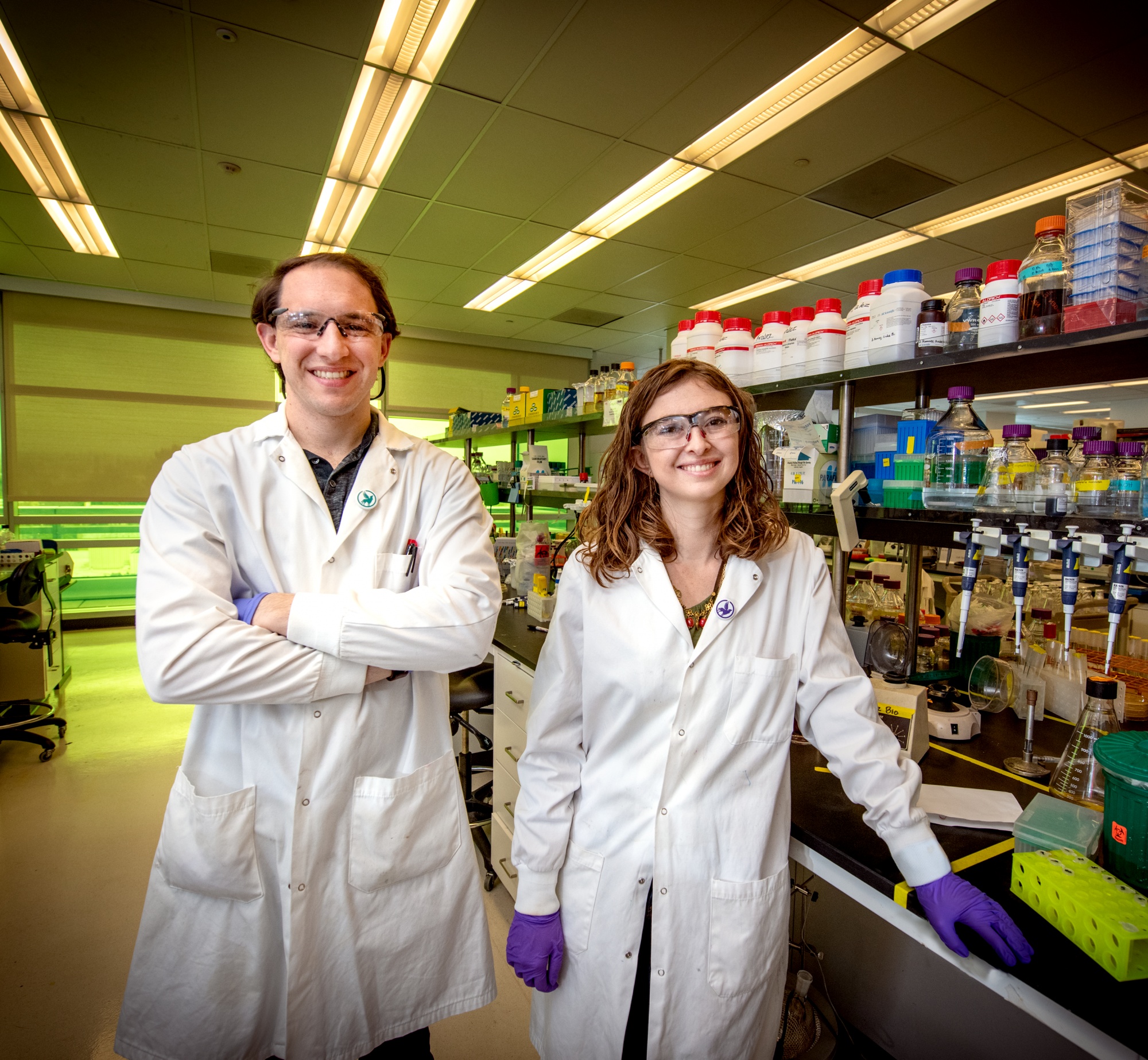
Years later, that childhood idea has a business address and a catalogue. Boville is co-founder and CEO of Aralez Bio, where engineered enzymes make noncanonical amino acids: molecular building blocks beyond the familiar set of twenty used to construct proteins. Her fellow founders are chemist David Romney and Caltech professor Frances Arnold. Their raw material is an unusually practical question: what could people build if the pieces were easier to obtain?
Boville has compared those pieces to LEGO. A builder needs different shapes for different jobs; a chemist does too. The comparison makes her work approachable without making it trivial. A missing brick can stop a design. A difficult molecular building block can do the same, with considerably more paperwork. The dragons have remained in the novels. The desire to extend biology's repertoire has found a workshop.
A recycling bin belongs in this story
At the University of Colorado Boulder, Boville studied molecular, cellular and developmental biology, then returned for a doctorate in biochemistry after working at Amgen. A summer internship there had stretched into a longer stay. She also enjoyed teaching. During her doctoral years, she became involved in the university's Graduate Teaching Program and took on a leadership role.
Another education happened around the laboratory's waste. Working with Kathryn Ramirez-Aguilar and CU Green Labs, Boville helped improve purchasing and disposal practices in the Jennie Smoly Caruthers Biotechnology Building. Pipette box recycling bins were among her contributions. In a career that would later involve sophisticated enzymes, a bin is a pleasingly legible achievement. You can point to it. People can use it before understanding a single reaction.
This work connected scientific practice with the resources it consumes. Reagents have to be bought; waste has to go somewhere. Better chemistry includes those consequences. The concern carried into her later work, where the manufacturing route would become part of the product's appeal. Her interest in useful biology was acquiring an additional condition: make the useful thing with less waste along the way.
Teaching an enzyme another trick
Boville moved to Caltech as a Resnick Prize Postdoctoral Fellow and joined Arnold's laboratory. Arnold's work on directed evolution earned the 2018 Nobel Prize in Chemistry. Directed evolution gives researchers a way to alter proteins, test the resulting variants and keep the changes that improve a desired activity. The method puts experimental selection to work on a problem chosen by a human.
In Arnold's lab, Boville and Romney worked on tryptophan synthase, an enzyme associated with making the amino acid tryptophan. They engineered it to accept different starting materials, widening the range of molecules it could produce. This is a subtle form of invention: change what a biological tool can work with, and the tool acquires new jobs.
A 2018 paper with Boville as first author examined making branched tryptophan analogues with an engineered enzyme. The researchers used structural and spectroscopic methods to understand its behaviour. Behind the friendly building-block analogy was a demanding programme of experiments, measurements and explanations. A catalogue entry begins long before anyone can click an order button.
By 2019, Boville, Romney and Arnold had formed Aralez Bio to commercialize the technology. Boville became CEO; Romney became CTO. A research programme now had to produce something other people would pay to use. The team carried its scientific relationship into a new arrangement, with Arnold as the academic co-founder and the two former postdocs running the company.
The second apprenticeship
Boville had expected a working life in a laboratory. Founding a company was outside the picture she had drawn for herself. The change brought a new collection of tasks: pricing, customers, finances, hiring and the problem of describing a technical advantage in terms someone else values. An enzyme does not prepare the profit-and-loss statement, however accomplished it may be.
In 2019 she entered the Cyclotron Road fellowship, now part of Activate's founder community. Its combination of startup training, mentoring and access to national laboratory resources gave her a setting in which to learn those tasks. She also recommended I-Corps training in customer discovery, which she had taken through the Resnick Institute's FLOW programme. Finding out what a customer needs became an experimental discipline of its own.
Her account of mentor Tom Boussie is especially revealing. She valued his habit of looking for opportunities to help fellows and thinking about their companies beyond a scheduled conversation. “A good mentor is always championing you,” she said. Entrepreneurship here looks less like solitary genius than a series of people making useful introductions, noticing problems and staying interested.
In 2020, Aralez Bio received a Rocket Fund award from Caltech. That same year, Boville was named one of MIT Technology Review's Innovators Under 35. The recognition marked an early stage in the company's development. It did not remove the everyday work of making the chemistry, the equipment and the business fit together.
“A good mentor is always championing you.”Tina Boville, on Activate mentor Tom Boussie
A Nobel office, one unofficial trophy
There is a particular hazard in working near a Nobel laureate: a visitor might assume everyone must be solemn. Boville supplied evidence to the contrary. With help from Arnold's assistant, Cheryl Nakashima, she hid a fake award among the trophies in Arnold's office. It was topped with a gold-painted poop emoji.
Boville expected the object to go undiscovered for months. Arnold spotted it immediately and laughed. There is something economical about the whole episode. One small object unsettles a room full of honours; the intended recipient needs no explanatory slide deck. The joke also makes sense of Boville's affection for a laboratory she remembers as supportive, with people helping one another and the resources they needed to work.
She has praised Arnold's focus on useful technology and her sense of humour. The combination allows scientific ambition and amusement to occupy the same room. Boville has brought a similar willingness to play into her own public appearances. Before a Halloween conference talk in 2022, she announced that she would wear a spooky costume and invited attendees to do likewise, offering an Aralez Bio sweatshirt for the best costume.
A conference audience can contemplate molecular synthesis while competing for a sweatshirt. The invitation does not ask anyone to take the research less seriously. It makes the people doing it a little easier to meet.
The auction-house school of management
When Boville discussed founder lessons with Alexandra de Paz for Northwestern's FoundHer Stories series in January 2024, the advice included an unexpectedly tangible item: buy laboratory equipment at auction. Early companies need instruments as well as ideas, and the bill for turning an empty room into a functioning laboratory can be considerable. An auction catalogue belongs in the founder's reading pile.
Her other recommendations were about learning quickly and choosing carefully. Begin customer discovery early. Understand the difference between the science itself and the value the company offers. Talk widely to potential customers, partners and advisers. Keep the business focused rather than pursuing too many possibilities at once.
These lessons sit naturally beside the enzyme work. A broad range of possible reactions creates opportunities, but a company still has to choose what to deliver. Scientific flexibility and commercial focus have to coexist. A customer needs a material that solves a particular problem, in a useful quantity, at a workable cost.
The advice also offers a concrete picture of Boville as a working founder: someone willing to discuss equipment purchases alongside value propositions. There is no ceremony required to make that transition. There are conversations to have, assumptions to test and a laboratory to furnish. The imaginative part of the job arrives with an invoice.
Repeat the cycle to improve the chosen task. Schematic, not a manufacturing recipe.
From a vial to a batch
In October 2024, Aralez Bio announced a $12 million Series A financing led by Spero Ventures, with matched investment from Paladin Capital Group. Boville described its purpose in terms of commercialization: expand the portfolio of noncanonical amino acids and establish manufacturing at commercial scale. The announcement set out plans for a site with tons-per-year capacity.
That is a different test from demonstrating a reaction. A useful manufacturing process must work repeatedly, and it must yield material people can use. For Boville, the founder's question had grown with the company. What begins as an interesting enzyme has to become a reliable way of producing a particular building block.
In 2026, the Aralez Bio team received the CMO Excellence in Green Chemistry Award from the ACS Green Chemistry Institute Pharmaceutical Roundtable. The recognition covered its manufacturing platform and documented batches of 20 to 50 kilograms, alongside an expansion into hundreds of additional noncanonical amino acids. It also described reductions in electricity use, emissions and hazardous chemical use compared with conventional routes.
The award belongs to a team, including Boville and Romney. The batch figures give the story a physical scale. These molecules are no longer only a proposition on a whiteboard. They can be produced in quantities measured in kilograms. Years after the recycling bins, the attention to how chemistry gets made is still part of the work.
October 2024
in the 2026 award
A larger box of pieces
Boville's route into leadership has a useful irregularity. Fiction supplied an early idea. An internship made research into a job. Teaching and lab sustainability enlarged what that job could include. At Caltech, collaborators and enzymes supplied a technology; founder training helped turn it into a business. Each stage introduced a new kind of work.
Her present ambition is expressed through Aralez Bio's continuing expansion of what its enzymes can make and what its manufacturing operation can supply. It is a practical version of the childhood proposition: biology can be altered to do things it was never asked to do. The crucial addition is that somebody else should be able to use the result.
The page of a novel can accommodate a dragon immediately. A chemical catalogue is less obliging. It requires experiments, usable processes and batches that survive contact with ordinary commercial expectations. Boville's career has followed the distance between those two kinds of page, with room along the way for a recycling bin and a very unofficial trophy. She has kept the appetite for invention while learning how to put the pieces in other people's hands.