An entrepreneur changes countries and takes a career’s worth of knowledge along. Somewhere nearby, a university has researchers, students and young companies who could use it. The distance between those two facts can be surprisingly large. Tim Sitdikov has built his work around making the introduction.
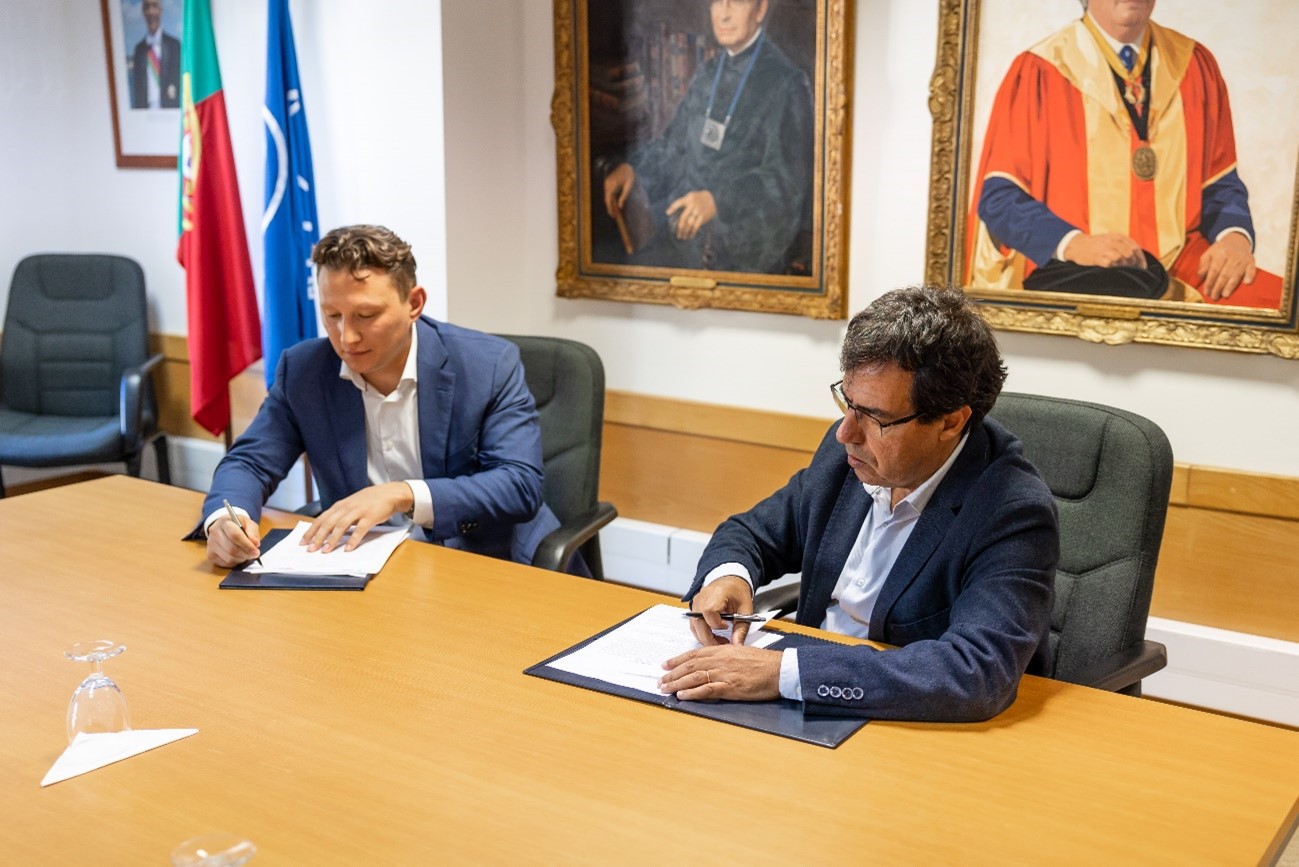
Consider a fairly quiet event in the Algarve. On January 3, 2024, the University of Algarve announced a cooperation agreement with World Talents, the company Sitdikov founded. The agreement concerned incoming entrepreneurs, outside investment, mentoring and the talent already growing inside the university. World Talents was hosted at the institution’s UALG TEC START incubator. The relationship had an address before it acquired a slogan.
It is a useful starting point for understanding Sitdikov. His business deals in global mobility, a phrase that can sound as if everybody involved is perpetually waiting for a flight. But the interesting part of his work begins with staying somewhere long enough to become useful. A new country offers a location. A working relationship offers a reason to be there.
A university on the other side
Sitdikov is the founder and CEO of World Talents. His professional background includes investment migration and international tax strategy, and his company works with entrepreneurs, investors and professionals pursuing opportunities across borders. Portugal occupies a central place in that work. The company also describes an international remit reaching the United States, the United Kingdom and beyond.
What gives the Portuguese work its particular character is the university connection. An entrepreneur brings experience built elsewhere. An institution brings local knowledge, research capacity and people working on specific questions. World Talents puts itself between those worlds, arranging pathways through which the experience might find an assignment.
World Talents describes its university partnerships as beginning with an institution’s priorities, followed by a shortlist of relevant people, activities and continued program management. That order gives the institution a say in the match. A founder’s impressive résumé still has to meet a particular need, whether in a student’s education or a researcher’s project.
The Algarve agreement made room for both arriving talent and people already there. It aimed to help businesses settle into the region while improving opportunities around the university. The collaboration also encompassed regional events and support for student participation in international programming competitions. That last detail gives the arrangement a pleasingly practical scale. Alongside the international executive is a student with an algorithm to finish.
The calendar after arrival
In his Algarve Tech Hub Summit biography, Sitdikov traces his team’s work supporting international business leaders back to 2018. He describes helping entrepreneurs relocate, invest and expand internationally, with Portugal’s innovation community a particular focus. The ambition is expressed in three ordinary but demanding words: simpler, swifter, strategic.
Each word points to a different frustration. Simpler concerns understanding what to do. Swifter concerns the time spent waiting to do it. Strategic asks whether the move helps the business once the waiting ends. Taken together, they describe a service that has to think about the calendar after arrival.
His December 2024 writing on Portuguese entrepreneur mobility put university collaboration near the center of the discussion. He described the connections between incoming entrepreneurs, academic partners, business mentors and funding networks. The important personal detail is where he directs his attention: toward the people and institutions that might make an international move productive.
For a founder, the first meeting in a new country can be pleasantly encouraging. The next several meetings determine whether anything happens. Someone has to understand the commercial ambition, find a relevant academic counterpart and keep the conversation moving. Sitdikov’s proposition lives in that sequence. It asks an entrepreneur to imagine a destination through the work that could be done there.
“My mission is to make global mobility simpler, swifter, and more strategic”
Tim Sitdikov
His involvement in Lisbon’s founder community also appears in the sponsorship of a RedBridge startup pitch event in October 2023. Sitdikov, through World Talents, was named among its sponsors. The evening brought startup presentations before judges and an audience of roughly a hundred guests. Sponsorship is a modest but concrete way to participate in a network: help provide the occasion at which other people can present their work and meet potential allies.
Ten minutes, then the real work
His 2025 Algarve Tech Hub Summit keynote carried the title “It Takes a Network to Build a Founder.” The scheduled slot was ten minutes. A rather economical allocation for a subject that can occupy the rest of a working life.
The session’s theme brought mentors, peers and investors into the founder’s story. It placed company building inside a community of people whose knowledge and decisions affect what happens next. That is a revealing subject for a mobility entrepreneur to choose. The founder may move individually; the business will still need other people.
The agenda then put Sitdikov in the moderator’s chair for “Match Point: Connecting and Winning in Sports, Tech, and Business,” with Frederico Gil and Paddy Cosgrave. The combination fits the professional neighborhood around World Talents. His co-founder Bernardo Saraiva competed on the ATP tennis circuit before leading Portuguese operations.
There is a temptation, with a panel like that, to turn sport into a bag of business metaphors and empty it over the audience. The more useful connection is access to people who have worked in different competitive environments. A moderator’s job is to make those experiences intelligible to one another. It is a public version of the translation Sitdikov’s company undertakes between entrepreneurs and institutions.
- 01DiagnoseThe institution’s priorities
- 02CuratePeople with relevant experience
- 03ActivateMentoring and research
- 04SustainA continuing relationship
World Talents’ stated approach to university partnerships.
The people who make the introduction work
The team around Sitdikov helps explain the service. Saraiva brings entrepreneurship and international sporting experience. Gonçalo de Sá, responsible for programs and university partnerships, has a chemistry doctorate and has founded companies. David Bonellie leads business operations. Legal operations and application processing have their own specialists.
A business owner, a scientist and a legal operator can all attend the same meeting and leave with quite different lists of what needs doing. In this company, that variety has an obvious use. A promising research conversation needs someone who understands research. An international business decision needs commercial judgment. A complicated application needs attention of another kind.
One participant’s experience offers a smaller view of Sitdikov’s place in the arrangement. Entrepreneur and communications strategist Amena Khan met him and the wider team while engaging with the Global Talent Portugal program. She described the experience as “Professional, structured, and reassuring.” The combination of university access, mentoring and knowledge transfer appealed to her ambitions for the next stage of her work.
Her response captures something that can disappear in discussion of international networks. The connection has to feel credible to the person making the move. Before a partnership can produce research or a business opportunity, somebody has to trust the people across the table. The meeting with the founder is part of that judgment.
A local problem, an international colleague
As the university relationships spread, the destinations become more specific. In March 2025, World Talents announced a partnership with the Polytechnic Institute of Guarda. The institution’s research facilities included eleven laboratories, with work spanning robotics, information systems, chemistry and materials, and prototyping. Its business initiatives included an ideas competition and an incubator.
For an incoming entrepreneur, those details give substance to the invitation. A laboratory has equipment, expertise and a field of inquiry. Matching a person to that setting requires understanding what the person knows and what the institution wants to develop. The town’s name alone cannot answer either question.
In July 2026, the company announced a collaboration agreement with CIIAE, the energy and energy-storage research center in Cáceres, Spain. Saraiva and de Sá led the visiting World Talents team. The expansion carried the university-linked research approach into another country, through a regional institution with a defined technical focus.
Back in the Algarve, a different kind of participation had already taken place. Three university student teams competed at SWERC 2024 in Lisbon with World Talents sponsorship. The competition involved five hours of algorithmic problem solving and practical coding. It is a compact example of what an institutional relationship can support: students get to compete, and a company concerned with talent helps them make the trip.
A little less friction, a rather good brunch
Sitdikov’s interest in connection also shapes his response when movement becomes harder. In December 2025, discussing uncertainty around US immigration, he said it “adds friction where we need clarity.” His concern was the practical effect on cross-border ventures and talent programs. An entrepreneur trying to plan needs to know whether the next step is possible.
That preference for a workable route has a more sociable companion. Recalling a ten-day strategy retreat, Sitdikov singled out the food and the shared experiences: a palace brunch, dinners by the sea, a tuk-tuk tour, an open-air cinema and a closing boat evening. “The palace brunch set a refined tone,” he said. Strategy, apparently, can accommodate a decent breakfast.
The anecdote puts a human scale on his recurring subject. People who might work together need time together. Sometimes the setting is a university. Sometimes it is a conference stage. Sometimes it is a meal with a view. The useful question running through Sitdikov’s work is what happens once those people have met. A country can provide the arrival. He is occupied with arranging the introduction.