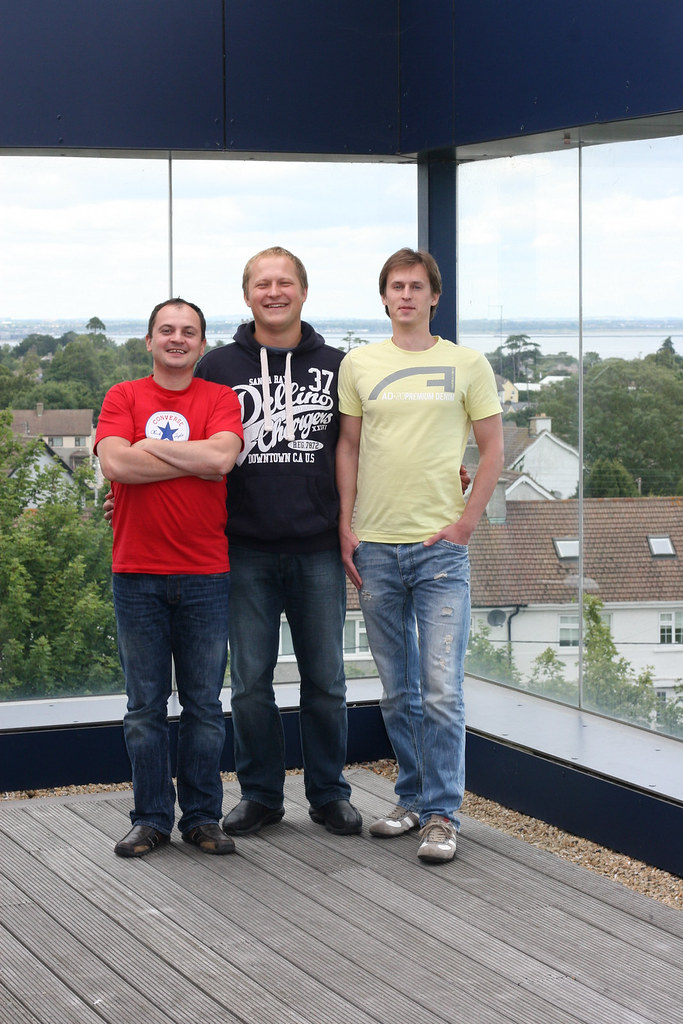
Before there was a company to expand across the Atlantic, there was a shopkeeper trying to keep up. Kanstantsin Chernysh was selling online and needed to know what other retailers were charging. Checking by hand took too long. He began writing software to do it. His friends Volodymyr Pigrukh and Dmitry Vysotski, both in Ireland, saw the possibility of building a business around the problem. Profitero, founded in Dublin in 2010, began with the sort of commercial irritation that rarely gets a standing ovation: somebody else had changed a price.
Pigrukh understood the irritation. Before his corporate career, he had run a mobile-phone business, where keeping track of competitors could affect sales and margins. Later came commercial work at Microsoft, Accenture and Google. He had experience of both the small retailer’s daily arithmetic and the organisations selling technology at scale. A phone shop offers a fairly direct education in business. You can have an excellent explanation for your price and still watch the customer leave.
Today, Pigrukh is founder and CEO of DataHive, supplying datasets for AI. He is now based in Portugal. The technologies and customers have changed since those early retail days, but there is a recognisable question running through his career: what information does someone need badly enough to build a business around obtaining it?
Dublin, by choice
Ireland was a deliberate decision. When Pigrukh and his co-founders considered where to establish their venture in 2010, Dublin and London were both possibilities. He had come to Dublin from Ukraine to work in technology, and already knew the city’s multinational employers. Establishing a company there offered another set of advantages.
He pointed to straightforward registration and support from Enterprise Ireland, which recognised the venture’s fundraising potential. Those are unromantic considerations with a considerable effect on a founder’s week. A business needs somewhere to be incorporated, people who understand its plans, and a route to the resources required to carry them out. An attractive skyline cannot process the paperwork.
His background also crossed the technical and commercial sides of the business. He holds a computer-science bachelor’s degree and a master’s in international business. His LinkedIn education entry lists Technological University Dublin, 2006 to 2007, and a gold medal for best dissertation. That combination provides some context for the work that followed: explaining a technical service in terms a buyer could justify.
The price keeps moving
By March 2012, Profitero was monitoring more than 27 million products across over 2,500 European retail websites. Pigrukh was already talking about retailers changing prices hourly and about the move from collecting information to interpreting it. There was a practical distinction here. A list of numbers can tell you that something happened. A useful service helps you decide what to do next.
“Pricing is a very important part of the buying decision,” he said. It was a modest sentence for a large operational problem. When prices change repeatedly, the act of looking becomes a continuing task. The customer needs information that is timely, comparable and connected to a decision. Yesterday’s answer can be perfectly accurate and commercially useless today.
The software needed constant development as the collection grew. Pigrukh discussed automated product matching and the possibilities of combining collected data with business-intelligence tools. The ambition was visible early: help a retailer move from observing a rival’s price to understanding its own options. The difficult part sat between the two.
Customers and relationships preceded the American office.
The expansion, 2012-2014
A trophy with useful introductions
In February 2012, Profitero won IBM’s Global Entrepreneur of the Year competition at the SmartCamp Global Finals in San Francisco. It had previously won the London stage. For a young Dublin company, the result brought a public endorsement from a business whose name required considerably less explanation than its own.
Pigrukh’s response looked toward the people the award could bring within reach: technical specialists, partners, investors, academics and clients. That is an unusually practical way to read a trophy. Its value could continue after the photograph, in the conversations and potential collaborations that followed. IBM’s smarter-commerce work offered a relevant setting for a company handling retail data.
The award also makes a useful marker in a story otherwise built from less visible work. Software companies can appear to arrive suddenly when they win something. The thing being recognised has usually required a succession of smaller decisions. In Profitero’s case, a retailer’s problem had become a product, a company and an international pitch. Recognition gave the founders another opening through which to carry it.
A market visited before it was entered
The American expansion had a similarly practical prehistory. From 2012, Pigrukh and his founding team visited the US every two to three months. Their $8 million Series A came in 2014, with a US office among the objectives. By then, they already had paying American customers. The market had supplied evidence before the company committed to a larger presence.
The trips also helped Pigrukh meet prospective employees. One relationship eventually led, two years later, to the recruitment of Profitero’s North American sales vice president. Hiring and selling were developing together. A future office was being assembled through people and commercial relationships before it existed as a destination.
This sequence suggests patience in the preparation rather than hesitation about the opportunity. Each visit could answer a question that a plan alone could leave unresolved: whether buyers would pay, whom the company might recruit, and what a local presence would need to accomplish. The Atlantic is an expensive place to conduct an argument with your own assumptions.
- 2010Build in DublinProfitero is founded.
- 2012Show up in the USRegular visits begin.
- 2014Fund the expansion$8m from Polaris Partners.
Money to move faster
The 2014 investment from Polaris Partners arrived with specific plans. Profitero intended to grow from 40 employees to 100 over 18 months, increasing its presence in North America and other markets. There were six employees in Dublin and 34 engineers in Minsk. Expansion meant adding commercial capacity as well as continuing the product work.
Pigrukh said the company had been breaking even since October 2012 and was making a profit. “This investment will allow us accelerate our growth,” he said. The money was attached to an existing business, with clients including Staples, Sam’s Club, Waitrose and Ocado. The commercial question was becoming how quickly Profitero could extend what it had already begun.
He also described a broader customer opportunity. Retailers wanted to follow competing retailers; brand owners needed to understand how their own products performed online. That shift widened the decisions Profitero could help inform. A manufacturer selling through someone else’s shop still needed a clear view of the shelf. Online, that shelf could change without anyone moving a single physical object.
The job underneath the title
By October 2018, Pigrukh had a different subject to discuss onstage at Dublin’s Dogpatch Labs: how a founder’s role changes as a company grows. Profitero had expanded sales to more than 50 countries and hired more than 150 employees. The event’s title, “CEO Evolution”, captured a problem that an organisation chart can conceal. The same job title can cover very different working lives.
The person helping win early customers eventually has to think about a business serving many countries and employing specialists across functions. Pigrukh’s talk was framed around the move from founding to growth. It is a useful point at which to pause the familiar sequence of startup milestones and consider the person doing the work beneath them.
In April 2020, Profitero announced Bryan Wiener as its new CEO, alongside president Sarah Hofstetter and technology chief Sandor Palfy. The company also announced $20 million in new funding. That leadership change marks the end of Pigrukh’s CEO chapter at Profitero and the start of another phase for the business he helped establish.
Publicis announced its acquisition of Profitero in May 2022. At that point, the company had 300 employees and served more than 4,000 brands, with coverage spanning more than 700 retailer websites in over 50 countries. Wiener and Hofstetter continued to lead it. The original pricing problem had become part of a much broader commerce operation.
Another customer for difficult data
At DataHive, Pigrukh is building with Chernysh again. The company supplies datasets for AI, and its $3.5 million seed round was announced in 2025 with backing led by 6th Man Ventures. The recurring commercial theme is easy to see: customers need information that takes work to acquire and prepare.
DataHive’s catalogue includes ecommerce listings and reviews, alongside images, video and speech. Its work includes sourcing, creating and labelling data. Those verbs matter. A customer buying training material needs more than a pile of files; the material must suit the task. Pigrukh’s current business puts that preparation at the centre of the offer.
A recent example is Hive Calls. Pigrukh has promoted the Android app as a way for people to have natural conversations that can become voice-AI training data. Qualifying conversations are recorded with everyone’s consent. The company’s explanation emphasises the pauses, interruptions, accents and changes of pace that make real dialogue difficult to reproduce through scripts.
It is a fitting new problem for someone whose earlier company dealt with a marketplace that refused to sit still. A retailer changes a price. A speaker interrupts a friend. The useful detail is often the detail a tidier system leaves out. Pigrukh’s career keeps returning to the work of noticing it, finding a buyer who needs it, and building the means to deliver it.
Follow the next chapter
Profiles, conversations and the companies along the way.
- Pigrukh on LinkedIn ↗
- Explore DataHive ↗
- Profitero+ ↗
- Aforja Podcast: Pigrukh’s career conversation ↗
- Watch: Profitero’s IBM SmartCamp win ↗
- Frontline’s US expansion playbook ↗
- The 2014 funding and hiring plans ↗
- Pigrukh on prices and product development ↗
- The choice to build in Dublin ↗
- The 2018 CEO Evolution keynote ↗
- Profitero’s 2020 leadership announcement ↗
- The 2022 Publicis acquisition announcement ↗
- Pigrukh introduces Hive Calls ↗