Cybersecurity marketing begins with an awkward fact: the product is easiest to appreciate on the day nobody wants to have. A threat is found, a breach is contained, an attack never becomes tomorrow morning’s crisis. The work is technical; the result is often an absence. Between those two points sits a thicket of signals, systems, analysts, promises and acronyms. Tim O’Rourke has spent more than 13 years finding a path through it.
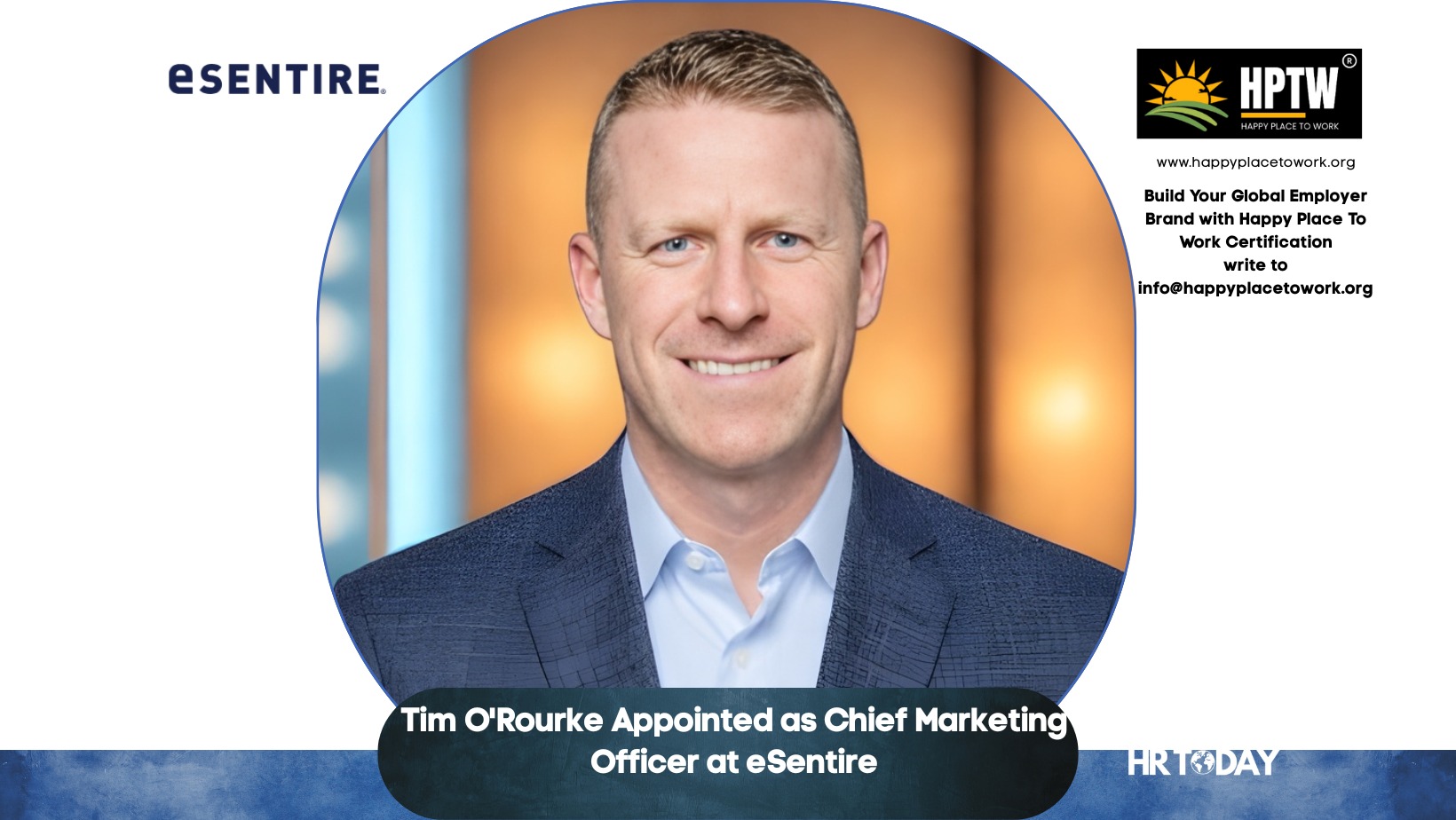
In March 2026, eSentire made that path considerably wider by naming him chief marketing officer. The job covers the full stage - strategy, positioning, growth and the long campaign to make a security company’s claims feel concrete. O’Rourke arrived with nearly two decades in product marketing and marketing leadership, plus a résumé that reads like a brisk tour through the evolution of enterprise security: Cisco Systems, Verisign, ZeroFox, CrowdStrike and Flashpoint.
The sequence matters. Infrastructure, identity, external threats, endpoint protection, threat intelligence: each stop put him near a different part of the machinery. Product marketing is the occupation of standing between that machinery and a buyer who has neither the time nor the desire to admire every gear. The marketer must know enough to be accurate, edit enough to be useful and resist the temptation to confuse volume with conviction.
Two educations in consequence
Before the security-company titles, there was finance at the University of Notre Dame. Then came service as a captain in the United States Marine Corps. Later, O’Rourke earned an MBA from Harvard Business School. It is a combination almost too neatly suited to an executive biography: numbers, command and strategy. Yet its more interesting value lies in the habits those worlds demand.
Finance asks what an asset is worth and how risk should be priced. Military service makes responsibility stubbornly specific. Business school turns the case study into a rehearsal for choices made with incomplete information. Cybersecurity marketing borrows from all three. A campaign consumes capital. A claim carries consequences. A market rarely waits for perfect certainty.
None of this means a boardroom is a battlefield, a comparison that has suffered quite enough misuse. It means only that O’Rourke’s career has repeatedly placed him where abstractions must become decisions. Product marketers live there. So do security leaders. One begins with a crowded whiteboard; the other ends with a sentence someone is willing to act on.
“eSentire is building its first-ever dedicated Customer Marketing function.”
That sentence, from one of O’Rourke’s recent hiring posts, is more revealing than the usual arrival announcement. New executives are commonly introduced with verbs polished to a high corporate sheen: accelerate, transform, elevate. An open role is less coy. It shows where money, attention and organizational patience are about to go.
The org chart as an argument
O’Rourke’s early public moves at eSentire included two hires. One was a senior product marketing manager charged with go-to-market strategy, messaging and the presentation of AI-powered cybersecurity services. The other was a customer marketing manager - the first dedicated function of its kind at the company - responsible for advocacy, references, case studies and retention.
Place those roles side by side and the plan comes into focus. Product marketing clarifies what the company offers and why it differs. Customer marketing supplies evidence that the offer survives real life. The first gives salespeople a sentence; the second gives that sentence witnesses. In a category famous for dramatic predictions, a customer willing to describe ordinary confidence may be the more persuasive voice.
The two hires also close a loop. Customer stories return the vocabulary of actual use to the product team. Better product language helps attract customers whose needs fit. Their experience produces stronger proof. Marketing departments often draw this as a funnel, as though human judgment were a plumbing problem. A loop is the more honest shape.
Marketing the people behind the platform
At eSentire, the story O’Rourke inherits is not a single appliance or a solitary piece of software. The company says it protects more than 2,000 organizations across more than 35 industries. Its current model pairs AI-driven operations with human judgment and provides managed detection and response across endpoint, network, log, cloud and identity signals. The catalogue is broad because an attacker’s interest in tidy product categories is famously low.
Breadth creates a marketing trap. List everything and the reader remembers nothing. Simplify too aggressively and the claim begins to float free of the work. O’Rourke’s professional reputation rests on translating complex capabilities into differentiated narratives tied to pipeline and revenue. The phrase sounds corporate, but the underlying craft is editorial: choose the detail that carries the whole.
For a managed security provider, that detail may be accountability. Software can alert. Automation can act. An organization still needs to know who is watching, what happens next and where judgment enters the sequence. The question is not merely whether the system moves quickly. It is whether its actions can be understood, governed and trusted. Good positioning makes that operational distinction visible without requiring the buyer to complete a minor degree in the product architecture.
The first role shapes the promise. The second collects the proof. Together, they make the market story harder to fake.
This is the sober advantage of O’Rourke’s background. At ZeroFox, CrowdStrike and Flashpoint, he worked in businesses where credibility is rented by the sentence and can be lost by the adjective. Security buyers compare claims with analysts, peers and their own noisy dashboards. They have heard “next generation” from several generations. The useful marketer respects that memory.
What the CMO title enlarges
Product marketing gave O’Rourke a specialist’s view: the product, the buyer, the competition and the words connecting them. The CMO role adds the rest of the system. Brand must agree with demand generation. Customer engagement must agree with retention. The sales story must resemble the customer’s experience closely enough that nobody needs to perform a small act of literary criticism after signing the contract.
His recent recruitment language is notably practical. The product-marketing team is described as fast moving, close to revenue and responsible for owning go-to-market strategy. The customer-marketing position is framed around high ownership and building a program from the ground up. These are working instructions, not personality poetry. They suggest an operator assembling connective tissue, one role at a time.
There is also a useful tension in the moment. Artificial intelligence has handed security companies a fresh vocabulary just as buyers have grown wary of AI vocabulary everywhere. eSentire speaks of AI-powered operations and controlled autonomy. O’Rourke’s team must explain what that control means, where people remain answerable and which outcomes improve. A phrase earns its place only when the operation beneath it can pay the bill.
O’Rourke’s career has prepared him for precisely this unglamorous test. Finance offers the instinct to connect activity with value. The Marine Corps offers a vocabulary of ownership. Product marketing offers the discipline of deciding which truth matters first. Leadership makes him responsible for turning those instincts into a team.
The geography adds another small complication. O’Rourke is based in Purcellville, Virginia; eSentire’s roots and operating center are in Waterloo, Ontario; its customers span industries and borders. The marketing organization he is shaping includes hybrid and remote work. Its common room is therefore the story itself: the shared account of who the customer is, what the company can do and how success will be recognized. When colleagues cannot rely on overhearing the same hallway conversation, language has to carry more weight. A fuzzy noun becomes an operating problem. A precise promise becomes a way to coordinate people who may rarely occupy the same room.
The quieter promise
A security company would naturally prefer to be judged by incidents prevented, attacks contained and customers left to conduct their ordinary business. Marketing would naturally prefer visible triumphs. The CMO has to reconcile them: make invisible work legible without turning every risk into theatre.
That may explain why O’Rourke’s story is better told through the structure he is building than through a grand personal slogan. A dedicated customer-marketing function says experience will be gathered and circulated. A stronger product-marketing bench says complexity will be edited before it reaches the market. Both moves give other people a larger role in the narrative.
The result, if it works, will sound deceptively simple. Buyers will understand the service. Customers will recognize their experience in the promise. Salespeople will know which claim to make, and operators will be able to defend it. In cybersecurity, clarity is not the soft layer placed on top of the technology. It is how accountability travels.
Tim O’Rourke has crossed enough institutions to know that every specialized world invents its own dialect. His new job is to make several of them agree: engineers, analysts, customers, sellers and executives, all speaking about the same risk without pretending it is simple. The best version of that work will not call attention to itself. It will merely leave fewer people confused at the moment a decision matters.