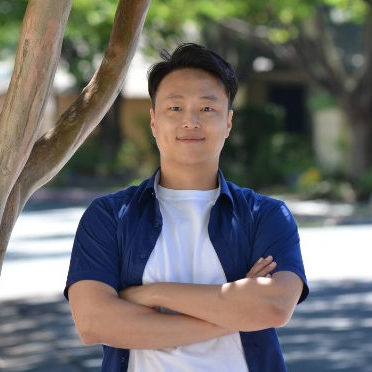
The Man Who Taught AI to Speak Like Your Favorite Character
Somewhere around 2019, Tim Jung walked away from one of the most coveted addresses in tech - a staff engineering and tech lead role at Google - to solve a problem that bothered him more than any distributed system ever had. Hollywood was shipping content to 70+ countries and the subtitles were terrible. Not technically terrible. Humanly terrible. Flat, literal, stripped of tone. The AI tools doing the work were trained on Wikipedia and news articles - not on the way a detective snaps at a witness or a comedian lands a punchline.
Jung founded XL8.ai in San Jose with CTO Jay Park, who came from Apple. A Google-and-Apple founding team working on a problem the world's biggest tech companies had largely ignored: not whether AI could translate, but whether it could translate the way people actually speak.
A Kid Who Took Apart Phones Before Smartphones Existed
In the early 1990s in Korea, Tim Jung was the kind of child who took things apart to see what happened next. Rotary phones were his first targets. He discovered that the hangup switch could generate signals - and promptly wired a phone's numeric keypad into a makeshift joystick for video games. His parents never stopped him. That freedom to experiment with consequences became the operating system for everything that followed.
Before smartphones, before the internet went mainstream in Korea, a young Tim Jung was rewiring household phones into gaming hardware. The specific detail isn't just cute - it's diagnostic. He has always seen infrastructure as something to be reconfigured, not accepted at face value.
That experimental bent carried him through a PhD in Computer Science at Columbia University, where his research focused on optimizing how computational tasks are distributed across heterogeneous devices - essentially, how to make complex systems run efficiently across mismatched hardware. He won the Best Paper Award at CloudCom 2012 for that work. Academia noticed. But Jung had other plans.
"Imagination is more important than knowledge."- Tim Jung, Founder & CEO of XL8.ai
Samsung, the South Korean Army, and Google
Before Google, Jung served as a Communication Officer in the South Korean Army - a detail that rarely makes his tech profiles but says something about the range of systems he has operated across. From there, he joined Samsung Electronics and led the UI Framework team that launched Tizen, Samsung's Linux-based mobile operating system. Tizen was an ambitious project - Samsung's attempt to build an alternative to Android and iOS from the ground up. It shipped.
Google came next. For roughly four years, Jung worked as a Staff Software Engineer and later Tech Lead and Manager, overseeing a team of engineers and ML researchers. He launched Events Search - the feature that lets you search for concerts, festivals, and local events and get structured results. He built Events data into Google's Knowledge Graph and helped integrate it into Google Maps. He worked on Personal Search. These are not side projects - they are features used by hundreds of millions of people.
Walking away from that was not a small decision. But Jung had noticed something in the media industry that he couldn't unsee.
Based on XL8 internal benchmarks on media content. General MT tools trained on open web data.
The Problem Nobody Was Solving
Generic machine translation tools are trained on the internet. That works fine for legal documents and business emails. But media content - TV shows, films, live broadcasts, streaming originals - is full of colloquial speech, cultural idioms, humor, subtext, and tone. A character who speaks in casual slang doesn't become more engaging when the subtitles read like a legal disclaimer.
XL8's answer was to train its engine on something different: 100% human-professional-curated data from the media localization industry. Every training sample came from professional translators working on actual content, not scraped from news sites or web forums. The result is a translation engine that understands colloquial speech - not just what words mean, but what speakers are trying to convey.
- MediaCAT - AI-assisted localization platform: sync, translate, dub workflows for media companies
- EventCAT - Real-time AI interpretation and subtitling for live events and broadcasts
- Custom MT Engines - Translation engines fine-tuned to a client's specific content style and terminology
- Automated Quality Control - AI review of translations before human sign-off
The impact is measurable: XL8's media-specific MT is 40% more accurate than general-purpose machine translation services on media content. That gap closes when the content is a Wikipedia article. It blows open when the content is a crime thriller with regional dialect.
From Rotary Phones to Real-Time Translation: The Arc
The Google Philosophy He Kept
One of the things Jung brought from Google to XL8 was a specific cultural practice: the Blameless Postmortem. When something goes wrong in a system, you don't find someone to blame - you find the root cause. The assumption is that smart people in ambiguous systems will make mistakes, and the job is to fix the system, not punish the person.
He applies the same logic to competition. He encourages healthy competition among colleagues but draws a line at toxicity. The distinction matters in early-stage companies where the pressure to perform can corrode team culture faster than any product problem.
"Our goal is to help localization professionals collaborate quickly and easily - so that professionals around the world can focus on their creativity."- Tim Jung, on XL8's Series A mission
What Jung Gets Right About AI in Media
The mainstream narrative around AI translation is about replacement - AI takes the job, humans become redundant. Jung argues something more nuanced: AI handles the mechanical throughput, humans bring the cultural judgment. XL8 isn't trying to eliminate translators. It's trying to eliminate the parts of translation that waste their expertise.
That distinction matters commercially. Media companies have massive content libraries to localize and shrinking timelines to do it. Streaming platforms now release original content in 30+ countries simultaneously. The localization industry can't hire its way to that scale. XL8's platform lets human professionals review and refine AI output rather than start from scratch - a workflow that maintains quality while dramatically increasing throughput.
At COMEUP 2023, a Korean government-hosted startup festival at Seoul's Dongdaemun Design Plaza, Tim Jung spoke about AI startup survival in the post-ChatGPT era. The irony: XL8's own EventCAT was providing live AI interpretation for the event in real time. His product was solving the problem he was being asked about, at the exact moment he was being asked about it.
The forum was more than a speaking engagement. Jung was specifically chosen by South Korea's government to represent the next generation of Korean entrepreneurs - a signal that his work is being watched not just by the media industry but by policymakers thinking about where AI leadership will come from.
How He Thinks
Jung reads science fiction for strategy. He cites Andy Weir's Project Hail Mary - a novel where an astronaut wakes up alone with no memory and has to figure out a mission-critical problem from first principles - as an influence on how he approaches novel technical challenges. The discipline isn't "what have others done?" It's "what can be imagined?"
He deliberately seeks out people from different cultures and industries. In a field full of engineers who talk exclusively to other engineers, Jung treats cross-domain conversation as a competitive advantage. Language barriers have always interested him not just as a technical problem but as a human one - what connections don't happen because two people can't speak each other's language?
His aspirations are not modest: eliminate language barriers entirely, not just for streaming content, but for live events, broadcasts, and real-time communication. The version of the future Jung is building toward is one where the language you were born speaking never limits what you can watch, attend, or participate in.
Fun Facts
XL8 is a wordplay on "translate" - say it out loud: X-L-8.
Tim's full given name is YoungHoon Jung. "Tim" is his English name.
XL8 trains on 100% human-curated professional media data - no scraped internet content.
He co-founded XL8 with a former Apple engineer. One company's Google, one's Apple - and they built something neither company built.
Jung served as a Communication Officer in the South Korean Army before his tech career.
He was inspired by Andy Weir's "Project Hail Mary" for approaching first-principles problem-solving.
XL8 translates colloquial speech, slang, and idioms - not just dictionary definitions.
Won Best Paper at CloudCom 2012 - academic validation he then promptly moved past.