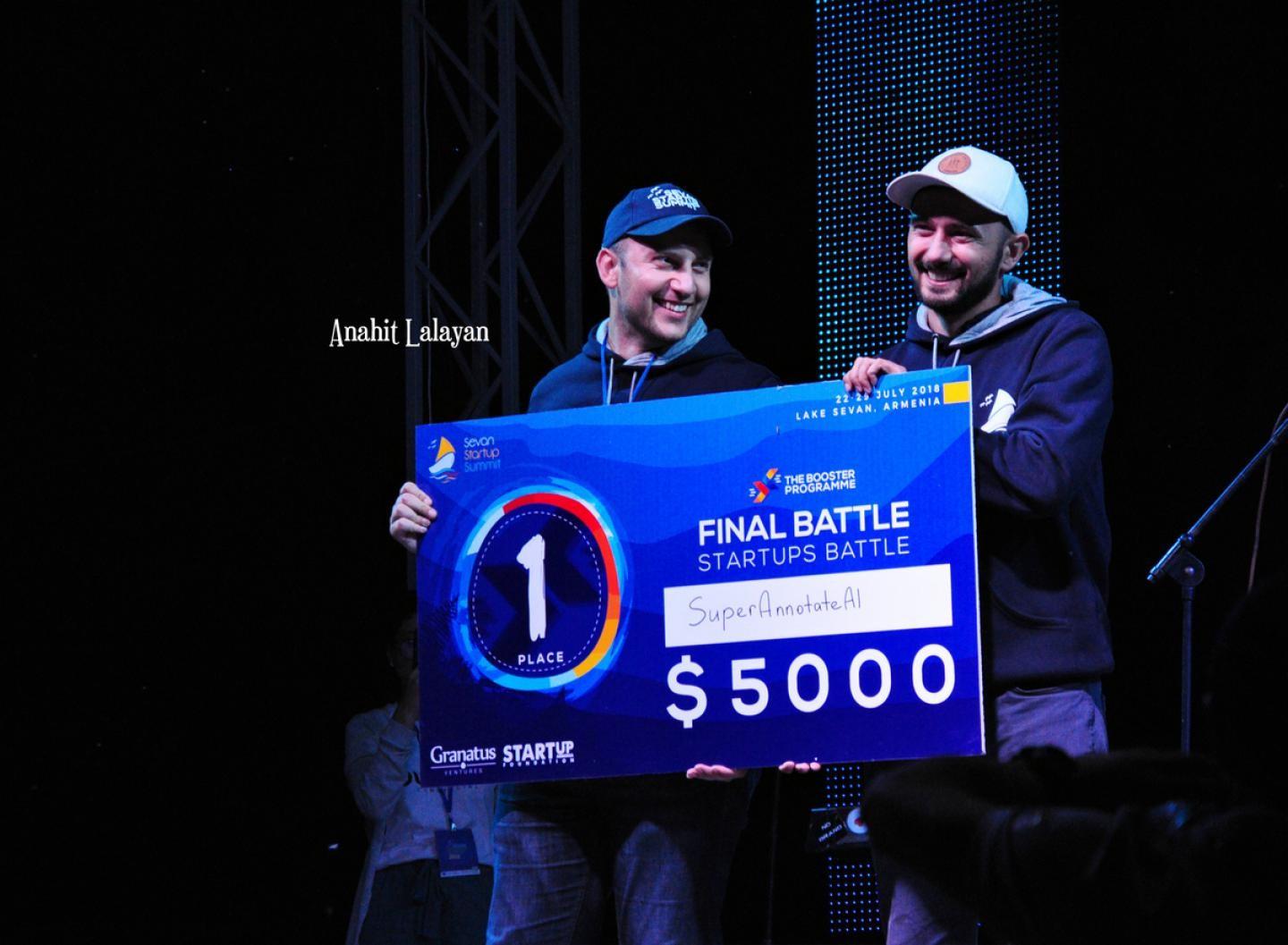
Tigran Petrosyan and his brother wanted a holiday. They were both doing PhDs in Europe, and a startup competition beside Lake Sevan offered a plausible excuse to go home to Armenia. Vahan had been working on an image segmentation algorithm. They could put in an application, make a pitch, and get a little time away from their research. An agreeable plan, provided nobody took the startup part too seriously.
They won. Investors became interested. A trip intended to interrupt their academic work ended up interrupting their academic careers. In 2018, Tigran left his doctorate and began building SuperAnnotate with Vahan. The unfinished thesis would remain unfinished. The problem that drew them out of university would keep getting bigger.
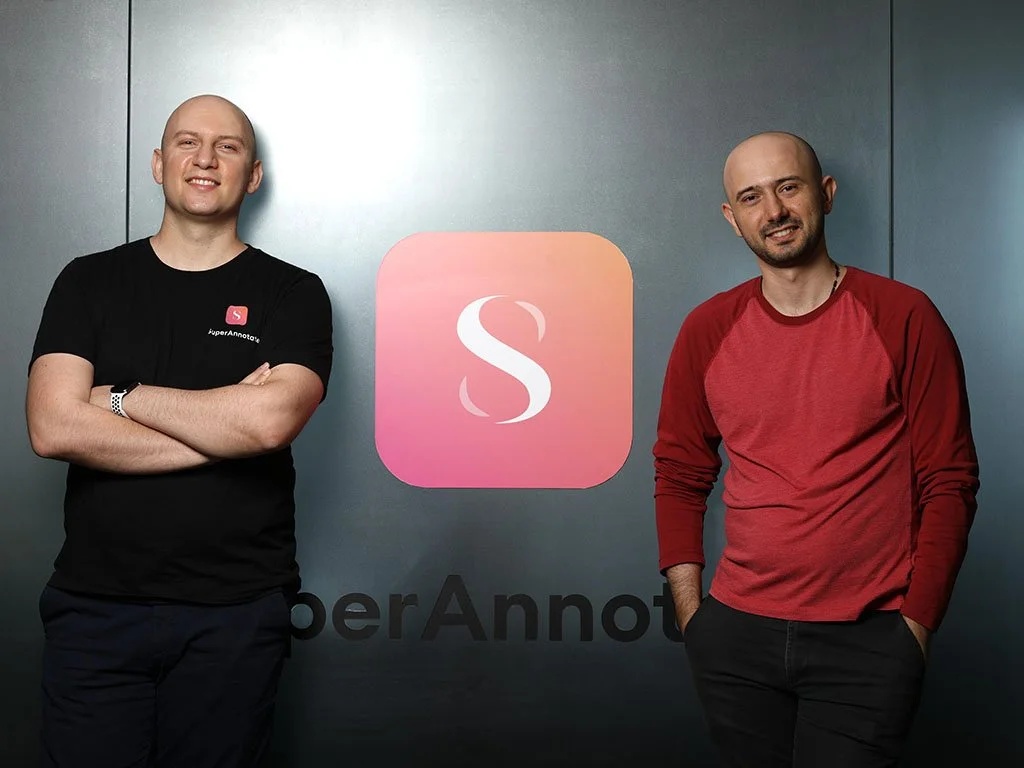
Today, Tigran is SuperAnnotate's co-founder and president, having previously served as CEO. The company works on the data used to train and evaluate artificial intelligence. Its origins involve an algorithm, two brothers, and a competition. Its development involves a less cinematic discovery: a useful piece of technology can leave an astonishing amount of business still to be built.
The family assignment was mathematics
Petrosyan grew up in Armenia, in a suburb where, by his account, studying did not carry much social prestige. His parents had their own view of the matter. They insisted that the children do well in school, with particular attention to mathematics. Family expectations supplied a direction before there was any thought of a company.
He studied physics at Yerevan State University, then moved to Switzerland for a master's at ETH Zurich. He went on to doctoral research at the University of Bern. This was a substantial investment in an academic life: successive institutions, another country, years spent learning how to formulate a question precisely enough to investigate it.
Artificial intelligence caught his attention during his years in Switzerland. In May 2016, he spoke at TEDxHochschuleLuzern on a question that has aged rather well: “Is Your Job Safe From Automation?” Before he was selling software to AI teams, he was already talking publicly about what automation might mean for work.
His brother was pursuing research in Sweden at KTH Royal Institute of Technology. Vahan's work on image segmentation became the technical foundation of their venture. KTH's account also credits student Oscar Örnberg with helping develop the early tool. The eventual business had roots in several places before it had an American address.
A computer needs someone to point
The brothers' starting problem was easy to overlook because the finished result looks so effortless. A computer identifies a car in a street scene. Before it can do that reliably, someone has usually had to show a learning system many examples of cars, with labels explaining what is where. Intelligence arrives with a considerable amount of preparatory paperwork.
Some tasks call for a box around an object. Others require its precise outline. Drawing boundaries around objects, image after image, takes time. Vahan's segmentation work offered a way to accelerate that detailed annotation. It gave the brothers an entry into a business built around helping machines make sense of visual information.
Yet the person tracing an outline is only one participant. Engineers need usable training data. Annotation teams need instructions and tools. Someone must check the results, handle corrections, and keep the project moving. A better selection tool could save effort, while leaving all those relationships to be organized.
The first customer changed the homework
Berkeley SkyDeck helped introduce the brothers to the practical education of running a startup. Tigran has described the accelerator's value in terms of access: people who understood industries, introductions to companies, and conversations that challenged the founders' assumptions. Research experience had brought them to the door. Customers had questions of their own.
One early customer was developing autonomous trucks. The relationship began with a contract worth a few thousand dollars a month and grew into the tens of thousands. Working with that customer exposed demands beyond the segmentation algorithm. Different labeling tasks required different capabilities. The product had to accommodate the customer's actual work.
There is an appealing modesty to the lesson Tigran drew. He estimated that the technology accounted for only a tenth of what was needed. Execution, the team, and serving customers consumed the rest. A founder with a research background was discovering just how much of a software company happens outside the research.
“Having the tech is basically 10% of everything.”
Tigran Petrosyan, 2023
He also conceded that a connection to an early customer did not automatically establish the right market strategy. An introduction can put a company to work. It cannot, by itself, tell the founders which customers they should pursue next. That distinction is expensive enough to deserve its own place in any university curriculum.
Teaching became a way to sell
By early 2020, SuperAnnotate had released a standalone software platform. The scope had expanded toward infrastructure for machine learning teams: organizing data work alongside the people doing it. The original capability remained useful, but the commercial proposition increasingly concerned the whole process around it.
Human annotation required another kind of selection. The company developed a marketplace of service teams, vetting their capabilities and matching them to projects. In a 2023 interview, Tigran described regular work with roughly 50 to 70 teams, from a larger group of more than 200 that had been assessed. These are historical figures, describing that stage of the business.
The route to customers also reflected his background as an explainer. Detailed articles and webinars brought machine learning practitioners to the company's website. Content generated the initial leads; sales and business development followed. Tigran spoke with particular pleasure about customers recommending the company to other people. A referral is a useful review because it risks the reviewer's reputation.
He took the interviewer's chair himself for the Real-Life AI podcast. Guests included Berkeley professor Trevor Darrell, Aurora Solar co-founder Christopher Hopper, and Krisp co-founder Davit Baghdasaryan. The subjects ranged from computer vision research to solar software and noise cancellation. A former researcher had made a recurring project of asking other people how their ideas became products.
Brotherhood required its own engineering
A company founded by siblings invites an easy story about automatic trust. Tigran's account is more deliberate. He and Vahan worked early on to make both their family relationship and their business relationship function. He has acknowledged moments when the company might have taken different directions, and the stakes of disagreeing with someone who is also your brother.
They regarded the bond itself as something to protect. That helps explain the appeal of the arrangement: when an uncertain venture goes badly, each knows the other is there. It also explains the work involved. Familiarity does not write a decision-making process. A shared childhood is a considerable history to bring into a meeting.
By July 2023, Tigran was being introduced as president rather than CEO; Vahan became the company's CEO. The changed titles belong in the story because building a company includes changing the founders' jobs. The brothers continued together as the organization grew beyond the roles it had needed at the beginning.
Tigran's humor about leaving university is revealing. Asked whether he regretted abandoning his doctorate, he ranked the decision just behind meeting his wife. He has also admitted that knowing the full difficulty in advance might have discouraged him from starting. Enthusiasm got a vote before experience had arrived to object.
The images became a wider question
The company's later development followed the changing demands of AI. In November 2024, SuperAnnotate announced a $36 million Series B, with participants including Socium Ventures, NVIDIA, and Databricks Ventures. In July 2025, an additional $13.5 million from Dell Technologies Capital brought the announced Series B total to approximately $50 million.
Announced Series B total after the Dell Technologies Capital investment.
By then, the company's description covered annotation and evaluation for language models, agents, and other AI products. The data could involve more than images. The people involved might be judging an answer or helping establish whether a system performed acceptably. The underlying organizational question remained familiar: how do you turn judgments into something a technical team can use?
Petrosyan's public LinkedIn activity has reflected that broader work, including enthusiasm for collaborations with Google Cloud and NVIDIA. His company now discusses human review alongside automated evaluation. These developments extend the early problem rather naturally. A system needs examples to learn from, and someone still has to decide whether its outputs deserve confidence.
The degree he kept using
Petrosyan's view of doctoral study makes the unfinished thesis less of a dramatic severing than it first appears. He values the habits acquired in research: examining a problem critically, finding the information needed to pursue it, and working through uncertainty. Leaving the program did not oblige him to leave those habits behind.
They are visible in the company's successive revisions. A segmentation tool led to a platform. Customer work exposed demands the initial algorithm could not cover. Teaching helped bring in users. Human feedback remained part of the product as the surrounding technology changed. The story is full of adjustments, which is less tidy than a founding vision and more recognizable as work.
The lakeside competition gave the brothers a reason to make a pitch. The years afterward gave Tigran reasons to revise it. He had set out for a break from research and found a different way to keep asking questions. Somewhere in that exchange, the holiday became a rather demanding job.