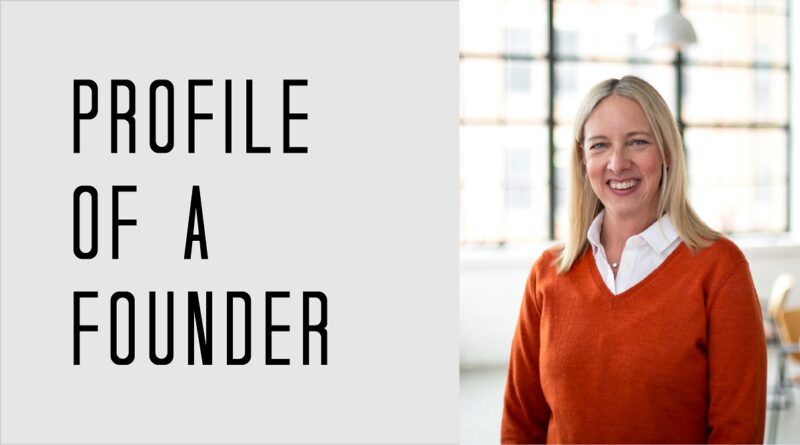
Tiffany Mullen keeps a small monument to entrepreneurial persuasion: a notebook containing two emphatic words from a local founder. “DO IT!” He wrote them before she launched Vytal Health, when the company was still an argument with the future and Mullen was still considering whether to exchange an established medical career for a startup. Advice becomes suspicious when it fits on a coffee mug, but this particular instruction had the advantage of momentum. In 2018, she did it.
The leap was not from ignorance. Mullen had worked as a physician at Aurora Health Care since 2005 and served as a medical director from 2010 to 2018. She had helped lead the system’s integrative medicine group. She knew the institution from inside its meetings, calendars and constraints. Her critique was therefore operational, not theatrical: a brief appointment asked professionals to move quickly through work that often needed more time.
Vytal Health became her answer. The Milwaukee company would use telemedicine to give clinicians and customers a different setting for their relationship. Software supplied reach. The real product was attention.
The second curriculum
Mullen arrived at company building with an unusual academic stack. She had studied art history at Lawrence University before earning a Doctor of Osteopathic Medicine from the Chicago College of Osteopathic Medicine. Residency, fellowship work and advanced professional training followed. The sequence suggests an appetite for systems and interpretation: first images, then bodies, then organizations.
None of it, she has noted, taught the business of running a medical practice. Regulation does not care that a founder is learning. Legal bills do not accept curiosity as payment. Hiring, capital and customer discovery all require their own fluency. A first-time founder can be impressively prepared in one field and freshly amateur in six others by lunchtime.
“Everything was a surprise,” Mullen once said of launching her first digital-health startup. It is less a complaint than an honest job description. The founder’s role is a machine for discovering new categories of ignorance. Mullen’s response was to keep the learning close to the work: speak with people who had already built practices, hire people smarter than herself and ask customers what they actually thought.
Her route to the chief executive’s chair also complicates the usual founder mythology. Mullen did not spend her twenties collecting startup vocabulary or circling venture firms. By the time Vytal Health opened, she had more than a decade of experience in an organization where decisions moved through departments and professional responsibilities were sharply defined. The startup erased those lines. A CEO could set direction in the morning, solve an operational snag after lunch and end the day studying a compliance question. Expertise became less like a throne and more like a base camp.
That transition explains the specificity of her advice to other practitioners. Talk to people who have already succeeded, she says, and learn from both their mistakes and their successes. The point is not to borrow somebody else’s company. It is to shorten the distance between a foreseeable problem and its recognition. Mullen’s own learning curve included the dense rules around a regulated service, the unfamiliar language of fundraising and the practical question of how a small team supports professionals across geography. The job expanded because the company did.
Three ideas Mullen repeats in public
The listening mattered immediately. Vytal Health opened before virtual appointments became ordinary. Early customers brought understandable doubts about whether a meaningful professional relationship could travel through a screen. Mullen asked them directly how it felt. They told her that the warmth and connection remained, then shared those experiences in reviews and social posts. The software removed geography; testimony removed hesitation.
No appetite for broken things
A technology founder is expected to admire speed. Mullen adds a qualifier. In a 2023 interview, she argued that the Silicon Valley instruction to move fast and break things makes for a jaunty slogan when the product is software. A service carrying real responsibility needs patience. Get it right, she said.
This stance does not reject ambition. Mullen has spoken plainly about scale and about building a national company. It simply recognizes that growth and haste are not synonyms. Vytal Health had to assemble clinical operations, compliance, technology and an experience that felt personal across state lines. Each layer brought a new set of edges. The company could automate distance, but it could not automate trust.
Her account of the hard parts is unusually free of varnish. Fundraising was difficult, especially during the pandemic. Milwaukee’s startup scene had grown, she observed, while local institutional capital remained thinner than founders wanted. The cost of establishing a regulated company was substantial. She and co-founder Alex Yampolsky eventually concluded they were not the right pair to continue running it together.
Mullen describes their separation as amicable and credits Yampolsky for believing in the vision and continuing to support the company. It is a gracious sentence, which also makes it useful. Startup stories are often edited into heroes and obstacles. Her version allows two capable people to discover a mismatch without turning either into the villain.
Survival is a metric
Asked about her biggest accomplishment as a business owner, Mullen did not offer a revenue chart or flattering adjective. “My biggest accomplishment is survival,” she said. The company had endured a pandemic, a founder split and an economic downturn. Four years in, it was still present and growing.
Survival sounds modest only to people who have never carried payroll. It is the cumulative result of a thousand undramatic decisions: which bill can wait, which hire cannot, which customer criticism contains a roadmap and which fashionable idea deserves to be ignored. Mullen also described the early founder as “all things to everyone,” perpetually on because the supporting cast had not yet arrived.
Her three pieces of public advice make more sense against that background. Care genuinely about what the business offers, because enthusiasm has to outlast novelty. Surround yourself with smarter people, because a company that cannot outgrow its founder’s knowledge will eventually meet that ceiling. Talk to customers often, because their experience is the part of the strategy that happens to be real.
These are plain instructions. Their value lies in her receipts. Vytal Health began before the pandemic accelerated virtual care. It worked through a market shift that made the category more familiar and more crowded. It expanded beyond its Milwaukee home while keeping that city in its identity. By 2024, Mullen had also become the regular host of the Vytal Health Podcast, interviewing colleagues and guests and turning the company’s expertise into an ongoing conversation.
The numbers she chose to share in 2023 reveal how she framed progress. Revenue, she said then, had doubled each year since the company’s beginning. The service was reaching people in 41 states and approaching profitability. She paired those figures with a warning about the seductive hockey-stick chart. An inflection point takes time. The juxtaposition is instructive: Mullen was willing to name growth, but unwilling to pretend growth had abolished consequence. Her preferred narrative kept the compound curve and the careful work in the same frame.
The podcast adds another layer to that operating model. Hosting is a public form of listening. The host prepares, asks and then leaves enough room for another person to become interesting. Mullen’s episodes place colleagues beside her rather than turning every conversation into a founder monologue. For a chief executive whose company depends on a distributed team, that format doubles as culture made audible. Authority is present, but shared attention gives the program its shape.
The pianist at the controls
There is another Mullen outside the neat sequence of titles. She is a lifelong pianist who listens to and creates music, attends concerts and performances, reads and studies Italian. She has called herself “semi-obsessed” with Italy. She is also the mother of three children, an arrangement unlikely to encourage preciousness about a pristine schedule.
The hobbies offer a more human portrait than another credential could. Piano rewards repetition, but not mechanical repetition. A player returns to the same passage and listens for what changed. Language study offers the daily humility of saying simple things badly until, one morning, they sound less bad. Both practices are built on attention, timing and an acceptance of unfinished work.
Those qualities fit Mullen’s public account of leadership. Her company did not emerge from one thunderclap of inspiration. It grew from years inside an existing system, a notebook nudge, early conversations through unfamiliar screens and a sequence of difficult adaptations. Even her advice to “DO IT!” arrives with necessary footnotes: do it, then listen; do it, then learn; do it, then build the team that makes doing it again tomorrow possible.
The interesting tension in Vytal Health is still the one present at its birth. The company uses technology to travel farther while arguing for an experience with more time in it. Scale usually asks people to standardize, compress and accelerate. Mullen’s wager is that the scarce human part can remain visible inside the machinery.
Eight years after the launch, the two words in that notebook read less like a conclusion than an opening bar. The rest has been variation: physician to operator, medical director to CEO, private conversations to a public microphone. Mullen is still playing the piece, still listening for the next change, and still making a business case for time.