A pizza is a useful way to misunderstand a restaurant. You see dough, sauce and a little theatrical flour. The operator sees a queue: mixing, proofing, baking, holding, handing over. Speed up the oven and the queue may simply move somewhere else. Dinner is a sequence of small industrial problems disguised as a pleasant evening out.
The Middleby Corporation makes equipment for that sequence. Its names appear on conveyor ovens, fryers, griddles, coffee systems and ice machines. You might recognize TurboChef or Taylor without recognizing their parent. That arrangement tells you something about the business: the customer needs a particular machine to behave predictably, long before the parent company needs to be famous.
- The job: equip commercial kitchens, from cooking to beverages.
- The method: specialist brands, shared reach and live menu testing.
- The turn: a 2026 reset concentrated the operating business on foodservice.
A showroom with something at stake
Near Dallas, Middleby offers an unusually literal sales argument. Its Innovation Kitchens opened in 2021 with 40,000 square feet, 15 specialized cooking areas and more than 150 working pieces of equipment. The important word is working. Customers can bring the question a brochure cannot answer: what happens when our food goes through this machine?
The facility includes pizza, baking, beverage and automation demonstrations. Its Ad Hoc Kitchen lets customers assemble and revise a proposed layout. A dining room seats 70. This is equipment selling with lunch attached, but the useful part is experimental: move the discussion from specifications to a meal, a workflow and a result somebody can inspect.
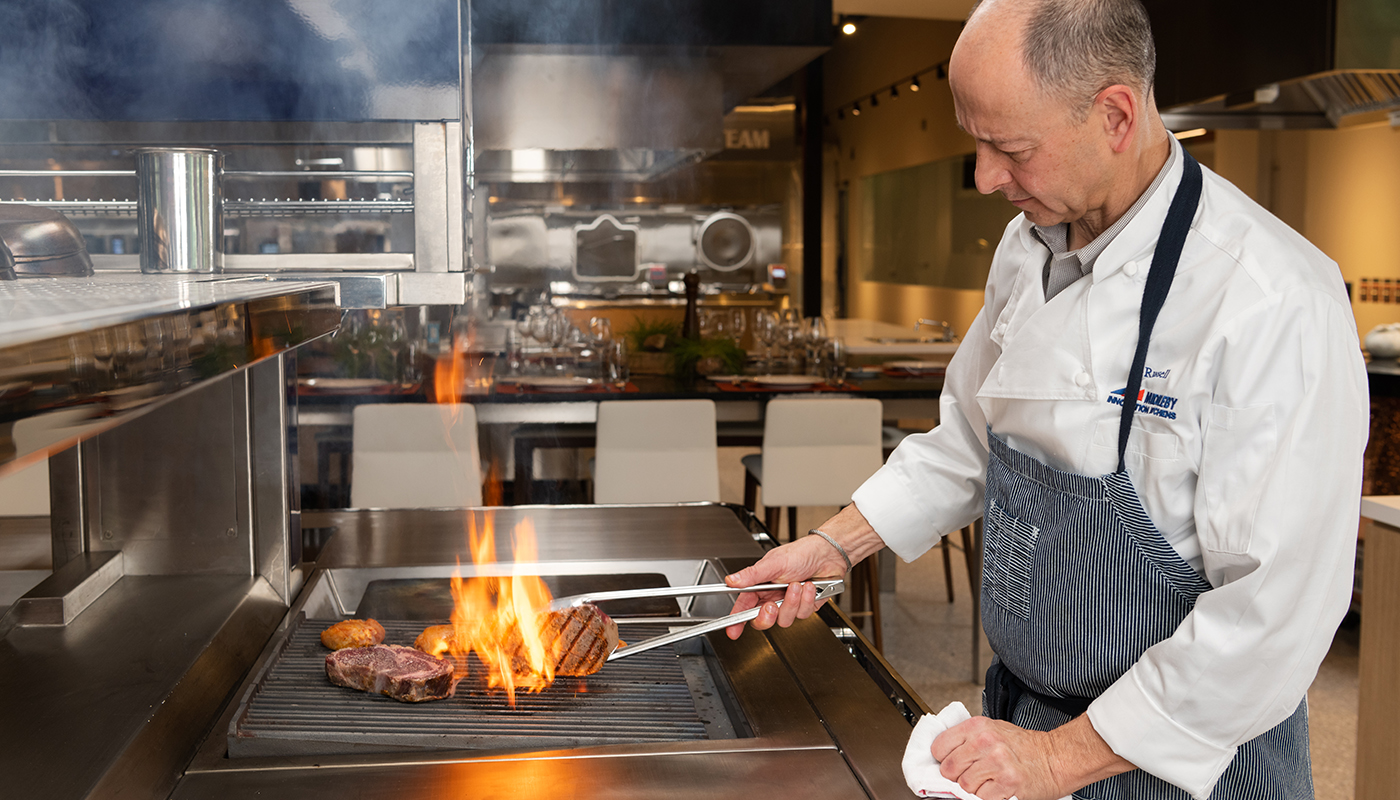
For a buyer, the lesson is wonderfully portable. Take your own menu to the demonstration. Time the preparation and the cleanup. Ask who must load the machine, who must unload it and what happens between batches. Bring a stopwatch, too. A beautiful demonstration becomes useful when it resembles the shift you actually run.
Buy the missing capability
Middleby began in Chicago in 1888 with Joseph Middleby and John Marshall’s oven business. Its later expansion followed a recognizable logic: buy specialist businesses that add something a kitchen needs. TurboChef brought high-speed cooking. Taylor brought soft serve, frozen drinks and automated double-sided grills. A collection of names became a broader answer to the same customer’s problems.
Taylor also supplies a concrete answer to what this strategy cost. Middleby completed the acquisition in June 2018 for approximately $1 billion in cash, borrowing about $1 billion under its revolving credit agreement. That is a substantial wager on equipment that diners may encounter only as an ice-cream swirl or a burger cooked behind the counter.
The business model is industrial and commercial: manufacture equipment, sell through distribution and customer relationships, then support the installed machines with parts and service. The buyers include restaurant chains, independent operators, convenience stores and institutions. A school cafeteria and a quick-service restaurant have different menus, but both need repeatable output from people working against a clock.
“I worry about that every day”Tim FitzGerald, asked about losing agility as Middleby grows, FCSI interview, 2021
FitzGerald’s answer continued with the importance of decentralization. Give the people inside a specialist brand room to make decisions close to customers. That helps explain why Middleby’s identity can be less visible than its products. The organizational challenge is making those separate specialists cooperate when the customer’s problem crosses from one machine to the next.
The portfolio meets the arithmetic
Then the story changes direction. On February 2, 2026, Middleby completed the sale of a 51% stake in its residential kitchen business to a 26North affiliate. It received approximately $565 million in net cash proceeds and kept a 49% interest. On July 6, it completed the separation of its food-processing business as Midera.
Control sold49% interest retained
Midera separatesSpin-off completed July 6
Exit announcedWind-down expected by year-end
Management’s stated case was greater focus and shareholder value. That is a rationale, not proof that every separation creates value. It does change how a reader should understand Middleby today. Industrial food processing and residential appliances belong in the history of the portfolio; they should not be casually counted as unchanged operating divisions.
September supplied a less comfortable example of selection. Middleby announced plans to discontinue its Brewing & Distilling Solutions Group, including Deutsche Beverage + Process, Ss Brewtech and Wild Goose Filling. The group generated $24 million in 2025 sales and an approximately $9 million adjusted EBITDA loss. Its loss from operations was $17 million.
Here the clearest visible failure was economic: revenue had not produced an acceptable operating result. Middleby said it assessed businesses against long-term growth and margin potential. The decision shows a boundary to the acquisition approach. An adjacent product category still has to earn continued capital. By September, the company had chosen an exit over another chapter of expansion.
The machine must fit the meal
Middleby’s distinction is the breadth of specialist equipment it can bring into one customer conversation. Open Kitchen adds connected monitoring; ventless systems address another practical constraint. Neither removes the need to check compatibility, installation requirements and the menu. Buyers comparing alternatives should compare the whole operating task, including training and maintenance, rather than the machine’s fastest advertised cycle.
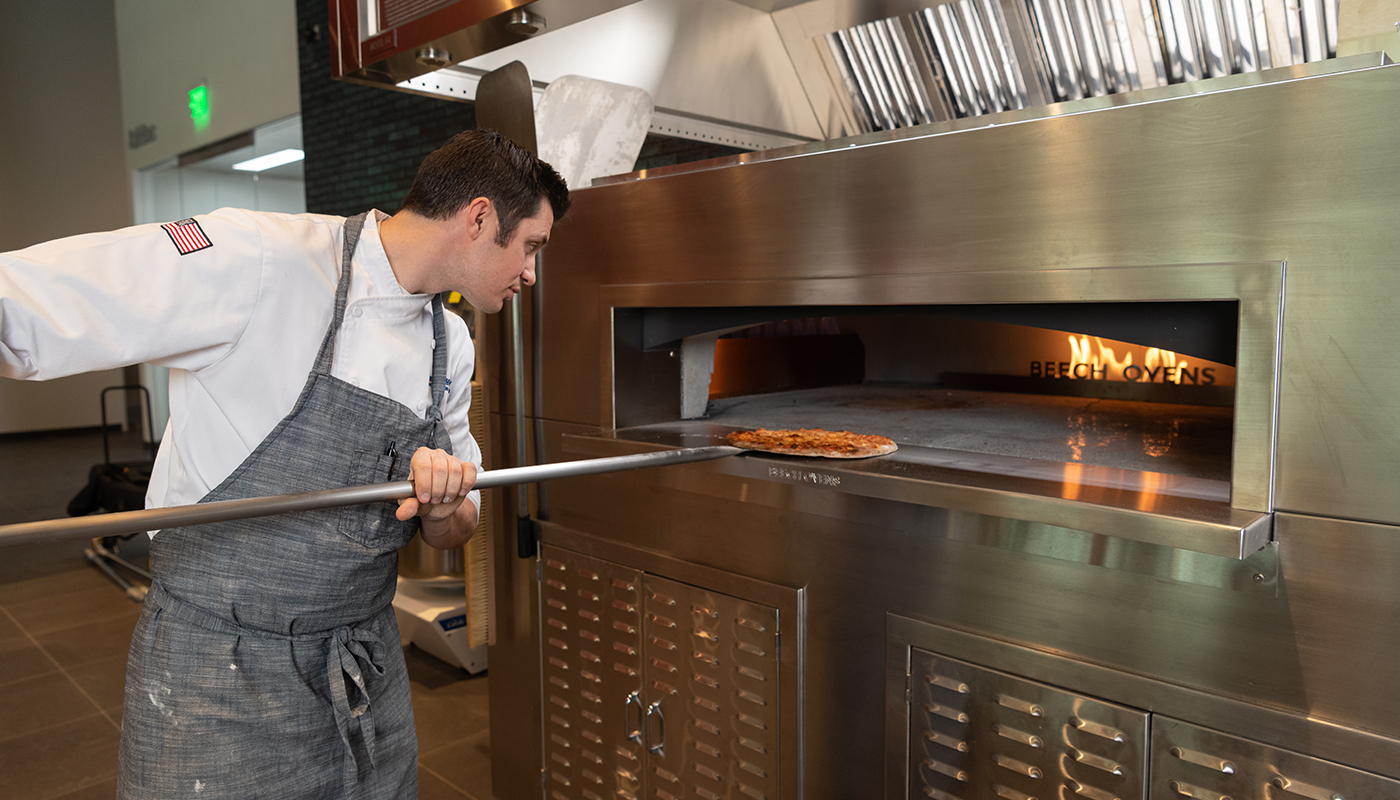
The approach is least persuasive when the bottleneck sits elsewhere. Faster cooking cannot create customer traffic; automation cannot justify itself without enough useful work. Middleby’s own 2025 shareholder letter described restaurant closures and postponed purchases amid cost pressures. Equipment demand depends on an operator having both a problem worth solving and the money to solve it.
That makes the demonstration kitchen more than an entertaining room full of ovens. It offers a sensible starting question for a sprawling manufacturer and a single restaurant alike: what, precisely, needs to happen before dinner? Find that constraint. Test the proposed change. Keep the machine only if the meal, and the arithmetic, agree.
Go into the kitchen
Explore Middleby, browse its brands, or arrange a visit to the Innovation Kitchens.