Consider a beer advertisement in which a ribbon has more to do than the bottle. It travels through Italy, encounters a floor lamp and a pasta machine, and moves to an operatic soundtrack. The beer is Peroni Nastro Azzurro. The agency is The Bank. The little joke is linguistic: Nastro Azzurro means blue ribbon. The larger idea is commercial. A name printed on a label can become an invitation into a culture.
- The Bank combined advertising, film and live events for brands and corporate clients.
- Peroni’s Italian origins supplied a coherent world for years of creative work.
- The original agency company was dissolved in 2017. This is a look at its work and what survives it.
An agency with a grudge
The name deserves a pause. In its own telling, The Bank grew from a music-production business that struggled in the recession of the early 1990s. The owners blamed a financial institution. The company that emerged was named in its memory, with a helping of sarcasm. Even the crest borrowed animals from high-street banking imagery before evolving into a phoenix, lion and unicorn. Someone had turned a grievance into a brand identity.
Founded in 1992, the London agency eventually offered strategy, advertising, design, film, digital communications and events. Its historical team page separated the leadership of advertising, film and events. That arrangement made its proposition tangible: a client could develop an idea and get help producing several expressions of it. The buyer was a marketing team; the audience might be beer drinkers, betting customers or employees watching a corporate film.

The Bank called its audience-facing approach “punter art”. There is useful modesty in that phrase. The viewer has other things to do. An advertisement has to earn a little attention before it can make a commercial argument.
The £1.2m distinction
In November 2004, The Bank won Peroni’s global advertising business following a two-agency pitch. The appointment came shortly after Will Harris joined as chief executive. Burkitt DDB, the previous agency, did not repitch. The reported UK advertising account was worth £1.2 million, within a larger international assignment.
Account spending is distinct from an agency’s fee.
That distinction matters. An account headline can describe a substantial advertising programme without telling us what the agency earned. The Bank sold professional creative and production services to businesses. Its projects establish that much; they do not reveal its margins. A buyer copying the approach would need to budget separately for the idea, production, permissions and distribution.
The brief included television, cinema and press. It placed The Bank between a brewer with international ambitions and consumers who needed a reason to recognise its product. By 2009, SABMiller had also appointed the agency to global work for Grolsch and Pilsner Urquell. One relationship had opened doors to two more brands.
A ribbon with somewhere to go
The 2008 ribbon campaign gave Italian design objects a shared visual thread. Its mechanism was unusually easy to explain: translate the name, then let that translation travel. Print and outdoor could belong to the same world as the cinema spot. The recognition came from the relationship between the details.

That world could expand without abandoning its roots. Storie di Stile explored the brand’s Italian heritage; an Amalfi Sailor execution extended it in 2014. In June 2015, The Bank announced Vita al Mare, written and produced by the agency and directed by Kalle Gustafsson. Filmed in Capri, it followed a starlet discovering ordinary seaside pleasures through local people. Cinema, outdoor, press and digital carried the campaign, with international rollout planned.
Think Artfully’s storyboard frames reveal the work beneath that ease. Before the finished images came drawings: a hat, cameras, faces, the arrangement of a scene. An attractive lifestyle had to become a sequence somebody could actually shoot.
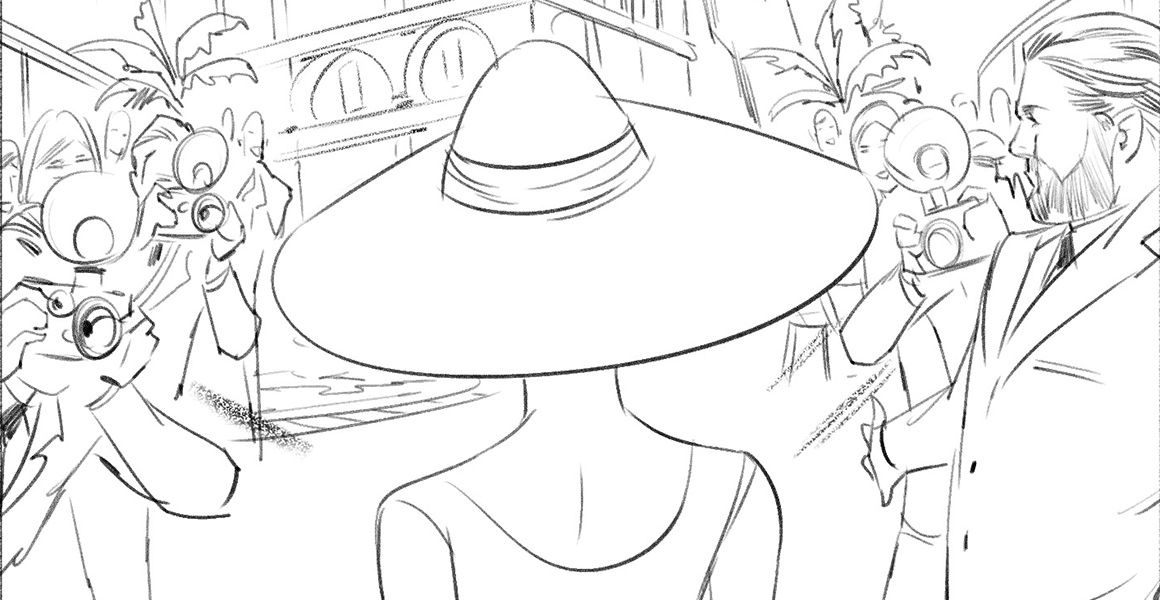
The practical lesson is to choose details your brand can plausibly own. Peroni had an Italian name and origin to work with. A company borrowing the scenery without that connection would need another reason for the audience to believe it. This is an interpretation of the work’s logic, rather than a claim that pretty pictures alone increased sales.
The soundtrack is part of the idea
The agency’s musical roots become especially interesting in its William Hill work. In 2010, a campaign for in-play betting paired football action with the Sex Pistols’ Pretty Vacant. The contrast supplied energy. Media agency 7Stars handled planning and buying, a reminder that an integrated creative proposition still depended on specialist partners.
Each band member received a £500 free bet, with winnings going to a charity of their choice. That reported gesture should not be mistaken for the music licence price. The creative decision also required agreement from the people attached to the recording.
“Music is a powerful cultural influence.”Rob Boughton, co-founder, writing in 2011
Boughton advised involving stakeholders early and using a demo when commissioning music. His warning was concrete: work could absorb time and money before a late rejection. A team can copy that discipline tomorrow. Hear the rough version together. Discover the objection while changing course is still relatively cheap.
Beautiful work needs boring paperwork
The archive also contains a less comfortable lesson. In 2016, South African model agents alleged that images from a 2006 Peroni campaign had continued running beyond authorised usage. Lawyers responding for The Bank and SABMiller disputed the claims, describing them as exaggerated and unfounded. These were contested allegations. They nevertheless illustrate why territories, duration and renewals belong in the production plan.
Companies House records The Bank Agency Limited’s dissolution on 7 November 2017. In December, trade reporting described Leagas Delaney’s appointment to Peroni and a desire to reconnect with younger adults drawn to craft beer. The chronology establishes an ending and a new brief; it does not establish what caused the agency to close.
The work remains useful to anyone buying or making advertising. Begin with something particular to the product. Give it a visual and musical vocabulary. Get approvals before production becomes expensive. Keep the permissions as carefully as the pictures. A brand world is much easier to build when everyone knows what they are allowed to put in it.