Consider a purchase order for painting an office. The invoice arrives. The amount matches. Accounts payable approves it. Somewhere else, a contract lists the agreed prices for ladders, brushes and labor. Nobody checks those prices. The transaction passes its test while the business may still be paying too much.
Daniel Haitz, Terzo’s head of growth and partnerships, uses this example to explain a peculiar corporate blind spot: two documents can agree with each other and still disagree with the deal. Terzo wants to make that third comparison routine. Its material is paperwork. Its intended audience is anyone responsible for the money.
- The job: connect commercial promises to actual spending.
- The machinery: document AI, human verification, analytics and agents.
- The test: whether a finding becomes a financial result.
The buyer’s missing CRM
The original observation was about an imbalance. Salespeople had elaborate systems for remembering their customers. Their customers often had spreadsheets for remembering the salespeople. Brandon Card had heard the complaints while working in enterprise software. In Terzo’s launch announcement, he recalled a large customer asking for a CRM built for buyers.
Card, Al Giocondi and Pradeep Thangavel founded Terzo in 2020. Thangavel had encountered the other side of the problem at Freshworks, where vendor contracts and account relationships were tracked through spreadsheets and email. Regular meetings with suppliers had not produced a shared, reliable picture of those relationships.
Card and Giocondi brought another shared history: Syracuse athletics. Card played football; Giocondi played lacrosse. They met at Harry’s Bar and Grill in 2008. The eventual company had three founders and a less romantic assignment: give enterprise buyers a useful memory.
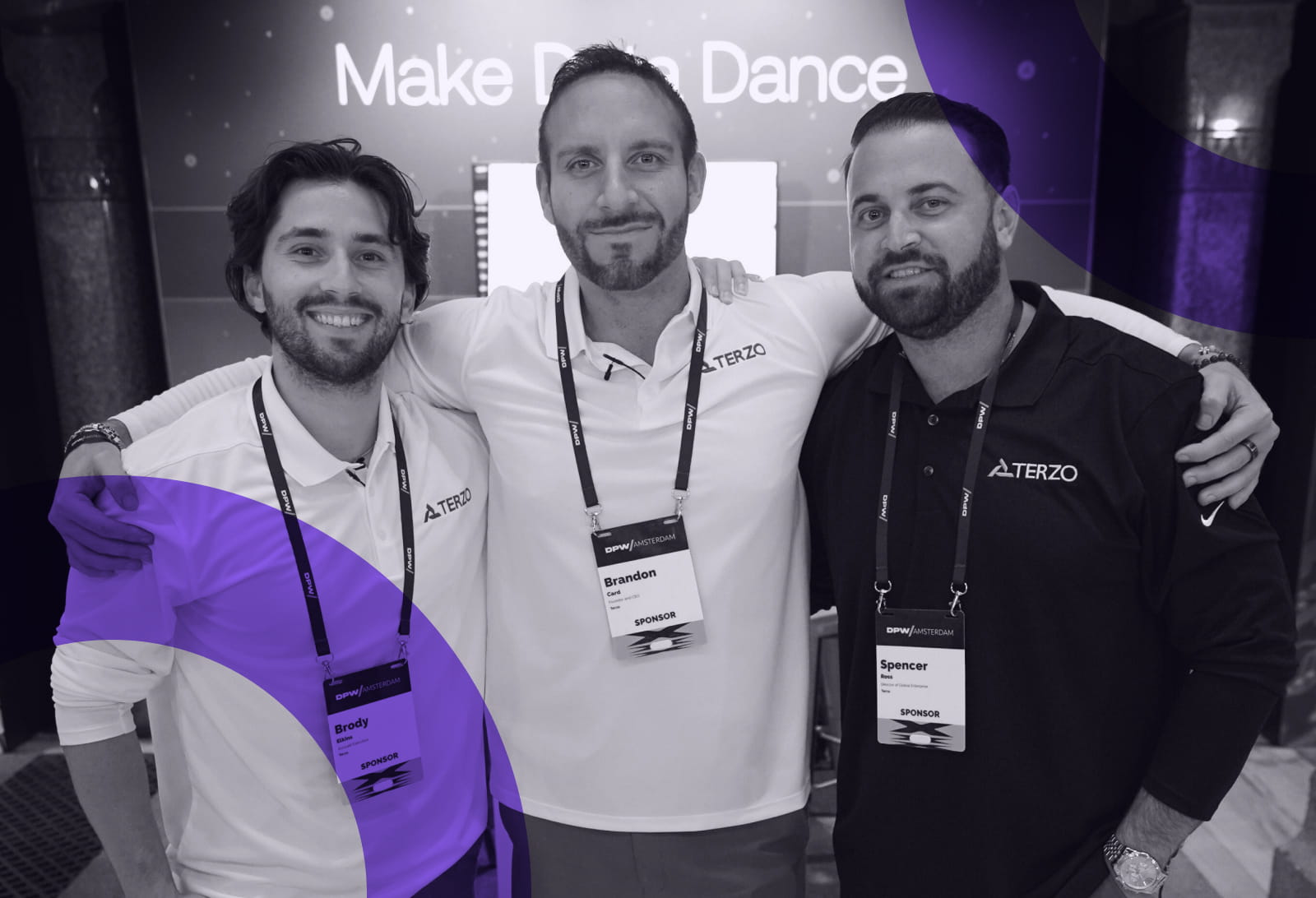
The timing was awkward. Card described frozen customer budgets and a fundraising process prolonged by the pandemic. Terzo bootstrapped before attracting angels and venture investors. A $3.2 million seed round in May 2021 preceded its public vendor relationship management launch that August. In November 2022, it announced a $16 million Series A led by Align Ventures.
Read the agreement. Then read the bill.
By the Series A, the pitch had become more financial. Historical ledger entries describe spending that happened. Multiyear contracts describe spending that may happen next. Terzo argued that finance needed both. A document repository could preserve an agreement without making its commitments useful to the people building a forecast.
Today, Terzo’s Document AI extracts commercial and legal terms from contracts, invoices and purchase orders. Its managed service combines machine processing with human quality assurance. The system normalizes records and connects agreements, amendments and related documents. Terzo calls the resulting network a Commercial Graph.
Invoices · POs
Connect records
Act on findings
Conceptual process, not a performance benchmark.
This is the distinction worth understanding. An amendment can change a price. A renewal clause can move a deadline. A supplier name can appear in several forms. Answering a question about one isolated PDF is easier than establishing which terms govern a payment across the whole relationship.
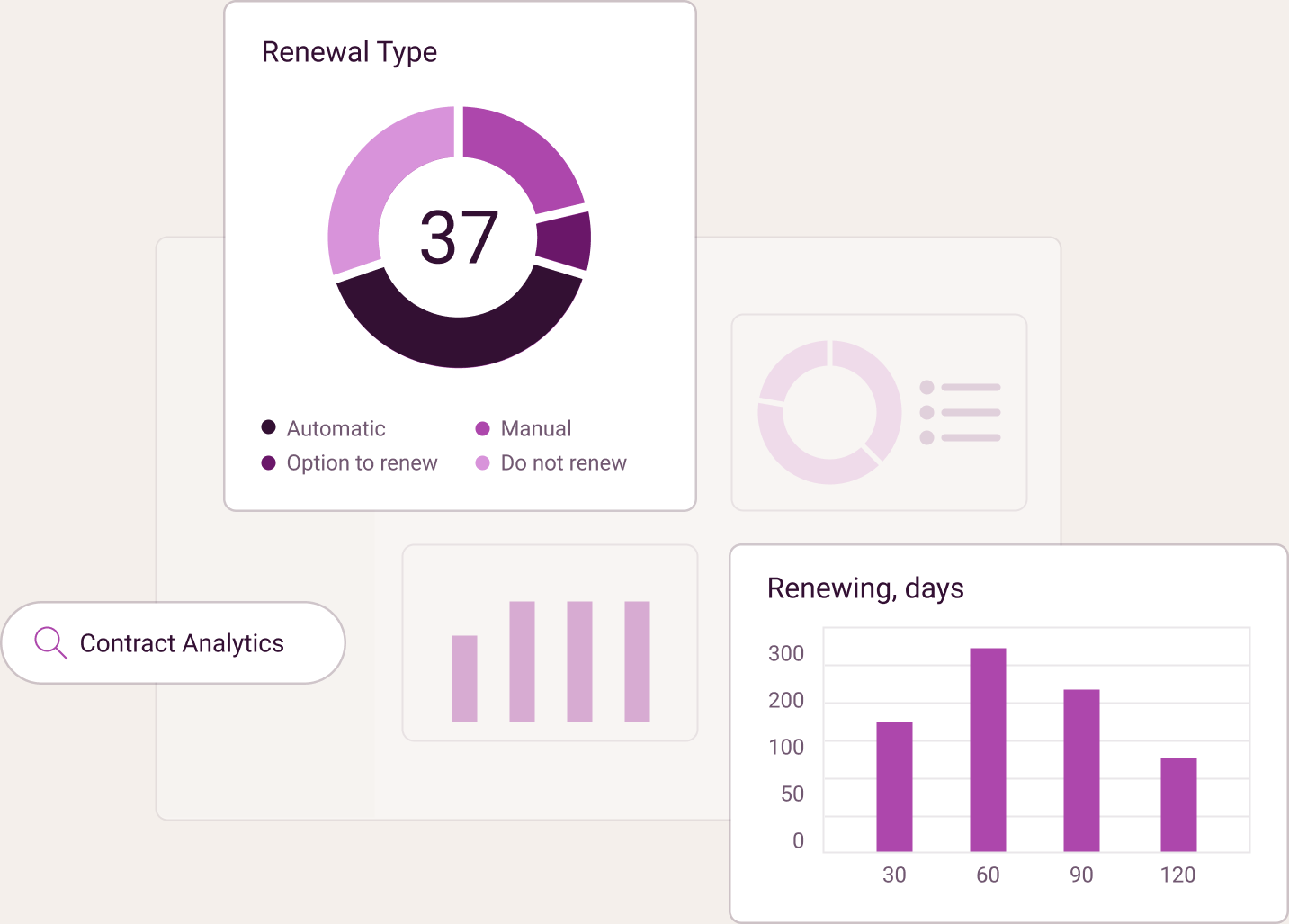
Contract Analytics adds dashboards for commitments, product inventory, renewals and risk. NirvanAI adds summaries, search, assistants and agents, with an API for custom applications. Finance can examine obligations and potential overpayments. Procurement can prepare negotiations. IT can track renewals. Legal can inspect the clauses behind an answer.
Terzo sells enterprise SaaS and AI-as-a-Service through a demo-led process. Its Microsoft Marketplace listing describes a managed service with a data model tailored to business objectives. A sensible buying calculation therefore includes the subscription, deployment work and the staff time needed to investigate findings. The commercial proposal needs to answer those questions.
For a buyer, the useful demonstration is a messy one: an original agreement, a later amendment and an invoice containing the disputed charge. Can the system follow the changes, identify the governing rate and show its work? That exercise tests the company’s expertise in extraction and document relationships more directly than a polished dashboard does.
The difference between found and recovered
There is a named customer example. On Terzo’s website, HD Supply’s Brian Crosson says, “Terzo helped us save $24M in OpEx.” The accompanying testimonial reports time savings from automated renewal tracking across IT, procurement and finance. It is a customer account published by the vendor, useful evidence with a clear provenance.
“Terzo helped us save $24M in OpEx.”Brian Crosson · HD Supply · Terzo website testimonial
The homepage supplies a larger scale: more than $500 billion in financial data processed and more than $1 billion in savings opportunities identified. Those are company-reported figures. “Opportunities” is doing essential work. Finding a discrepancy does not collect a credit, amend an invoice or persuade a supplier to accept a claim.
The limitations follow from the workflow. Missing amendments can undermine a comparison. Incorrect extraction can produce a false alarm. A genuine discrepancy may still require negotiation. Small businesses with a handful of straightforward agreements may find that a careful spreadsheet solves enough of the problem. The case becomes more compelling as document volume and commercial complexity increase.
Three words, six years later
Terzo’s market overlaps contract intelligence, spend analytics and outsourced data work. The relevant alternative might be a contract platform, an internal data project or a consulting engagement. Its strongest positioning is the managed, verified data layer connecting those activities. A head-to-head evaluation should use actual documents and check the evidence behind each result.
Its partnerships also need dates attached. Terzo announced Coupa certification and Microsoft Azure Marketplace availability in 2024. A 2025 IBM collaboration is historical: an April 2026 update says the partnership is inactive and watsonx integration is no longer supported. In June 2026, former NATO ambassador Douglas Lute joined the board as Terzo expanded its public-sector focus.
That government ambition is an extension of the same argument: large institutions need to understand their commitments. A board appointment signals a direction, however; it does not establish a federal deployment. The product still has to connect the underlying records before the promise becomes useful.
Then came a revealing admission. In September 2026, Terzo said it had been overthinking its description and had barely mentioned money. Its revised mission: “Find the Money.” Beneath the purple branding, the company describes flexible work, meditation and employee wellness. The customer promise has become decidedly less abstract.
There is something readers can copy immediately. Pick one supplier. Find the governing agreement and amendments. Compare the promised rate with a real invoice. Assign someone to resolve the difference and record the result. Before asking an AI to improve the business, give it a question whose answer someone can check.