The revealing detail in Teph Seal’s story is a trip to a wrecking yard. The company needed its mobile application to recognize vehicles reliably, so it tested VIN decoding against hundreds of cars there. Picture the contrast: a business devoted to making vehicles presentable, checking its technology among vehicles that had reached a rather different destination. A showroom demonstrates the finished product. A wrecking yard gives the scanner something to prove.
- Put the detail team inside the dealership.
- Connect each vehicle to its work order.
- Make the finished work visible to managers.
That small episode helps explain an easily misunderstood company. Teph Seal Auto Appearance prepares cars, certainly. But its business also involves making an unruly set of tasks manageable: who does the work, which vehicle receives it, who approves it, and how the dealer knows it is finished. The shine gets the attention. The coordination earns a closer look.
01 The dealership inside the dealership
Teph Seal works where its customers work. Its trained crews operate inside dealerships, preparing new vehicles for showroom displays and customer deliveries and bringing used vehicles back to resale condition. This is a business sold to dealers and automotive groups, with the car buyer experiencing the result at the end.
The arrangement changes what a dealership purchases. An independent detailer can sell a beautifully cleaned car. An internal department can provide direct control. Teph Seal offers an ongoing operation, including the recruiting, training, payroll, and supervision surrounding the technicians. For a manager, the relevant question becomes whether that arrangement releases attention for the rest of the dealership.
“The Teph Seal team has significantly reduced the time and distraction associated with managing the detail department.”
John Mantione · Vice President, Fields Auto Group
Consider what that testimonial values: management time. A dealer can inspect a polished bonnet. The hours spent filling a vacancy or sorting a schedule are less conspicuous, but somebody still has to supply them. Teph Seal has made those surrounding obligations part of the service it sells.
02 The shine has a back office
The service menu reaches beyond washing. Teph Seal lists interior and exterior reconditioning, paint protection film, ceramic coatings, window tint, paint correction, and dent repair. It also offers vehicle photography, condition reporting, and visual merchandising. A car has to look ready in a listing as well as on the lot.
These activities belong to the same commercial interval: the stretch between having a vehicle and presenting it for sale. Bringing them together gives a dealership a way to coordinate preparation and presentation. That is the operational logic of the offer; the quality of the local execution still matters.
- 01IdentifyVIN + work order
- 02PrepareAssigned services
- 03ConfirmApproval + reporting
03 First, the paperwork gave way
A May 2008 trade profile describes what went wrong before the handhelds: manually recorded vehicle information, faxed logs, spreadsheets, and billing delays. By 2005, Teph Seal had decided to automate. It piloted the system in Knoxville before a regional rollout in September 2006. The reported hard technology investment exceeded $600,000.
A rollout cost, not a current dealership price.
The transition had a human cost, too. The same account says some experienced detailers struggled to use the devices and personnel changes followed. Management reported labor savings of 10 to 15 percent. Read those as historical company claims, alongside the adoption problems, rather than as a savings promise for the next dealership.
That is the useful tension. Changing the recording system also changes the job. A technically competent worker can find the new routine difficult. Anyone copying this approach should budget for training and test adoption alongside the equipment.
04 A scanner is only the beginning
Teph Seal’s own technology account describes a development process with Zenware and MobileSpeed that began by walking through the work environment. The team gathered requirements from field staff, regional managers, and corporate managers. Those are three different views of one transaction, and the application had to connect them.
The resulting design joined mobile service orders, signature approvals, VIN decoding, barcode scanning, and time tracking to a management dashboard. Field data could reach managers responsible for services, pricing, employees, and reporting. The wrecking-yard tests fit this practical approach: challenge the input before trusting what comes out of the dashboard.
A later FYIsoft case study describes another version of the same problem, this time in finance. Teph Seal modernized reporting connected to Microsoft Dynamics GP, with distribution to more than 400 stores in one click. Capturing the job and distributing the financial report sit at opposite ends of the operation. Both concern information reaching the person who needs it.
05 People still carry the operation
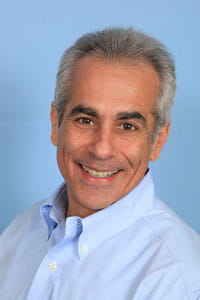
The leadership biographies add texture to the operating model. Chris Tricoli worked as a lot washer, detailer, and store manager before regional leadership. Jon Beckler’s biography emphasizes training and gives him the nickname “detail whisperer.” For a company selling managed labor, knowing how people learn the work is directly relevant expertise.
The current website reports more than 800 active dealership partners across 32 states and offers on-site staffing availability around the clock. Those are company-reported figures. Its dealer portal and mobile dashboard now share space with AI-assisted workflow language. The enduring question underneath the newer terminology remains wonderfully concrete: what is happening to this particular car?
06 Copy the sequence
The transferable lesson is to follow the work before buying the tool. Watch the handoffs. Establish a dependable vehicle identifier. Connect completion to approval. Pilot the process with real users, then teach it. Teph Seal’s public history gives each of those steps a practical setting.
For a dealership considering outsourcing, compare the whole operating burden: supervision, staffing coverage, preparation quality, reporting, and handoffs. A location with a stable internal team may value keeping control. A location with uneven workloads may value flexible coverage. Neither choice removes the need for clear standards. The polished car is the outcome; a repeatable way to produce it is the business.