Teddy Kaplan had a small problem with appearing on a podcast. He was being invited to explain a business he liked, to an audience that might include people who would quite like to compete with him. In September 2025, when host Spencer Levy raised that awkward possibility on The Weekly Take, Kaplan acknowledged that it had occurred to him, too.
He and his firm had preferred to “fly below the radar.” But a market that had grown up around him now required a more public voice. There was a dry little concession: “the cat's out of the bag.” An investor whose work depends on other people staying in their buildings was having to leave his own comfortable position behind the scenes.
Kaplan is president and chief executive of New Mountain Net Lease Trust, known as NEWLEASE, and leads the net lease strategy at New Mountain Capital. His professional subject is easy to overlook from the pavement. A factory can carry the same sign, employ the same people, and produce the same goods after its ownership changes. The consequential action happens in the contract.
That quiet rearrangement has supplied the through-line of his career. The public milestones concern funds, leases, and financing. Taken together, they tell a story about someone who has spent years examining the relationship between a business and the place where it does its work.
“The cat's out of the bag.”Teddy Kaplan, The Weekly Take, September 2025
Before the lease, the business
Kaplan graduated from the University of Virginia's McIntire School of Commerce in 1996, with a finance concentration. His earlier work included corporate and financial sponsors banking at Brown Brothers Harriman and investing in growth and early-stage companies at Meyer, Duffy & Associates. He earned his MBA at Columbia Business School in 2003.
The sequence matters because the subject of a net lease investment has two biographies. One belongs to the property: its location, condition, and possible uses. The other belongs to the company occupying it. A handsome building cannot answer a question about its tenant's ability to pay. A persuasive business plan cannot move a loading dock to a better address.
From 2003 to 2006, Kaplan worked at W. P. Carey, originating, underwriting, and financing net lease investments. Then came Angelo Gordon, where he helped form and manage its net lease real estate funds from 2006 to 2015. He co-managed the first two, which together had approximately $720 million in committed equity capital.
This was a career in which repetition had a purpose. Origination finds the transaction. Underwriting tests its assumptions. Financing determines how ownership is paid for. Having responsibility across those stages places the attractive opening proposition beside the less charming details that eventually decide whether it works.
A sale without a moving van
For a straightforward illustration, imagine a manufacturer that owns its factory. In a sale-leaseback, it sells the property to an investor and leases it back. Ownership changes; occupation continues. The company receives sale proceeds and accepts a rent obligation. The buyer acquires a property and the income associated with the lease.
The arrangement separates two decisions that often travel together: where a business should operate, and whether it should own that location. Renting can preserve access to a building while releasing capital tied up in it. Of course, the rent still has to be paid. A clever rearrangement of ownership does not repeal arithmetic.
In a triple net lease, the tenant generally takes responsibility for taxes, insurance, and maintenance, alongside rent. Those obligations help explain the appeal of the income stream to the owner. They also explain why looking closely at the occupant is unavoidable. The contract allocates expenses to a company that must remain capable of meeting them.
Kaplan's work sits in this overlap between property and corporate finance. The term “mission-critical” describes a practical question: how necessary is this particular site to the operating business? For a reader outside the industry, the useful image is a company considering the difficulty of moving. Machinery, location, and continuity can make an address far more consequential than a dot on a map.
The invitation in 2016
New Mountain announced Kaplan's arrival on February 11, 2016. The assignment was to build a net lease real estate business alongside the firm's existing investment strategies. Founder Steve Klinsky welcomed him into an organization that already researched companies and industries through private equity and credit.
Kaplan's stated attraction to the firm was its collective expertise and culture. He saw a setting in which sale-leasebacks with sponsored and leveraged companies could draw on knowledge already held inside the organization. His new job gave a familiar transaction a broader institutional home.
There is an appealing economy to that idea. Research is expensive, and a useful piece of knowledge need not belong to only one investment team. Understanding an industry may inform a decision to buy a company, lend to it, or own the facilities it occupies. Each decision requires its own analysis, but the conversations can begin with shared understanding.
For Kaplan, the opportunity was to build around those connections. The company behind a lease could be the subject of a richer discussion than an isolated property transaction would ordinarily invite. Who understands its market? What keeps demand going? What might change? The building gives those questions a fixed address.
Two fund closings, four years apart
In April 2019, New Mountain closed its first net lease fund with $533 million of equity commitments. Its initial fundraising goal had been $300 million to $350 million. Approximately $86 million came from the general partner, with $447 million from outside limited partners. The investors included institutions and private capital.
By June 2023, the second fund had closed with $825 million, against a $750 million goal. Approximately $100 million came from the general partner. The firm described a strategy centered on operationally critical facilities occupied by middle-market and private equity sponsored businesses.
Those numbers should be read for what they measure: committed equity for two separate funds. They are neither Kaplan's personal fortune nor a return earned by investors. The distinction matters in a profile where the largest numerals belong to collective financial vehicles, while the individual's contribution lies in organizing and managing the investment work.
The progression nevertheless gives the career a visible scale. A 2016 hiring announcement had become a first fund and then a successor. The June 2023 announcement reported $1.9 billion in acquisitions across 47 transactions since the strategy began. That is the unromantic evidence of a platform being built: successive decisions, properties, counterparties, and commitments.
A larger audience for a familiar idea
Kaplan's June 2025 conversation with Giovanni Amodeo for ION Influencers brought the mechanics into view. It covered the connection between New Mountain's private equity work and net lease investing, including sourcing transactions and coordinating teams. The investment portfolio was described at the time as nearing 40 million square feet, primarily industrial real estate across North America.
In a LinkedIn post about that interview, Kaplan recalled spending years explaining sale-leasebacks and net lease to investors. He described an asset class increasingly understood as a credit alternative. That recollection supplies a revealing professional before-and-after: explaining that a category exists, then explaining how one approaches it.
Popularity changes the conversation. When more people understand a transaction, a practitioner can spend less time defining its vocabulary. At the same time, familiarity makes the broad idea harder to claim as a distinction. The questions move toward execution: access to opportunities, judgment about occupants, and the organization of the people doing the analysis.
For Kaplan, those were already familiar subjects. His May 2026 appearance on Sean Hostert's Net Lease Observer returned to industrial manufacturing, the evolution of the asset class, and the role of New Mountain's existing private equity and credit infrastructure. His public appearances have made the underlying process easier to inspect.
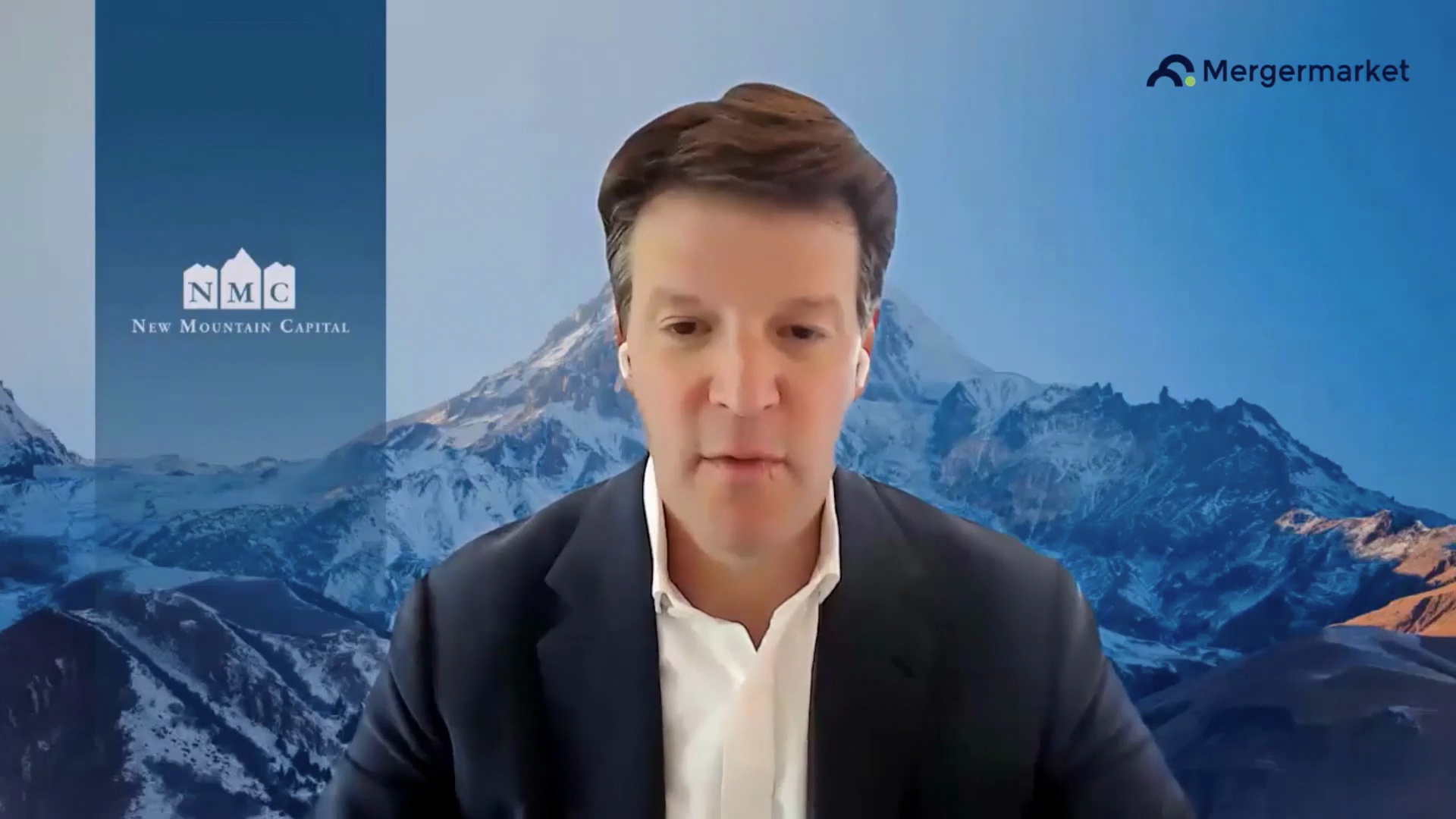
The contract acquires another audience
NEWLEASE added another chapter. The trust was formed in August 2024, and Kaplan has served as its president and chief executive since formation. He became a trustee in December that year. The titles put him on both the executive and governance sides of this particular vehicle.
Then, in December 2025, New Mountain announced its inaugural net lease asset-backed securities transaction: a $493.4 million issuance, NMNL 2025-1. Goldman Sachs and Evercore served as underwriters. Kaplan described the transaction as a milestone in the platform's growth.
An asset-backed securities issuance gives a portfolio another route into the capital markets. The acronym can make the transaction sound remote from a factory door. Yet the subject remains connected to leases and properties. A financing structure changes how capital is arranged around assets; it does not remove the need to understand them.
The trust and the securities issuance also belong to different parts of the story. One concerns an investment vehicle Kaplan leads. The other concerns financing announced by the broader net lease platform. Keeping them distinct lets the expansion be understood without turning every New Mountain announcement into a single undifferentiated pile of money.
The patience inside the paperwork
A professional life devoted to net lease involves an unusual relationship with time. A transaction has a closing date, but a lease asks for a view of years ahead. A company's present use of a building is only the beginning of the question. The agreement concerns its continuing use, and the economics attached to that commitment.
This is why Kaplan's career can be read through both movement and continuity. He moved among firms, helped build funds, and took on responsibility for a trust. The recurring subject remained the relationship between an operating company and its premises. His roles changed while the central investment problem stayed recognizable.
By July 2026, he was signing the chief executive certification accompanying NEWLEASE's quarterly report for the period ended June 30. There is little glamour in a certification. It is, however, a useful final image for a career so often described in dollars: a named executive putting his signature to the reporting of the business he leads.
The public voice and the paperwork now sit beside one another. Kaplan explains the market in interviews and occupies formal roles inside it. His story follows the distance between an idea that once needed an introduction and an operation with funds, financing, governance, and reporting. The factory may stay where it is. A considerable amount of work takes place around it.