The violins were there already. Sixty-two of them, half-size instruments, sitting in storage. TeamWork Education Foundation had something a child could use, but possession was only the beginning. In February 2025, news of a partnership with Palm Beach Symphony supplied the missing movement: the instruments had been repaired, outfitted, and given to students. A charitable asset had finally become something playable.
- TeamWork funds college scholarships and school music education in Palm Beach County.
- Its college approach combines tuition help with academic and career support.
- Its music work pays attention to instruction as well as instruments.
“We had 60-plus violins in our storage area.”Sue Chafin, TeamWork board member
The recipients included The Conservatory School @ North Palm Beach, Berkshire Elementary, and the Florida Youth Orchestra in Fort Lauderdale. It is an unusually useful little story about philanthropy. A donation needs a route to its destination. Sometimes the consequential decision is finding the organization that already knows that route.
A second career in opening doors
TeamWork began in 2012 with Kenneth Stein and Sandra Strine. Stein had attended public school in New Jersey, studied business at Rutgers, become a lawyer, and then founded Stein Hotel Corporation. After retirement in Florida, he wanted to give something back to public education. Strine brought a different kind of experience: public schooling in Pennsylvania, teaching first grade, and a long career in individual, marriage, and family therapy.
Their foundation now describes itself as all-volunteer. Its leadership mixes business experience with educators and school-system knowledge. Chafin, for example, is the retired owner of Chafin Music Center. That background makes the violin episode less mysterious. These are people with practical connections to the systems they are trying to help. The volunteer description concerns the people organizing the work. Teaching, instruments, scholarships, and program delivery still require resources. A donated hour can help run an organization; paying for educational opportunities remains a separate responsibility.
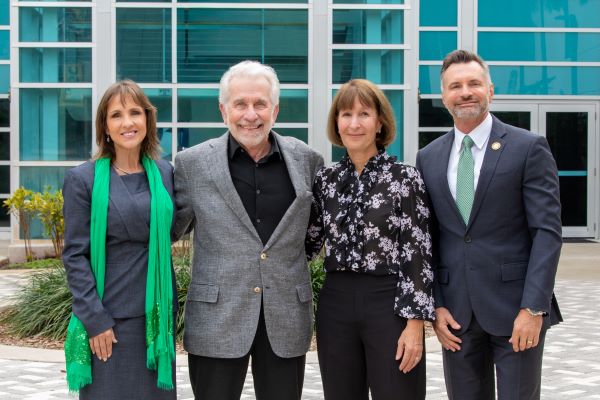
The student between a paycheck and a degree
Consider Mike, a biotechnology student described by Palm Beach State College. He works overnight hospital security and then goes to class. “I work full-time overnight security at a hospital,” he told the college. There is no shortage of ambition in that sentence. There is a shortage of margin.
The college describes TeamWork’s interest in ALICE households: Asset Limited, Income Constrained, Employed. These are working households struggling to afford necessities. That helps explain its position in the education landscape. Its beneficiaries are students; its institutional partners are colleges and schools; its financial supporters are donors. The service is educational support, delivered through institutions students already attend.
TeamWork made Palm Beach State its exclusive postsecondary partner. In the college’s account, president Patti Lehrhoff was persuaded by its foundation, programs, and leadership. The current program concentrates on career pathways at the Palm Beach Gardens and Loxahatchee campuses. Listed fields include medical technology and STEM. The intention is to connect a course of study with a plausible occupation, while helping students manage the journey between them.
The check is the first installment
In January 2026, Palm Beach State announced a $200,000 commitment over two years for Associate in Science students at Palm Beach Gardens. The package includes financial assistance, academic coaching, tutoring, and career counseling. That combination is the important design choice. Tuition help addresses the bill; the accompanying services address the work of staying enrolled and deciding what comes next.
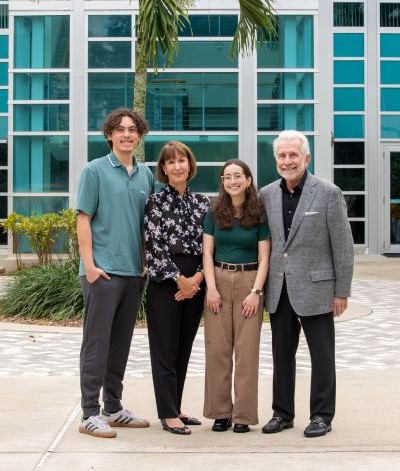
Electrical power technology student Jacob Delgado told the college he had found an interest in instrumentation and control. Biotechnology student Amanda Shenkman hoped to work in a laboratory. These are specific destinations. TeamWork’s version of college access links financial help to the possibility of doing identifiable work in the region.
scholars graduated or renewed for fall 2026.
The October 2026 impact report makes the distinction visible: 11 scholars graduated, 23 renewed, five were not eligible, and two withdrew. Together, graduates and renewals represent about 83% of the original cohort. That is a continuation-or-completion measure, rather than a graduation rate. Keeping those categories separate makes the result much easier to judge.
A music lesson needs a musician
Across its other program, TeamWork reports reaching more than 2,500 music students annually in 20 schools. Professional musicians serve as artists-in-residence, teaching and working with students and teachers over the school year. Small-group instruction supplies attention that an instrument alone cannot provide.
A schoolwide plan for The Conservatory School makes the arrangement concrete. TeamWork funds artists-in-residence working with grades four through eight, with weekly activity. The school describes this as support for families unable to afford private tutoring or coaching. Here, the additional resource is an adult’s time and skill, delivered inside the public-school setting.
Borrow the connection
The financial structure is ordinary nonprofit arithmetic: contributions, grants, and investment income fund charitable work. The useful distinction from a standalone scholarship award or instrument giveaway is the accompanying support. A college has tutors and career advisers. A symphony has an instrument-distribution program. TeamWork can connect money and materials to that existing capacity.
One public grant request shows the scale of the planning. In March 2024, TeamWork sought $10,000 for college support and mentoring within a proposed $395,000 project running from July 2024 through June 2025. That was a request and a budget, rather than a receipt for completed work. The application described volunteers and college staff helping students through mentoring and peer resources. It also identified individual donors as an important source of support.
For a donor, this offers two concrete ways in: help fund a student’s studies or help bring sustained music instruction into a school. The foundation also invites people to volunteer, host fundraising events, and discuss partnerships. Its focus is deliberately geographic. Someone seeking unrestricted cash, a nationwide scholarship service, or an immediate cure for every barrier to college would need a different arrangement.
There are practical boundaries. Its dedicated instructions for 2013-2024 scholarship recipients require invoices or receipts; direct payments generally go to institutions, with reimbursements requiring documentation. Scholarship benefits cannot repay student loans. Those rules are for legacy awards, but they reveal the operational detail behind the generous gesture.
The lesson another community can borrow is a question: who already knows how to get this resource used? That is an interpretation of TeamWork’s partnerships, not a guarantee of results. It depends on capable partners, sustained funding, and students who can participate. The violins make the question wonderfully tangible. First, somebody has to open the storage room. Then somebody has to know where the children are.