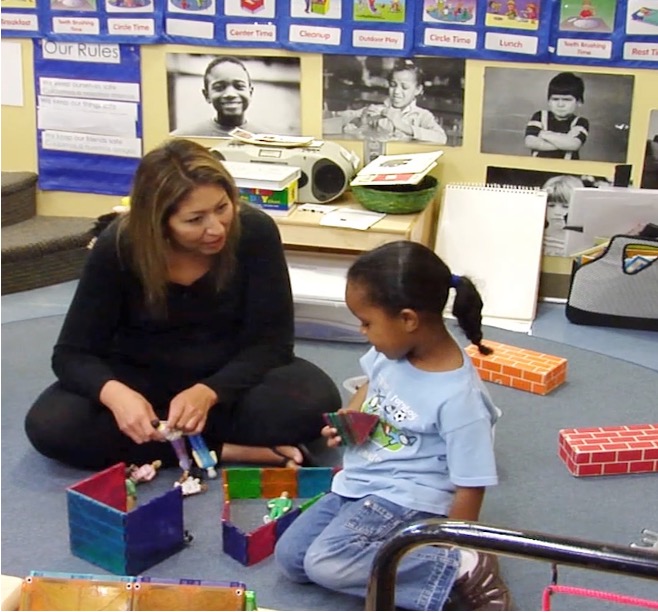
A classroom can look wonderful in a photograph. The books are upright. The blocks are sorted. The children’s paintings make the walls look busy and loved. Yet a photograph cannot tell you whether a teacher follows a child’s idea, notices confusion, or asks a question that produces an unexpected answer. Teachstone has built its business around that missing information.
- The product: CLASS observations, certification, coaching and professional learning software.
- The customer: early childhood providers, Head Start programs and education systems.
- The wager: specific feedback can help teachers improve everyday interactions.
The company’s central instrument is CLASS, the Classroom Assessment Scoring System. It gives trained observers a shared vocabulary for watching educators and children together. Its commercial proposition follows naturally: once you can describe an interaction precisely, you can train someone to recognize it, discuss it and practice improving it.
The room is only the beginning
Robert Pianta and Bridget Hamre founded Teachstone in 2008, bringing University of Virginia research into a company that could deliver training and support beyond a research setting. Both were CLASS authors. Their expertise was in relationships and classroom processes, which made the company’s starting question unusually focused: what happens between the adult and the child?
That focus distinguishes CLASS from broader measures of classroom conditions. The Environment Rating Scales, including ECERS, examine a wider set of features such as space, routines and materials, alongside interactions. CLASS concentrates on interactions themselves. Programs may use the approaches together. A well-stocked book corner and a thoughtful conversation about a book answer different questions.
In the preschool framework used in Head Start monitoring, three domains organize the observation: Emotional Support, Classroom Organization and Instructional Support. A calm room matters. So does whether the teacher extends children’s thinking. The categories let a program discuss those strengths separately, rather than flattening every impression into “good teaching.”
First, teach people to see
Observers watch classroom activity in cycles, then score defined dimensions on a seven-point scale. Teachstone describes observation periods of 15 to 20 minutes. Scores capture the frequency, depth and duration of interactions. The useful question is what the observer actually saw, and how consistently it happened.
Repeat the cycle. A score starts the conversation.
That makes observer preparation part of the product. Teachstone sells training, reliability testing and annual recertification. Organizations can also develop internal trainers. The business depends on people applying a common framework consistently, rather than every principal or coach bringing an entirely private definition of classroom quality.
“The evidence is clear that interactions matter.”Bridget Hamre, co-founder
The next step is harder than collecting a number. Teachstone’s CLASS Quality Improvement Subscription connects observation data, reports and learning resources in an updated myTeachstone platform. Leaders can assign resources around particular growth areas. CLASS Connect adds short courses, including 15-minute modules, for educators whose workday rarely contains an empty afternoon.
For deeper support, CLASS 1:1 Video Coaching develops coaches over ten months. Participants work with classroom footage, complete facilitated training and practice coaching in their own organizations. Certification includes at least ten coaching cycles with at least two educators. Those requirements reveal the company’s view of improvement: repeated practice, with another person paying attention.

Consider a hypothetical coaching goal: give children more room to explain their reasoning. A useful review would identify a particular exchange, discuss what the teacher noticed and choose a different response to try. The next observation could look for that practice. This is an illustration, rather than a reported customer result, but it shows why a shared vocabulary matters. “Improve instruction” is an intimidating assignment. Reviewing one exchange gives teacher and coach something they can actually work on.
The bill includes human attention
Teachstone earns revenue from subscriptions, training, certification renewals, coaching, services and printed materials. When checked in October 2026, its store listed Infant-Toddler Observer Certification Training at $994 and observer recertification at $156. These are individual product prices. A program’s total depends on staffing, services and purchasing arrangements.
Time belongs in that calculation. Someone must observe, discuss the findings and help teachers practice. Software can organize the work; the work still requires people. For a director comparing proposals, the practical question is whether the budget supports the feedback conversation as well as the observation.
The buyers include public systems with consequential uses for the results. Head Start employs CLASS in program monitoring. California’s preschool implementation combines CLASS 2nd Edition with the companion CLASS Environment measure. Teachstone also describes work with military child development centers. This places the company where professional learning meets public accountability.
California also illustrates the difference between buying a measurement system and designing an accountability policy. Its published preschool guidance says the state has not set a minimum CLASS domain score, while requiring results to be reported through myTeachstone. Regional training support is available to contractors. The same instrument can serve different purposes depending on how a public system chooses to use it.
Two tools were one complication too many
A revealing product change arrived in August 2025. Earlier infant and toddler settings used separate CLASS tools. Teachstone said this contributed to inconsistent training and more complicated implementation. Its second-edition Infant-Toddler suite brought the age groups into one framework, with aligned learning supports and certification pathways.
The lesson is refreshingly practical. A research tool has to survive contact with schedules, staff changes and training budgets. Feedback from the field helped drive the redesign. Simplifying implementation became part of improving the product, alongside updating examples and guidance.
The company has also borrowed expertise where useful. In 2016, Sesame Workshop and Teachstone announced co-produced educator courses covering social-emotional development, mathematics, and language and literacy. The familiar children’s-media organization was helping teach the adults. Teachstone’s B Corp certification, held since January 2021, adds a formal stakeholder commitment to its educational mission.
A score needs a second conversation
There are limits to what this approach can settle. Head Start explicitly notes that CLASS does not assess every component of teaching quality, including curriculum and ongoing assessment of children’s progress. An observed interaction is evidence about that interaction. It cannot answer every question about a school.
The transferable idea is modest enough to use tomorrow: choose a behavior, observe it carefully, give specific feedback and make time to practice. Without consistent observers or follow-through, measurement offers little practical help. Teachstone’s value rests on what happens after the score - when an educator gets another chance to listen, respond and ask a better question.