When Alex Grodd moved from teaching in Atlanta to teaching in Boston, he carried something rather valuable with him: two years of classroom materials. The problem was where those materials went. In a 2011 interview, he described the prospect of their dying on his desktop. Another teacher could use them. There was simply no convenient route from one teacher’s hard-won experience to another teacher’s Tuesday morning.
- BetterLesson grew from shared lesson files into personalized teacher coaching.
- Districts buy support tied to classroom practice, curriculum, and leadership.
- The 2026 Learning launch brings CSA curriculum expertise and Abl analytics into the offer.
The file that stayed on the desktop
BetterLesson began in 2008. Grodd and Erin Osborn had taught; Jonathan Hendler supplied technical expertise. Grodd also named Matt Lenard among the founding team. Their original proposition was sensible and appealing: let teachers borrow good work rather than spend every evening inventing it. The internet had made sharing photographs effortless. Surely it could manage a sixth-grade lesson.
But a file contains only part of a teacher’s knowledge. It can tell you what the activity was. It cannot sit beside you when your class misunderstands it. BetterLesson’s history makes that distinction unusually visible. Contemporary reporting dates its turn toward professional development to 2014. By November 2017, it had announced a $10 million Series B led by Owl Ventures to expand personalized coaching.
The change suggests a useful business lesson: distributing an answer and helping someone use it are separate services. A lesson library addresses preparation. Coaching addresses practice. BetterLesson increasingly sold the latter, with software helping organize the relationship.
The second conversation is the product
Consider Juan Lara, a Kansas City math and science teacher who participated in foundation-supported coaching in 2017-18 and 2018-19. In BetterLesson’s published interview, he described working with coach Chris DeWald on ways for students to share their work. One strategy paired students to review a problem. They also developed tracking for engagement, student talk, and classroom data.
Lara had worried that virtual coaching would require too much extra time. Small changes, followed by reflection, altered his assessment. His account is a teacher’s testimonial, but it usefully explains the service: someone helps narrow a sprawling classroom problem into something you can actually try.
“I was surprised to see the impact my student-centered lessons had on my students’ learning when I made small changes to my teaching.”Juan Lara · Math and science teacher · 2018
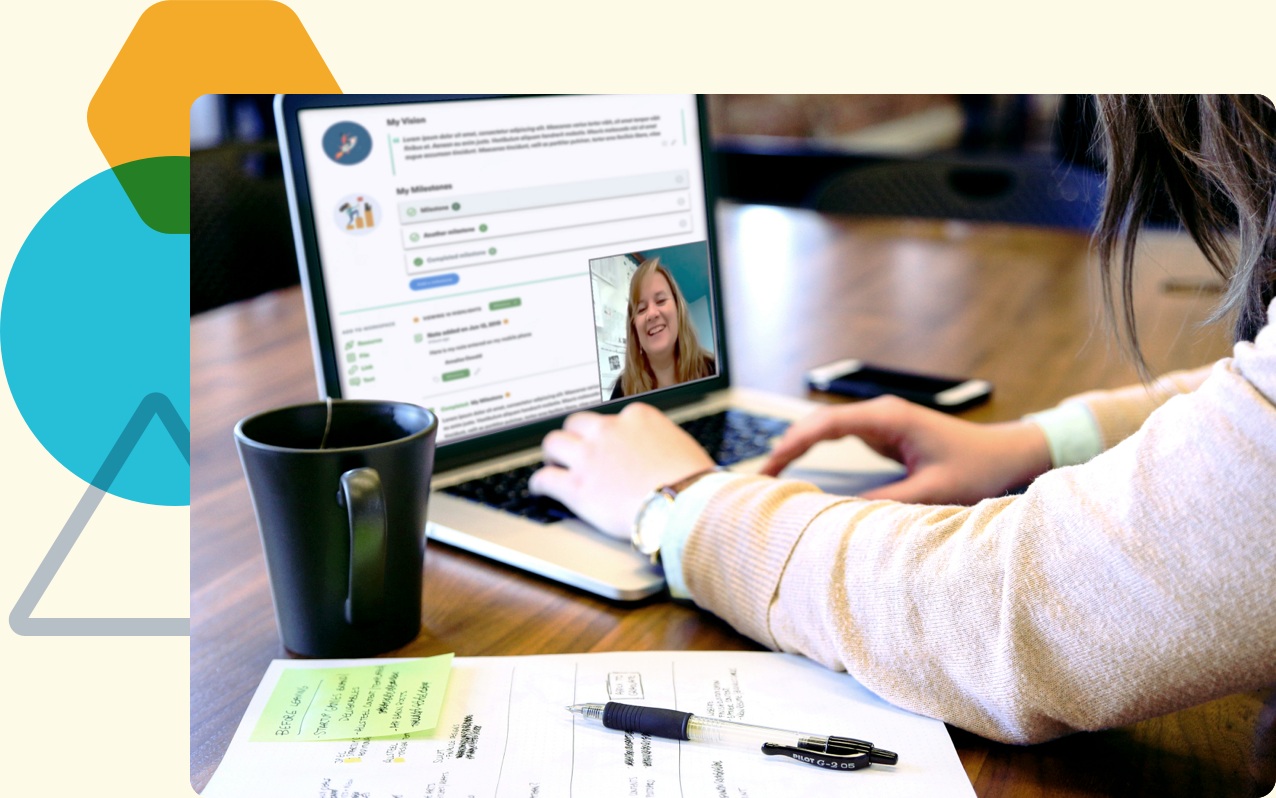
The company calls its method Try-Measure-Learn. A teacher selects a strategy connected to a goal, gathers evidence of what happened, and discusses what to refine. In its 2017 description, teacher and coach met by video every other week. The important feature is the return visit. Advice acquires a deadline and an audience.
BetterLesson matches educators with coaches whose experience fits their goals. Coaches receive training and continuing development themselves, including peer learning communities. It is a pleasingly recursive arrangement: the people helping teachers learn are expected to keep learning.
Who buys the sequel?
The customer is usually an institution: a school, district, or education agency. The user may be a new teacher, an experienced instructional coach, or a principal. BetterLesson offers virtual coaching, workshops, self-paced learning, and Learning Walks, which use non-evaluative classroom observation to examine changes in practice.
That makes it a professional learning provider with digital infrastructure. Its practical alternatives include district-employed coaches, curriculum publishers’ training, and other development providers. A free resource library competes for teachers’ browsing time; a sustained coaching relationship competes for district budgets and staff time.
Current pricing is customized to the district’s goals and scope. The company’s FAQ describes options ranging from single workshops to ongoing coaching and broader partnerships. Free teacher-created lessons and strategies remain available through BL Lab. The distinction matters: sampling a teaching idea and commissioning implementation support involve different commitments.
A June 2025 partnership with PASCO Scientific illustrates the paid work. PASCO supplies OpenSciEd curriculum and lab technology; BetterLesson supports implementation with professional learning. The announced sequence includes a launch webinar, asynchronous learning, in-person training, planning workshops, and Learning Walks. The equipment purchase gets a human sequel.
A timetable with a point of view
BetterLesson acquired Abl in February 2025, adding scheduling and academic-program analysis. The move extended its attention from what teachers do with classroom time to how districts distribute that time.
In the company’s Round Rock ISD case study, elementary campuses differed dramatically: one offered 140 daily literacy minutes, another 50. The analysis also identified $4 million in potential savings without staff reductions. Potential deserves its place in that sentence. An identified opportunity is not money already recovered.
The observation is more interesting than a generic efficiency claim. Two children can face the same academic expectations while receiving quite different opportunities to meet them. Better teaching and better scheduling belong in the same conversation.
A new name, and a careful reading of the numbers
In August 2026, CSA Education launched BetterLesson Learning after acquiring BetterLesson through a structured asset sale. The new offer combines curriculum expertise, coaching, and AI-enabled Abl Insights. The website identifies a new LLC and explicitly distinguishes it from the earlier corporation. This chapter carries forward an instructional history; it should not inherit the old company’s financial biography by editorial accident.

The website reports cumulative reach exceeding 86,000 educators and four million students. Those figures describe reach. BetterLesson also reports ESSA Level III, or “Promising Evidence,” from correlational research linking professional learning with outcomes. Association warrants attention; it does not establish that coaching alone caused the difference.
For a district leader, that suggests a sharper purchasing question: which observable classroom change will this support? For a teacher, it suggests starting with a manageable goal rather than a wholesale reinvention. Participation, student discussion, and feedback offer places to look. These are editorial applications of the coaching cycle, not promises that every school will reproduce a published result.
What can another organization copy? Define one behavior, arrange support, examine evidence, and return to the problem. As an implementation judgment, the approach needs protected time and trust. Where coaching becomes surveillance, or nobody can act on the findings, a thoughtful conversation can remain just that. Monday changes when someone has room to do something differently.