speech-recognition
(29)
Lucas Systems Wants to Give Every Warehouse Worker a Smarter Route
The Pittsburgh-area software company spent 28 years teaching warehouses to talk. Now its bigger bet is that the best automation is the one that changes its mind while the shift is still running.
CNTXT AI Is Building the Arabic Layer the Global AI Boom Skipped
The Abu Dhabi company is betting that the next enterprise AI advantage will not come from a bigger model. It will come from cleaner local data, Arabic that sounds like people actually speak, and systems that never have to leave the region.
Omilia
For 24 years Omilia has been trying to kill the phone menu. Now, with $67 million in fresh funding and a billion conversations a year running through its systems, the Cyprus-born company is betting that the future of customer service sounds less like a robot and more like a person who already knows why you called.
Observe.AI
The company wants to turn every customer service call into something a machine can hear, judge, coach and eventually handle on its own.
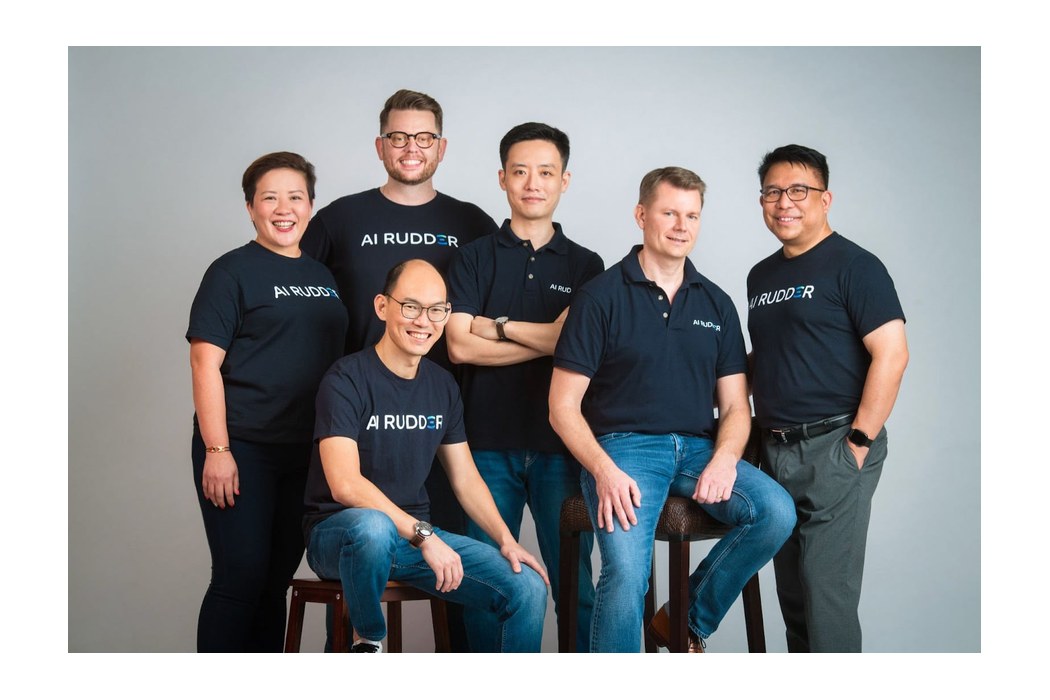
AI Rudder
AI Rudder is a Singapore-based voice AI company that automates high-volume customer phone calls and chats for banks, lenders, insurers, e-commerce and logistics firms. Its human-sounding voice agents handle payment reminders, verification, surveys, telemarketing and customer service across 15+ languages and regional accents, letting enterprises scale contact-center work without adding headcount. Backed by Sequoia, Tiger Global and Coatue, it serves 500+ enterprise clients concentrated in Southeast Asia and Latin America.
AirCaps
AirCaps builds lightweight AR smart glasses that display real-time captions, translate 60+ languages, and take AI meeting notes directly in your field of view. Founded by Yale and Cornell computer scientists who have been building on smart glasses since age 13, the company started with the Deaf and Hard of Hearing community and expanded to travelers, language learners, and professionals. The 49-gram glasses run a 4-microphone beamforming array, claim 97% caption accuracy at roughly 300ms latency, and sell for $599 with a free-forever tier.
ISSEN
ISSEN is an AI voice tutor for language learning. Built by Y Combinator Fall 2024 founders Mariano Sorgente and Anton Apostolatos, the app holds free-flowing spoken conversations in 50+ languages, adapts to a learner's level and interests, and lets users tune the tutor's speaking speed, patience, and accent. It targets intermediate-to-advanced self-study learners who want real conversation practice without booking a human teacher, and runs on a B2C subscription across web, iOS, and Android.
WIZ.AI
WIZ.AI is a Singapore-based enterprise voice AI company that builds generative-AI voice agents ("Talkbots") able to hold natural, human-like phone and messaging conversations in local Southeast Asian languages and accents - including Singlish, Bahasa Indonesia, Tagalog, Thai and Mandarin. Founded in 2019, it helps banks, telcos, insurers and other large enterprises automate customer service, collections, telemarketing and reminders across voice, chat and messaging channels, positioning itself as a local-first alternative to global contact-center automation vendors.
AssemblyAI
AssemblyAI is a San Francisco speech-AI company that builds and serves models turning audio and video into accurate text, plus higher-level 'audio intelligence' like summaries, sentiment, speaker labels, and PII redaction. Founded in 2017 by Dylan Fox, it sells a developer-first API used to add transcription, real-time streaming, and voice-agent capabilities to software. The company has raised more than $113M across seed to Series C and reports processing over a million hours of audio a day for customers ranging from startups to large enterprises.
Dasha
Dasha is a voice AI platform that lets developers build, test, and deploy human-like conversational voice agents to automate phone-based business processes such as sales calls, customer support, and lead qualification. Founded by Vladislav Chernyshov and Ilya Stupakov, the company built its own low-latency speech recognition and text-to-speech stack, and exposes conversation design through a purpose-built scripting language (DashaScript) and a JavaScript/Node.js SDK. It positions itself as infrastructure for developers who want production-grade, real-time voice AI at scale.
Talkmap
Talkmap is a Dallas-based enterprise AI company that turns 100% of a contact center's customer conversations - calls and chats - into structured, real-time intelligence. Its Talkdiscovery platform combines patented AI, machine learning, and computational linguistics to automatically detect customer intent, sentiment, and emerging trends, then routes those insights to specialized AI assistants for retention, sales, compliance, coaching, and analysis. Founded in 2017 (originally as discourse.ai) and led by CEO Tim Moss with founder Jonathan Eisenzopf, the company serves large brands in telecom, banking, insurance, and healthcare, keeping customer data inside private cloud environments rather than sending it to third-party models.

100ms
100ms builds voice-first AI agents for U.S. healthcare operations. Founded in 2020 as a low-code live video and audio infrastructure platform, the company pivoted to healthcare, applying its real-time communications expertise to automate patient access workflows - benefits verification, prior authorization, referral intake, scheduling, and intake - so care teams spend less time on phones and patients start treatment faster. Its agents are built to be HIPAA-compliant, with clinical safety guardrails and human escalation.

ASAPP
ASAPP is a New York-based enterprise AI company that builds an AI-native Customer Experience Platform for contact centers. Its flagship product, GenerativeAgent, autonomously resolves complex customer interactions across voice and chat, while agent-assist tools like Auto-Summary and real-time transcription boost the productivity of human agents. Founded in 2014 by Gustavo Sapoznik after a nearly three-hour call with his cable provider, ASAPP serves Fortune 500 enterprises in telecom, airlines, banking, insurance and retail - including JetBlue, American Airlines and Dish - and has raised roughly $380 million from investors such as Fidelity and Dragoneer.
DeepScribe
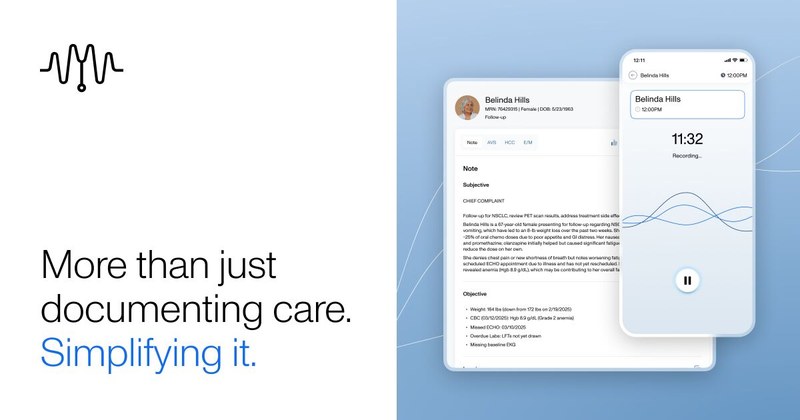
DeepScribe is a San Francisco-based health-tech company building an ambient AI medical scribe that listens to natural doctor-patient conversations and turns them into complete, structured clinical notes in real time. Founded in 2017, the company has narrowed its focus to oncology, where it says it serves roughly 90% of U.S. community oncology organizations, and layers on tools for coding, pre-visit prep, and specialty-specific customization. The pitch is straightforward: let clinicians look at their patients instead of their keyboards, and cut the after-hours documentation that drives burnout.

ELSA, Corp
ELSA (English Language Speech Assistant) is an AI-powered English pronunciation and speaking coach built on proprietary speech-recognition technology trained on non-native accents. Founded in 2015 by Vu Van and speech scientist Xavier Anguera, the app gives learners real-time, phoneme-level feedback on how they actually sound - not just what they type. It has grown to tens of millions of users across 100+ countries and expanded from a consumer app into ELSA Business, ELSA Schools, an API, and a generative-AI conversation tool called ELSA AI Tutor.
Applied Brain Research
Applied Brain Research (ABR) is a Waterloo, Ontario AI hardware company spun out of the University of Waterloo's Centre for Theoretical Neuroscience. It builds brain-inspired chips and software that run real-time AI - full-vocabulary speech recognition, text-to-speech and sensor processing - directly on edge devices at power levels measured in milliwatts. Its patented state-space models and the Legendre Memory Unit power the TSP1 Time Series Processor, which ABR calls the world's first single-chip solution for full-vocabulary speech recognition, doing the work of cloud voice AI while consuming 10 to 100 times less power.

Incept AI
Incept AI is a New York-based voice AI company building order-taking systems for quick-service restaurants, starting with the two hardest environments in the business: the drive-thru and the phone. Founded in 2024 by former Amazon and Presto Automation engineers, Incept pairs a proprietary neural audio engine that strips out background noise, echo and crosstalk with foundation models and POS integrations, so the AI can complete restaurant orders end-to-end without a human stepping in. The company says its system reaches 95%+ order completion without human intervention, well above the roughly 83% where most competitors escalate to a person, and raised a $3 million pre-seed round led by Rally Ventures in early 2025.
SpeakIn Technologies Co.,Ltd.
SpeakIn Technologies is a voiceprint-recognition and identity-security company founded in Silicon Valley in 2015 and headquartered in Shenzhen. Using deep neural networks and its iVector engine, SpeakIn turns the unique physical signature of a human voice into a biometric key, offering both 1:1 verification (is this the right speaker?) and 1:N identification (who is speaking, out of many?). Its SDK and cloud APIs are used across banking, public security, and smart devices, with reported accuracy near 98% and customers including Tencent, Lenovo, ASUS, and China Merchants Bank.
Sensory, Inc.
Sensory is a Santa Clara-based company that builds on-device AI for voice, sound, and biometrics. Since 1994 its embedded software has shipped in more than three billion consumer electronics, from toys and wearables to cars and smart speakers, giving devices the ability to listen, see, and verify without sending data to the cloud.

Flip
Flip is a New York-based vertical Voice AI company that answers customer service phone calls and resolves them end-to-end, without a live agent. Instead of routing callers through legacy IVR menus, Flip's AI assistant integrates deeply into a brand's backend systems to actually complete tasks - checking order status, processing returns, booking rides, and handling billing. The platform is purpose-built for specific industries (retail eCommerce, healthcare, and transportation) rather than offered as a one-size-fits-all bot. As of January 2026 Flip had automated more than 300 million calls for over 250 brands, automating up to 90% of inbound volume, and raised a $20M Series A.

Ello
Ello is an AI reading coach for children in kindergarten through third grade. Through its 'Read with Ello' app, a friendly turquoise elephant listens to kids read aloud, catches mispronounced or skipped words, and offers gentle, phonics-based coaching in real time. Built on proprietary child speech-recognition technology and a library of hundreds of decodable books, Ello aims to give every child the patient, one-on-one reading tutor that has historically been available only to families who can afford it.
Babbel
Babbel is a Berlin-based language learning company that teaches 14 languages through short, expert-designed lessons built for real-life conversation. Founded in 2007 and operated under the legal name Lesson Nine GmbH, it pioneered the paid subscription model for language apps and has sold tens of millions of subscriptions worldwide. Its lessons - typically 10 to 15 minutes - are written by linguists rather than crowdsourced or generated, and the company has layered in speech recognition and AI speaking practice while keeping human-designed pedagogy at the center.
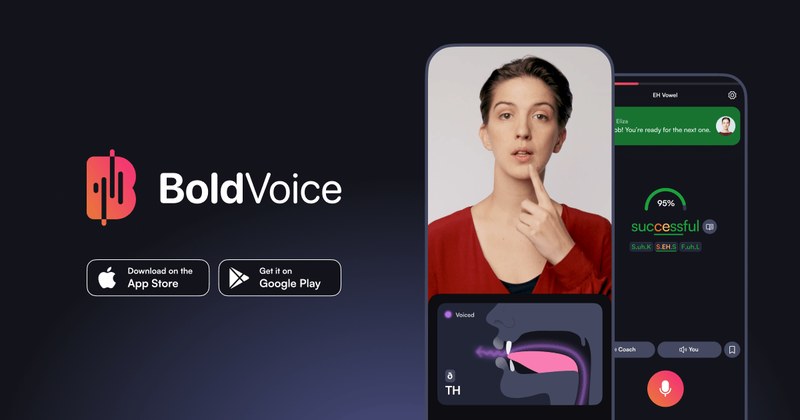
BoldVoice
BoldVoice is a New York-based AI speech and accent coaching app that helps non-native English speakers communicate more clearly and confidently. It pairs proprietary speech AI that gives instant, phoneme-level pronunciation feedback with video lessons taught by Hollywood dialect coaches. Founded in 2021 by Anada Lakra and Ilya Usorov, the app has passed five million downloads across 150+ countries and crossed $10M in annual recurring revenue with a small team.

Liulishuo
Liulishuo (LAIX Inc.) is a Shanghai-based educational technology company that uses artificial intelligence to teach English. Its flagship app, 'English Liulishuo' (known internationally as LingoChamp), pairs proprietary speech-recognition and deep-learning models with an adaptive curriculum to act as a personal 'AI English Teacher.' Founded in 2012 by three engineers with Google and academic backgrounds, the company grew to tens of millions of registered users and listed on the New York Stock Exchange in 2018.

Abridge
Abridge builds generative AI that listens to patient-clinician conversations and turns them into structured clinical notes and billing-ready documentation in real time. Deployed across 150+ U.S. health systems and integrated deeply with Epic, the company has become the dominant pure-play ambient AI scribe in healthcare, valued at $5.3B after a $300M Series E in June 2025.

Deepgram
Deepgram builds foundational voice AI - speech-to-text, text-to-speech, and full voice-agent APIs - used by more than 1,300 enterprises including NASA, Spotify, Twilio and Citibank to give machines the ability to listen, understand, and respond in real time.

PolyAI
PolyAI builds enterprise voice assistants that answer customer calls and handle them end-to-end. The London- and San Francisco-based company spun out of Cambridge's dialogue systems lab in 2017, and now runs AI agents in 18 languages for brands like Marriott, Caesars, PG&E, FedEx and Hopper.
Speak
Speak is an AI-powered language learning app that gets users speaking out loud from day one. Backed by OpenAI's Startup Fund, Accel, Khosla Ventures and Y Combinator, the San Francisco company reached unicorn status in December 2024 after raising a $78M Series C at a $1B valuation. Its AI tutor offers unlimited conversational practice and instant feedback to over 10 million learners.
Wispr Flow
Wispr Flow is a San Francisco-based AI voice dictation platform that converts natural speech into polished, formatted text across any application at roughly 220 words per minute - about 4x faster than typing. Built by two Stanford AI researchers, the company has quietly become the voice layer that 270 Fortune 500 companies rely on, combining a 10% word error rate (vs. 27% for OpenAI Whisper), 100+ language support, and context-aware formatting that automatically adjusts tone and style based on the active app. With $81M raised and a $700M valuation as of late 2025, Wispr Flow is racing to become the default voice-first operating system for a billion users.