self-driving
(8)
RoboDock
RoboDock is a San Francisco robotics startup (Y Combinator W26) building the physical automation layer for electric and autonomous vehicle depots. Its robots plug in chargers, align to charge ports with vision guidance, and run post-trip inspections using visual and thermal sensing - turning depots that still rely on people walking rows of vehicles into self-running infrastructure. Founded in 2025 by Stanford classmates Zinny Weli (CEO) and Celine Wang (CTO), the company offers its system as a retrofit that drops into existing facilities without layout changes.
Nullmax
Nullmax is an AI company building vision-only, map-free autonomous driving software for mass-produced cars. Founded in Silicon Valley in 2016 by former Tesla Autopilot engineer Lei Xu and headquartered in Shanghai, it develops MaxDrive, a chip- and sensor-agnostic driving stack, and Nullmax Intelligence (NI), an end-to-end, multimodal system that reads the road with cameras instead of lidar or high-definition maps. Its technology ships in production vehicles from major Chinese automakers.

PIX Moving
PIX Moving is a city-robotics company that builds modular, drive-by-wire electric 'skateboard' chassis and autonomous 'mobile spaces' such as its RoboBus and RoboShop. Founded in 2014 and rooted in both Silicon Valley and China, PIX combines metal 3D printing, generative design, and self-driving software to turn vehicles into reconfigurable rooms on wheels - a shuttle that can become a cafe, gym, retail pop-up, or library. It sells its chassis and full vehicles to developers, cities, and mobility operators, and runs a Robot-as-a-Service model aimed at deploying fleets across dozens of countries.
ACEINNA
ACEINNA is a Massachusetts-based MEMS sensor company building high-performance, low-cost inertial measurement units (IMUs), GNSS/RTK precision-navigation systems, current sensors, and flow sensors. Spun out of MEMSIC in 2017 with a roughly $50M investment, ACEINNA is best known for its open-source OpenIMU platform and for shipping centimeter-accurate positioning solutions for autonomous vehicles and ADAS at a fraction of the price of legacy systems.
Teradar
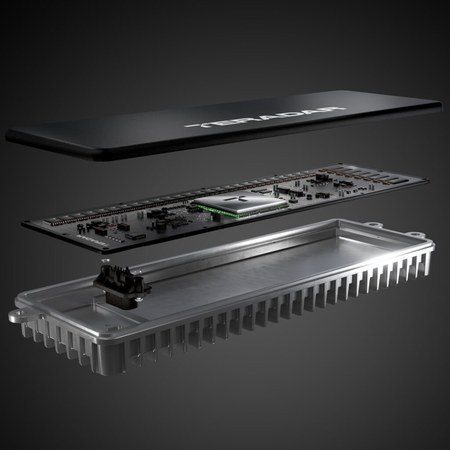
Teradar is a Boston deep-tech company building the first commercial sensor that sees using the terahertz band of the electromagnetic spectrum - the slice between microwave and infrared. Its solid-state Modular Terahertz Engine combines radar's ability to punch through rain, fog and snow with resolution approaching that of lidar, claiming up to 20x the detail of today's automotive radar with no moving parts. Founded in 2020 and out of stealth in November 2025 with a $150M Series B, Teradar is working with eight global automakers and Tier-1 suppliers and aims to put its sensor in a production vehicle by 2028.
Bedrock Robotics
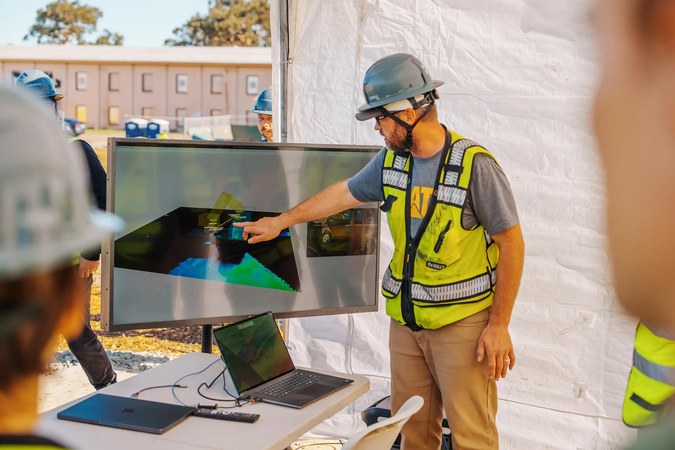
Bedrock Robotics is a San Francisco startup retrofitting existing heavy construction equipment - excavators, dozers, articulated trucks - with an AI kit that turns them into 24/7 autonomous machines. Founded in 2024 by former Waymo leaders, the company raised a $270M Series B in February 2026 at a $1.75B valuation to scale its 'Bedrock Operator' platform across active job sites in the US.
DeepRoute.ai
DeepRoute.ai is a Shenzhen-headquartered autonomous-driving company building full-stack self-driving software, from Level-4 robotaxi systems to mass-market driver-assistance for production cars. Its DeepRoute IO 2.0 platform - powered by a 40-billion-parameter Vision-Language-Action (VLA) foundation model running on NVIDIA DRIVE AGX Thor - is being shipped by Great Wall Motor and a handful of other OEMs.

AeroVect
AeroVect builds AI-powered autonomous driving software for airside ground support equipment (GSE) - the tractors, dollies and tugs that move bags, cargo and aircraft around airport ramps. Founded in 2020 by Harvard grads Raymond Wang and Eugenio Donati, the company turns existing OEM vehicles into self-driving machines with its hardware-agnostic AeroVect Driver platform, and is deployed with partners including dnata, GAT and Delta Air Lines.