security-validation
(11)
Novee Security puts your next release on trial
Software changes every day. Novee’s wager is that security testing should follow every change, produce a working exploit, and stay long enough to check the repair.

Snehal Antani and the Trouble With Feeling Secure
He spent two decades learning how large systems fail, then built Horizon3 to make companies attack themselves on purpose. His wager is simple: in cybersecurity, reassurance is cheap and proof has to be renewed.
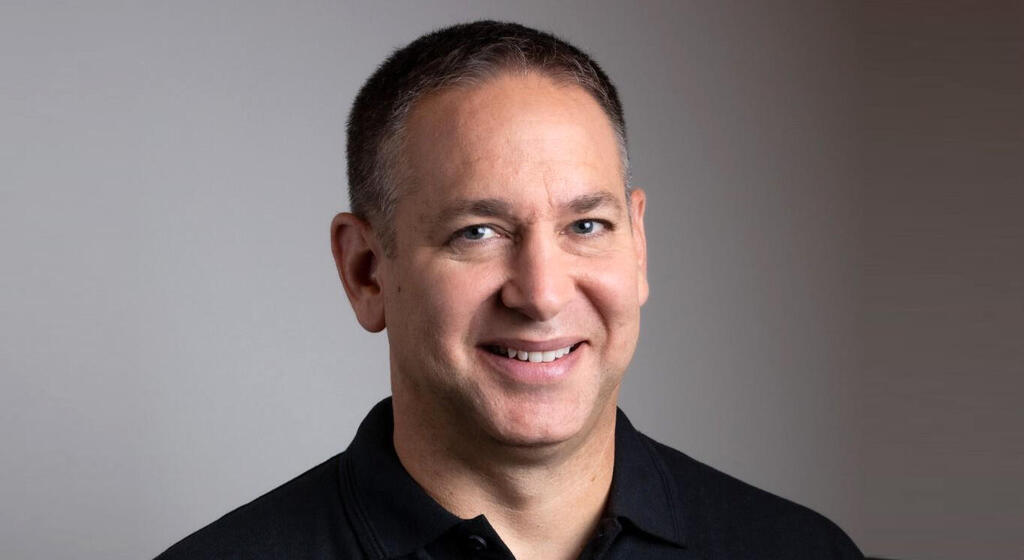
Aviv Cohen Made Cybersecurity Marketing Funny - Then Helped Make Validation a Category
An engineer learned to sell security without selling fear. At Pentera, Aviv Cohen used category language, cartoons, a children’s book, and one memorably put-upon goat to make continuous security testing easier to remember.

Horizon3.ai Built an AI Hacker - Now 7,000 Companies Pay It to Break In
Annual pentests produce a report. NodeZero keeps coming back, proves which weaknesses actually lead somewhere, and checks the repair - a simple loop that helped Horizon3.ai reach 7,000 customers and a $2 billion valuation.

Bari Abdul Has Spent a Career Selling the Invisible
From Pepsi and video games to firewalls and attack surfaces, the engineer-turned-marketer has made a specialty of translating risks people cannot see into choices they can act on.

The Pentagon-Grade Cyber Range That Lets Security Teams Fail Before the Real Attack
Most companies discover whether their defenses work when someone breaks in. SimSpace built a safer place to find out first - a digital double where teams, tools and AI agents can be attacked on purpose.

Pentera Turned a 12-Attack Beta Into a $100M ARR Business by Making Security Prove Itself
Security teams had plenty of alerts and too little proof. Pentera built a machine that attacks safely, shows what is actually exploitable, and turns an annual pentest into a repeatable operating habit.

Bryson Bort Wants Cybersecurity to Rehearse the Fire
The SCYTHE founder’s career runs from Cold War childhood curiosity to Army communications, national-security research and a cheerful campaign to make cyber defense more measurable - unicorn headband included.
The $18.25 Million Security Bet That Asks One Rude Question: Do Your Defenses Actually Work?
SCYTHE grew from a one-off tool built with Target into a platform for continuously testing the security stack companies already own. Its sharpest idea is also its least comfortable: a control is only as good as the last realistic attack it caught.

Alper Memis
H. Alper Memis is the Co-Founder and CEO of Picus Security, the company that pioneered Breach and Attack Simulation (BAS) technology. A mathematician-turned-financial-analyst-turned-cybersecurity-CEO, Memis co-founded Picus in 2013 in Ankara, Turkey alongside two university friends — combining a rare background in sovereign debt management, financial risk, and a CFA designation with the mission to replace assumption-based security with continuous, evidence-based defense validation. Under his leadership, Picus has raised $80M in total funding (including a $45M Series C in 2024), serves 500+ enterprise customers including Mastercard, Visa, and Vodafone, and has simulated over one billion cyberattacks.

Picus Security
Picus Security is the cybersecurity company behind the Picus Security Validation Platform - an Adversarial Exposure Validation system that continuously simulates real-world attacks against an organization's defenses to expose which ones actually work. Founded in 2013 by three Turkish mathematicians and now headquartered in San Francisco, Picus serves 500+ enterprise customers including Mastercard and is the official Exposure Validation Partner of Juventus.