At UiPath, the problem was arithmetic. In a customer interview published by Novee, CISO Scott Roberts said the company had made more than 500 releases on its cloud platform in the previous year. A security assessment conducted once a year could be exquisitely thorough and still describe a product that had disappeared hundreds of changes ago. Imagine checking a hotel’s locks in January, then rebuilding the corridors until December.
- Novee tests applications, proves attack paths and checks repairs.
- Customers include UiPath, Cresta and HiBob, according to published accounts.
- Its $51.5 million launch funding was a cumulative total.
- The useful test for buyers: reproducible findings in their own environment.
Novee Security sells a response to that scheduling problem: continuous AI penetration testing. Its platform looks for vulnerabilities, attempts to exploit them, supplies tailored remediation guidance and retests fixes. The buyer is a security team; the beneficiary should also be the engineer who otherwise inherits a frightening report and a remarkably unhelpful instruction to “remediate.”
Five hundred releases, one photograph
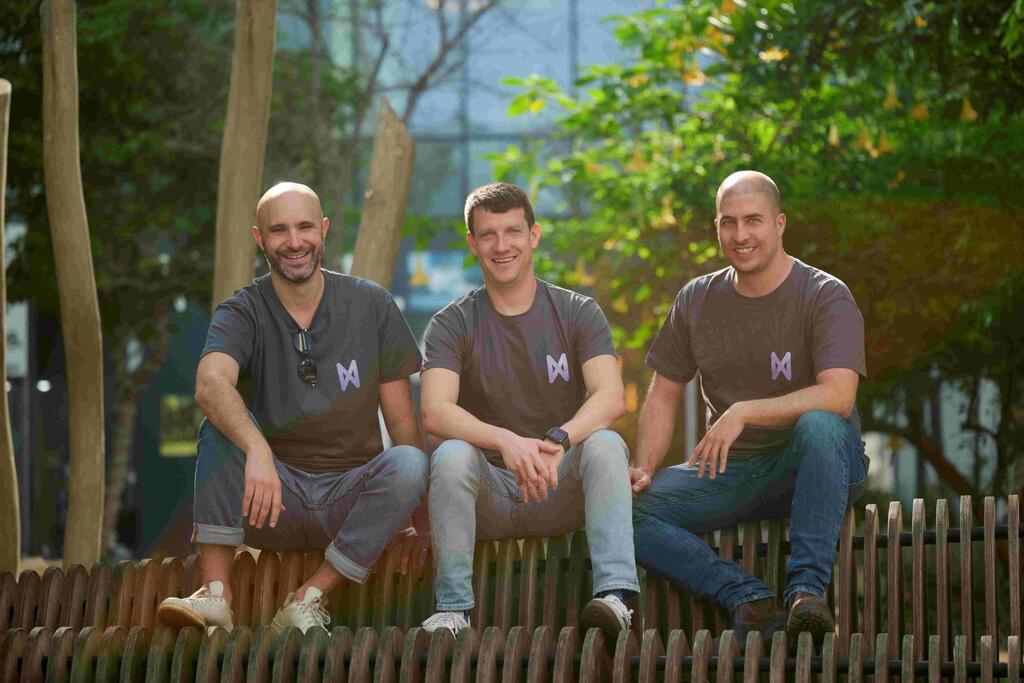
The founders came from offensive security. Ido Geffen is CEO, Gon Chalamish is chief product officer, and Omer Ninburg is chief technology officer. They founded Novee in May 2025. Their account of the origin identifies a change in what seemed feasible: reasoning-capable AI in 2024 suggested that an agent could carry out the sustained, adaptive work of an experienced tester.
By January 14, 2026, Novee had emerged from stealth with $51.5 million in total financing, backed by YL Ventures, Canaan Partners and Oren Zeev. The total included early-stage rounds; treating it as the price of one Series A would make the cheque rather more tidy than the reporting warrants. The company says its Series A arrived within four months of founding.
At Cresta, the initial frustration was more specific than a calendar. Its security leader, Robert Kugler, describes dynamic application security testing, or DAST, producing empty or irrelevant findings. He wanted testing that could uncover complex weaknesses such as server-side request forgery, in which an application can be induced to make requests it should never make.
“Traditional DAST produced either zero or irrelevant results.”
Robert Kugler / Cresta
In Novee’s published customer account
UiPath’s account emphasizes tenant isolation: whether one customer’s data remains separated from another’s. Roberts says Novee learned the multi-tenant architecture within days and demonstrated reachable attack paths. These are customer testimonials published by the vendor. Their value is the specificity of the problem: proving how an attack reaches a business workflow gives engineers something concrete to investigate.
A gym with an awkward electricity bill
Novee’s distinction is its purpose-trained offensive AI, supported by specialized tools and orchestration. Its current architecture also routes tasks to frontier models. The proprietary model is therefore part of a larger system that must choose tools, remember observations and decide what to try next. The company calls its training and optimization environment the Novee Gym.
The Gym supplies a pleasingly literal answer to the question of how to train a hacker: give it applications to attack. Novee describes imitation of successful attempts followed by reinforcement learning against live targets. A deterministic validator executes the proposed exploit and checks whether it works. Persuasive writing earns no points from an application that remains unbroken.
of the bill went to live target applications
The unexpected expense was the practice field. Each training attempt needed a fresh, isolated application instance, with thousands running concurrently. In one campaign, Novee says those environments consumed 50–70% of the total bill, more than the GPUs. Continuous testing needs affordable repetition; the infrastructure that makes repetition possible can dominate the budget.
The team expected the difficulty to lie in hacking. Its July engineering account describes quieter enemies: numerical bugs that let training continue while degrading results, and a gateway that stalled as stored data grew. A kernel race condition took days to isolate before a one-line fix. The lesson readers can copy is concrete: replay suspicious inputs, inspect numerical consistency and measure the plumbing even when dashboards look healthy.
The repair has to survive the next release
For HiBob, the complicated part was permissions. Its August customer account says an initial run took roughly 48 hours to map the environment. The team supplied its intricate permission model, and Novee now checks enforcement on pull requests and endpoints. Ronen also describes early gaps involving WAF handling, mobile testing and redirect loops that Novee subsequently addressed. Context and feedback mattered.
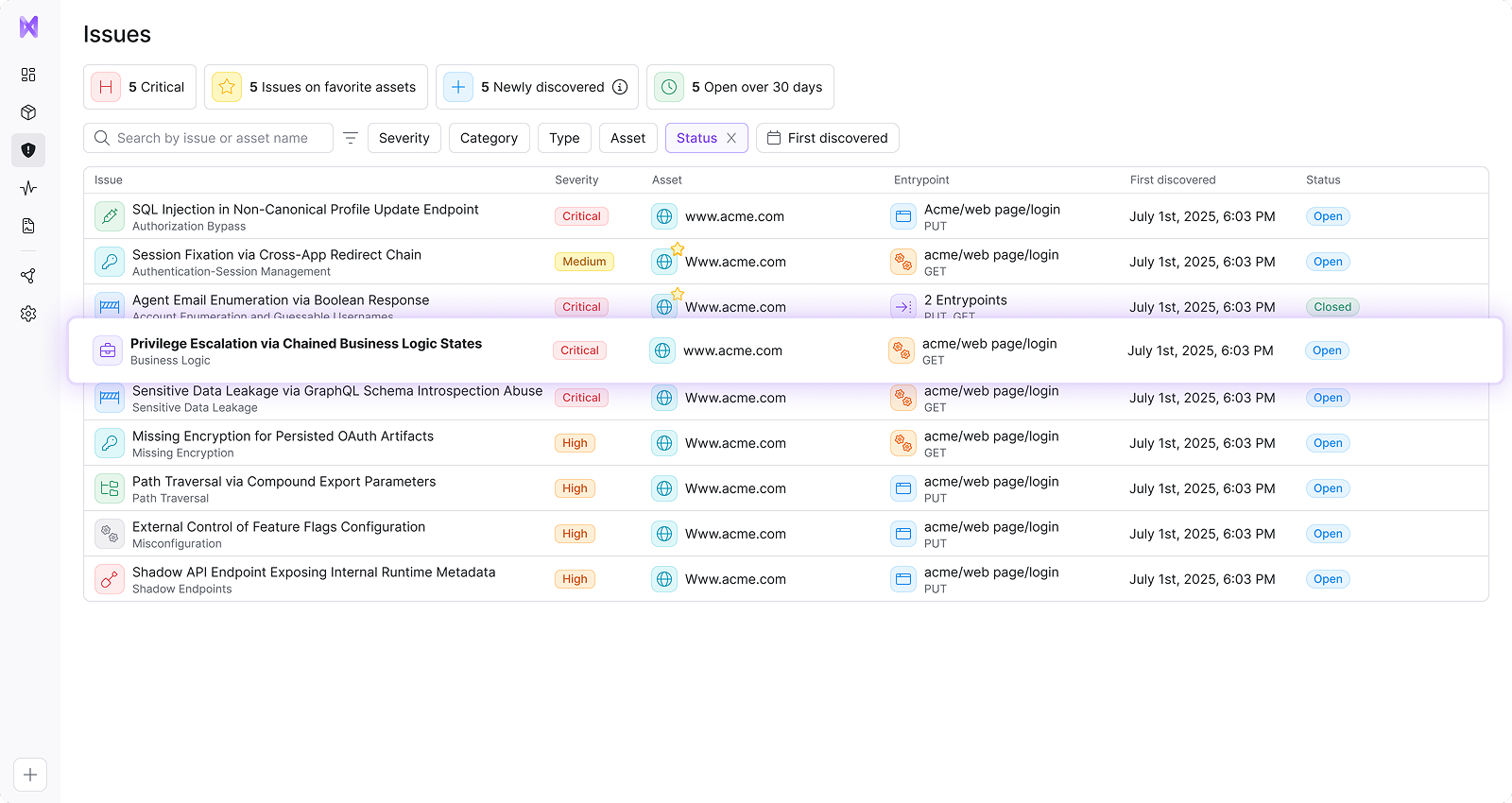
Novee Pipeline, announced August 19, brings that logic into development. A CLI or Docker image connects to CI/CD, compares commit identifiers and tests affected runtime endpoints, workflows and trust boundaries. Distinct exit codes let a proven finding fail a build. In September, external-report validation added another entrance: upload existing findings and have Novee attempt the exploits within an approved scope.
- 01DiscoverMap the application
- 02ProveReproduce the attack
- 03RepairGuide the change
- 04RetestCheck the result
This is a business software sale, with demo-led buying and SaaS, Bastion Node or on-premises deployment options. Novee reports dozens of enterprise and mid-market customers globally; its September London-office announcement extends that footprint. The commercial proposition is sustained testing capacity that fits the way engineers ship.
The market is crowded enough to keep that proposition honest. XBOW and Tenzai also advertise autonomous testing and reproducible exploits. Novee’s training system and repair loop deserve examination alongside those alternatives. Its contribution of PWNBench to Fireworks’ Specialized Intelligence Index adds a useful discipline: measure precision, coverage and cost separately, rather than admiring one flattering number.
For a buyer, the copyable move is to run a scoped trial on an application with meaningful permission boundaries, then ask whether findings reproduce and repairs hold. A domain-only assessment cannot see everything behind authenticated workflows. An unreachable test environment, missing business context or an engineering team unable to act will blunt the value. The interesting question arrives after the report: what happens when the next release ships?