research-and-development
(10)
The Israeli Innovation Hub That Starts With Fish Ponds, Olive Pits and Factory Floors
InnoValley is betting that the best place to build the next agricultural technology is beside the farms, factories and fish ponds that will have to use it. Its currency is not hype but access - to grants, operators, researchers and a region willing to test what comes next.
Skolkovo built a startup city. The real test is the sale.
Russia’s Skolkovo Foundation bundles grants, laboratories and corporate introductions into a national technology project. Its history shows how much a state can build - and how much still depends on a customer saying yes.
Erciyes Teknopark Starts Before the Startup
In Kayseri, a university-linked technology park helps founders find an idea, build a prototype and meet investors. Its most revealing feature is how much work happens before there is a company to rent an office.

Yıldız Tech Has a Useful Head Start: Customers in the Family
Built inside Yıldız Holding, the software company turns grocery orders, delivery routes and factory problems into products. Its advantage is access to businesses that can put the code to work.

Fintech Zone Istanbul wants to get startups through the bank’s door
Inside Istanbul Financial Center, a fintech technopark is building a route from R&D projects to corporate pilots. Its Fintech Gate program starts with a useful demand: make the big company do its homework, too.
Lyonbiopôle works on biotech’s other problem: who opens the next door?
A promising discovery still needs partners, money and a route to patients. Lyonbiopôle has spent two decades organizing those introductions - and its new strategy puts the business end of science under the microscope.
IDBS and the science of getting four weeks back
BioIVT says IDBS helped it deliver research data at least four weeks faster. The company’s bigger bet: better lab records can speed the journey from experiment to manufacturing - and give AI something trustworthy to work with.
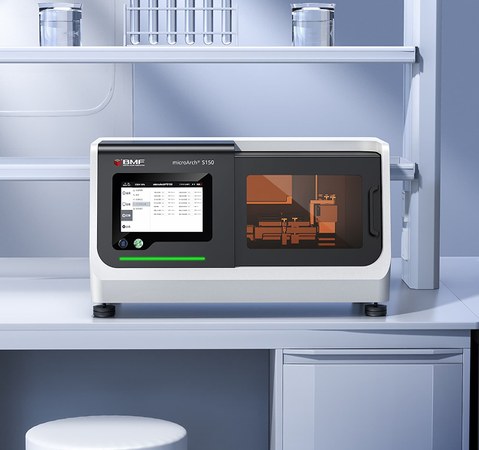
Boston Micro Fabrication (BMF)
Boston Micro Fabrication (BMF) builds 3D printers that work at a scale most machines can't reach - resolutions down to 2 microns with tolerances of about plus or minus 10 microns. Its microArch printers use a proprietary process called Projection Micro Stereolithography (PuSL) to make tiny, complex parts for medical devices, microfluidics, optics, connectors and semiconductor packaging. Founded in 2016 and headquartered in Maynard, Massachusetts, BMF has placed machines with more than 2,000 customers across roughly 35 countries.
Huawei
Huawei is a Shenzhen-based technology company and the world's largest maker of telecommunications equipment. Founded in 1987 by Ren Zhengfei, it now spans carrier networks, enterprise ICT, cloud computing, digital power, and a consumer business that builds smartphones, wearables, and the homegrown HarmonyOS operating system. Despite years of U.S. sanctions, the company posted roughly 880.9 billion yuan in 2025 revenue and pours over a fifth of that back into R&D.
BreezeBio
BreezeBio (formerly GenEdit) is a Brisbane, California-based biotechnology company that develops precision genetic medicines using its proprietary NanoGalaxy platform - a library of polymer nanoparticles capable of delivering genetic payloads like mRNA, siRNA, and CRISPR components to specific tissues without triggering immune responses. Unlike viral vectors that can only be dosed once and often provoke dangerous immune reactions, BreezeBio's non-viral approach allows repeat dosing, broad payload flexibility, and tissue selectivity across immune cells, heart, lung, and CNS. Founded in 2016 out of UC Berkeley by CEO Dr. Kunwoo Lee and CTO Dr. Hyo Min Park, the company rebranded from GenEdit in early 2026 following its $60M Series B, signaling a shift from delivery-platform licensor to full therapeutic developer with a lead program (BRZ-101) targeting Type 1 Diabetes.