photonic-computing
(10)
Darius Bunandar and the Art of Moving Light
He began with explosions, black holes and quantum-secure messages. Now Lightmatter's co-founder and chief scientist is trying to solve AI's less glamorous crisis: the costly distance between one chip and the next.

Neurophos
Neurophos is an Austin-based photonics startup building an Optical Processing Unit (OPU) that uses light instead of electrons to run AI inference. Spun out of Duke University and the Metacept incubator, the company packs more than a million micron-scale metamaterial optical modulators - roughly 10,000x smaller than conventional photonic elements - onto a single chip to perform the matrix-vector multiplication at the heart of large AI models. It positions the OPU as an energy-efficient, drop-in alternative to GPUs for data-center inference, and raised a $110M Series A led by Gates Frontier in January 2026.
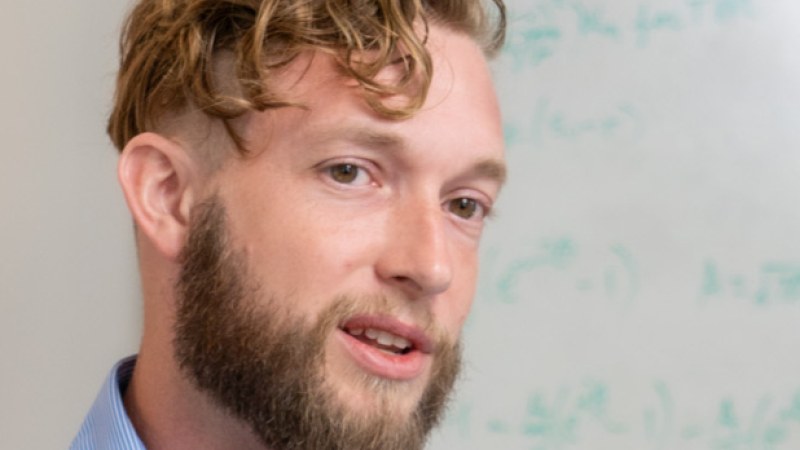
Patrick Bowen
Patrick Bowen is co-founder and CEO of Neurophos, an Austin-based startup building optical AI accelerator chips around metamaterial-based photonic tensor cores. A Duke PhD in electrical engineering and ETH Zurich master's grad, he previously co-founded Metacept with his Duke advisor David Smith. In January 2026 Neurophos closed a $110M Series A led by Gates Frontier with Microsoft's M12, Aramco, Bosch and others.
Opticore
Opticore is a photonic computing startup building optical processing units (OPUs) - chips that run AI workloads with light and waveguides instead of electrons. Spun out of research at MIT, USC and UC Berkeley, the company claims its photonic chips are up to 100x more energy efficient and offer roughly 25x the computing density of leading GPUs, using time-multiplexed computing to encode as many as a trillion parameters on a single chip. Opticore has raised about $14.5M to date to attack the energy and 'memory wall' bottlenecks of AI data centers.

Arago
Arago is a Paris and Palo Alto deeptech startup building a photonic AI accelerator that uses light instead of electrons to run AI workloads, targeting 10x lower energy consumption than today's leading GPUs at equivalent performance and cost while staying compatible with PyTorch and standard hardware ecosystems.

Zaijun Chen
Zaijun Chen is a physicist-turned-founder building light-powered computers for artificial intelligence. As co-founder and CEO of Opticore, he is developing photonic optical processing units (OPUs) that the company says are up to 100x more energy efficient and 25x denser than leading GPUs. Trained at the Max Planck Institute of Quantum Optics and MIT, and now director of the Laboratory of Intelligent and Quantum Photonics at USC, Chen turned a decade of precision-optics research into a venture-backed bet that the future of AI compute runs on photons instead of electrons.
Yichen Shen
Yichen Shen is the founder and CEO of Lightelligence, an MIT spinout building computers that run on light instead of electricity. A physicist who earned his PhD at MIT in 2016, Shen co-authored a landmark 2017 Nature Photonics paper showing that deep-learning math could be done with interfering photons, then turned the idea into chips. His company has shipped photonic processors (PACE), the first optical network-on-chip (Hummingbird), and optical interconnects (Photowave), and in 2026 became the first AI photonic-computing company to go public.
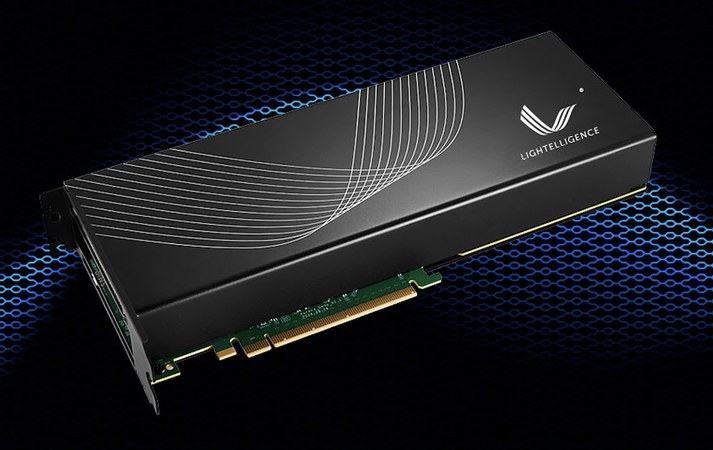
Lightelligence
Lightelligence builds photonic and optoelectronic hybrid computing hardware that moves and processes AI data with light instead of electrons. Spun out of MIT in 2017 on the back of a landmark Nature Photonics paper, the company designs silicon-photonics chips, optical interconnects, and AI accelerators aimed at the bandwidth and energy bottlenecks of modern data centers. In April 2026 it listed in Hong Kong as the world's first AI silicon-photonics chip stock, jumping roughly 400% on debut.
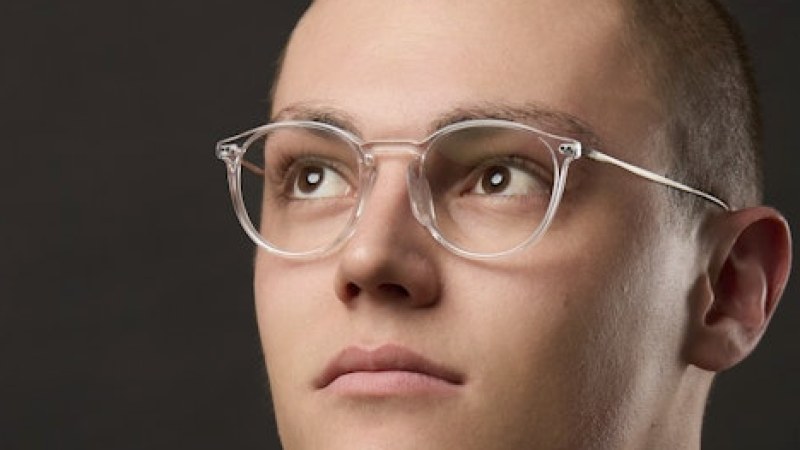
Nicolas Muller
Nicolas Muller is the co-founder and CEO of Arago, a Paris-based deep-tech startup building a photonic AI accelerator called JEF that uses light instead of transistors to perform AI inference at 10x lower energy than leading GPUs. Coming from a physics and machine learning background - including an ML degree from MIT - Muller co-founded Arago in 2024 alongside Eliott Sarrey and Ambroise Müller. The company raised an oversubscribed $26M seed round in July 2025 backed by Earlybird, Protagonist, Visionaries Tomorrow, and angels from Apple, Datadog, Hugging Face and Arm. Arago's approach - top-down from inference efficiency requirements, not bottom-up from optics research - delivered a working prototype in under 12 months.

Nicholas Harris
Nicholas Harris is the founder and CEO of Lightmatter, the photonic computing company rewriting the rules of AI infrastructure by replacing copper wires with light. A PhD from MIT's Quantum Photonics Lab, he grew up in the redwood forests of Gasquet, California, and turned years of academic research on programmable nanophotonic processors into a $4.4 billion company that has raised over $850 million from investors including Google Ventures and T. Rowe Price. With 87+ patents, 82 publications in Nature and its family of journals, and recognition as an Optica Fellow and MIT TR35 Innovator, Harris is building what he calls the next Moore's Law - not in transistors, but in optical interconnects.