patient-monitoring
(9)
Spectrum Medical wants to connect every beat of heart surgery
Pumps, disposable circuits and patient records all meet in Spectrum Medical’s Quantum range. Its expansion shows the appeal of joining them together - and the scrutiny that comes with supplying life-support technology.

Neopenda Went to an Equipment Graveyard and Built the Baby Monitor Hospitals Would Actually Use
A student project became neoGuard only after Sona Shah and Teresa Cauvel saw why donated hospital equipment was collecting dust in Uganda. Their harder lesson was that a device clinicians want is not automatically a device health systems will buy.

Philips Bet the Whole Company on Hospitals - Then a CPAP Recall Almost Broke It
It made light bulbs, then TVs, then the CT scanner in your local hospital. The story of how a Dutch electronics giant reinvented itself as a pure health-tech company - and nearly lost the bet.

The Danish startup teaching a ceiling sensor to watch grandma - so nurses don't have to
Teton wraps a camera in enough AI that it never has to save a single frame of video - and uses it to cut falls in elder care by up to 82%. Now it is betting American nursing homes will pay for a night nurse that never blinks.

GE HealthCare
The 130-year medical-technology lineage is no longer selling scanners alone. Its bet is that imaging hardware, diagnostic drugs, cloud software and AI can work as one connected care system - without asking clinicians to become IT departments.
Medtronic
Medtronic began by repairing hospital electronics in a Minneapolis garage. Seventy-seven years later, its devices sit inside bodies, beside beds, and at the center of a high-stakes contest to make medicine less invasive, more measurable, and easier to scale.

Baxter International Inc.
Baxter rarely gets the bedside spotlight. Its pumps, beds, monitors, medicines and IV bags are the practical infrastructure that lets modern care move - and the century-old company is rebuilding itself around a more connected hospital.
REEV
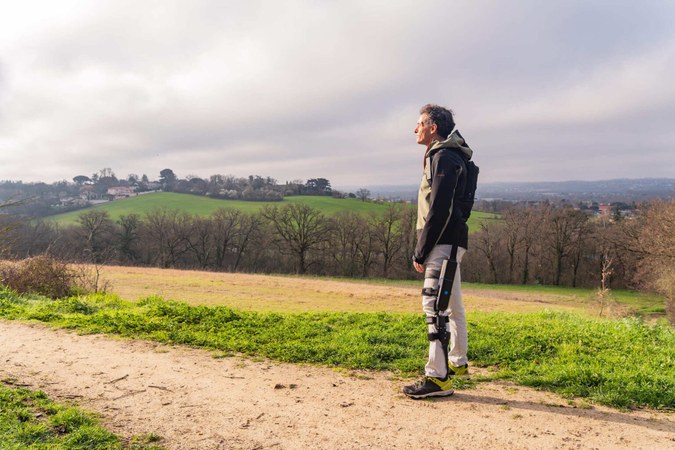
REEV is a medical robotics company building AI-powered wearable robotics to restore everyday mobility for people with neurological gait disorders after stroke, multiple sclerosis or paraplegia. Its flagship DREEVEN is a lightweight (about 3kg) motorized knee orthosis driven by electro-hydraulic actuation and real-time gait sensing, paired with REEV SENSE, an IMU wearable that turns a person's walking pattern into clinical-grade gait reports. Founded in 2021 and split between Boston and Toulouse, REEV raised $9.2M in February 2025 to finalize DREEVEN, run a clinical study at Boston University and prepare for FDA trials.
ImaCor, Inc.
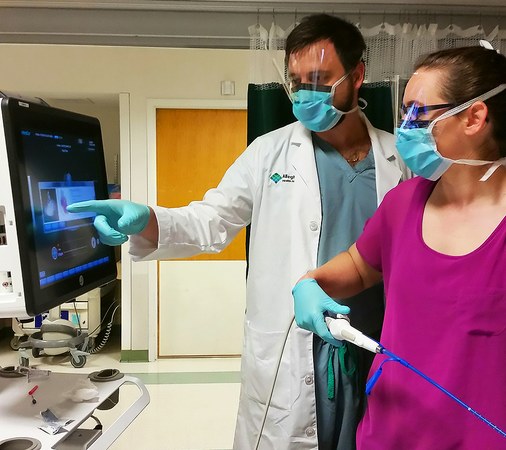
ImaCor, Inc. is a New York medical-device company that built the world's first and only hemodynamic transesophageal echocardiography (hTEE) platform for the intensive care unit. Its miniaturized, disposable ClariTEE probe can stay safely in a critically ill patient for up to 72 hours, giving clinicians a continuous, direct window onto the heart - preload, contractility, and right- and left-ventricular function - so they can guide fluids and drugs in real time instead of guessing. In 2022 ImaCor and Clarius Mobile Health launched the FDA-cleared Zura Handheld Hemodynamic Ultrasound, a pocket-sized, 22-ounce TEE system that puts that window in a clinician's hand.