WORLD'S FIRST & ONLY hTEE PLATFORM CLARITEE PROBE FDA-CLEARED TO STAY 72 HOURS ZURA HANDHELD: 22 OUNCES, AIMED AT THE HEART THERAPY CHANGED IN 66% OF ICU PATIENTS HEMODYNAMICS IMPROVED IN 80% 15,000+ PATIENTS WATCHED IN REAL TIME JUDGE'S CHOICE AWARD, OCTANE CTS 2023 WORLD'S FIRST & ONLY hTEE PLATFORM CLARITEE PROBE FDA-CLEARED TO STAY 72 HOURS ZURA HANDHELD: 22 OUNCES, AIMED AT THE HEART THERAPY CHANGED IN 66% OF ICU PATIENTS HEMODYNAMICS IMPROVED IN 80% 15,000+ PATIENTS WATCHED IN REAL TIME JUDGE'S CHOICE AWARD, OCTANE CTS 2023
Company File · Critical Care · New York

ImaCor wants the ICU to stop guessing about the heart.

A disposable probe that lives inside a critically ill patient for up to 72 hours, and a handheld the size of a wallet. Both do one thing: let clinicians see the heart instead of inferring it.

Founded 2009  ·  Garden City, NY  ·  ~19 people  ·  hTEE pioneer
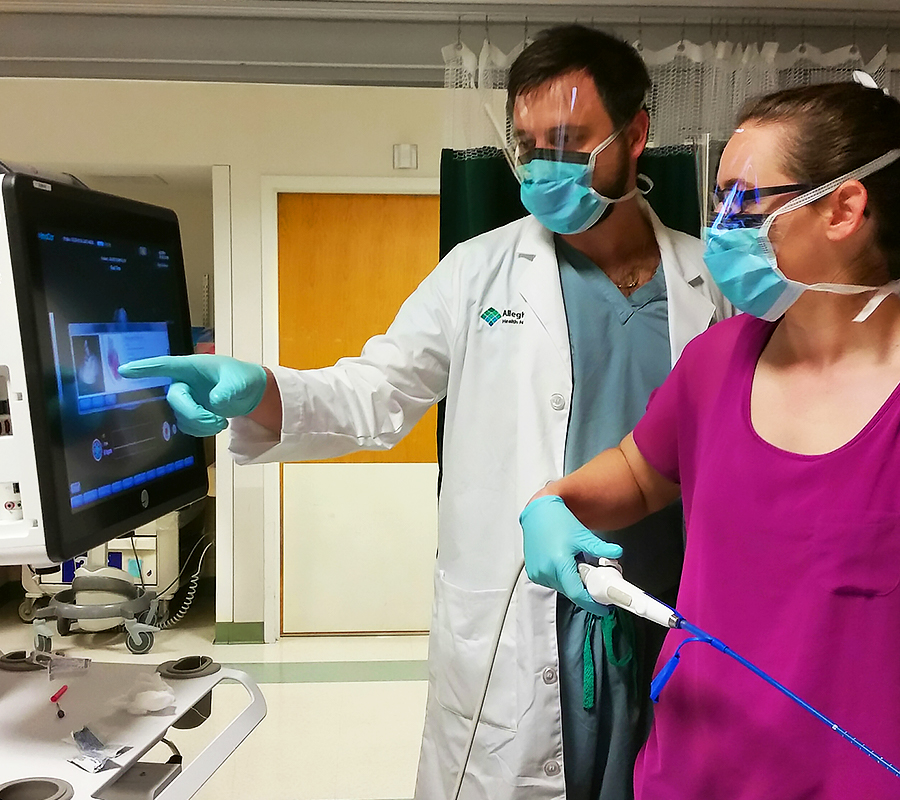
ImaCor hemodynamic ultrasound (hTEE) in clinical use
ImaCor, Inc. - the only ultrasound built to stay put, watching a heart that would otherwise keep its secrets for three days straight.
Dispatch / The ICU, 3 a.m.

A patient is crashing in an intensive care unit. Blood pressure is sliding. The team has a choice that has to be made in seconds: more fluid, or less. Get it wrong in either direction and the patient gets worse. For decades, this decision has been made on inference - numbers off a monitor that hint at what the heart might be doing. ImaCor's answer is blunter: stop hinting. Look at the heart.

That is the whole company. ImaCor, Inc., a roughly 19-person outfit in Garden City, New York, builds the world's first and only hemodynamic transesophageal echocardiography platform - hTEE, if you want the clinical shorthand. Translated: a small, swallowed ultrasound probe that gives the bedside team a live, moving picture of the heart's filling and squeeze, on demand, over days. Not a proxy. The actual chambers, in motion.

"In the ICU, fluid is a drug. ImaCor's pitch is that you should be able to see the dose before you give it." - The central idea, in one sentence

It is a small company solving a problem that is anything but small. And it has been at it, patiently, since before most people had heard the word "hemodynamic."

The Problem They Saw

The heart is the one organ everyone treats and almost no one watches.

Here is the awkward truth of critical care: the most consequential decisions revolve around an organ the team usually cannot see. The traditional tools - the pulmonary artery catheter threaded through the heart, the pressure waveforms, the lab values - are all clever ways of guessing at what the heart is doing from the outside. They measure shadows and infer the object.

Echocardiography, the obvious fix, was for years a scheduled event. You called a cardiologist, wheeled in a cart, captured a snapshot, and the cart left. The heart, of course, did not agree to stop changing between visits. A patient can be over-filled at noon and bone-dry by three, and the cart was long gone.

"Echo used to visit the ICU like a polite guest - it knocked, took a snapshot, and left before anything interesting happened." - On the gap ImaCor set out to close

So the bedside team did what it had always done: it inferred. It treated numbers instead of the heart that produced them. Most of the time that worked. The trouble was the times it didn't - and in an ICU, the times it doesn't are the times that matter most.

The Founders' Bet

Two cardiologists and a scientist decided the cart should never leave.

In 2009, Scott Roth, M.D. and Steven Evans, M.D. - cardiologists who had watched the inference game from the inside - teamed up with scientist Harold Hastings, Ph.D. The bet was specific and a little stubborn: what if the echo probe were small enough, and gentle enough, to simply stay in the patient? Not for a snapshot. For days.

That meant inventing a probe nobody had built: miniaturized, disposable, comfortable enough to remain indwelling, and good enough to trust. It also meant a second, quieter bet - that an ordinary ICU team, not just a visiting cardiologist, could be trained to capture and read the views. Make the tool simple, and the heart becomes everyone's to watch.

SCRAPBOOK NOTE → Founding initials: M.D., M.D., Ph.D. Two doctors who were tired of guessing, and a scientist who knew how to make the probe small enough to stop them.

Investors took the bet too. A $5.45M Series A closed in February 2009, with Johnson & Johnson Development Corporation and WFD Ventures backing the idea that the ICU deserved a live feed of the heart.

"Make the tool simple enough, and the heart stops being the cardiologist's secret. It becomes the whole team's to watch." - The second, quieter bet

The Slow-Burn Files

Medical devices don't sprint. They accumulate clearances, evidence, and trust - one regulator and one patient at a time. ImaCor's milestones, in order.

2008

The disposable TEE probe gets its first FDA nod

ImaCor's miniaturized transesophageal echo probe and system clear the U.S. FDA - the foundation everything else is built on.

2009

$5.45M Series A

Johnson & Johnson Development Corporation and WFD Ventures fund the company that wants the cart to never leave.

2009

ClariTEE cleared for 72 hours

The disposable probe is cleared to remain indwelling up to three days - turning a snapshot into a continuous window.

2011

CE Mark in Europe

The ClariTEE probe and Zura system earn the CE Mark, opening the door to ICUs across Europe.

2022

The Zura Handheld, with Clarius

ImaCor and Clarius Mobile Health launch the world's first handheld TEE system - pocket-sized, 22 ounces, FDA-cleared.

2023

Judge's Choice & the AHA Network

Wins Judge's Choice at the Octane Cardiovascular Tech Summit and joins the American Heart Association's Innovators' Network.

The Product

A probe that stays, a method anyone can learn, and a handheld that fits in a coat.

Strip away the acronyms and ImaCor sells three connected things. The first is the ClariTEE probe - the miniaturized, disposable centerpiece, cleared to remain in a patient for up to 72 hours. The second is the Zura imaging system, the bedside platform that turns the probe's signal into a readable picture of preload, contractility, and right- and left-ventricular size and function. The third, newest, is the Zura Handheld - built with Clarius Mobile Health and cleared by the FDA in 2022 as the world's first handheld TEE system, all 22 ounces of it.

ClariTEE Probe

Miniaturized, single-use TEE probe FDA-cleared to stay indwelling up to 72 hours - episodic looks at cardiac filling and function without re-inserting anything.

Zura Imaging System

The mobile hTEE platform that displays preload, contractility, and RV/LV function at the bedside, with DICOM connectivity for the rest of the hospital.

Zura Handheld (with Clarius)

Pocket-sized, 22-ounce handheld TEE - the world's first - putting direct cardiac visualization in the clinician's hand.

hTEE 3-Step Method

A minimal-training protocol so multidisciplinary ICU teams, not just cardiologists, can acquire and read the views that drive fluid and drug decisions.

Caption: A 22-ounce device that images the inside of a beating heart weighs less than the average hardcover novel. The novel, admittedly, is easier to read.

"Most ICU monitors are very good at describing the weather around the heart. ImaCor just opens the window." - On what direct visualization actually changes
The Proof

Seeing the heart changed what doctors did next.

A nicer picture is a gimmick unless it changes a decision. ImaCor's case rests on the claim that it does. In reported ICU use, hemodynamic ultrasound made a direct, therapeutic impact in 66% of patients and improved hemodynamics in 80%. Put plainly: most of the time the team looked, what they saw was enough to change the plan.

When the ICU could see the heart

Reported impact of hTEE use in critically ill patients · source: ImaCor clinical reporting
Hemodynamics improved
80%
Direct therapeutic impact
66%
Probe dwell-time (of 72h max)
up to 72h
Figures are company-reported and shown as approximate; bars scaled to the stated percentages.
15,000+
Patients managed with ImaCor hTEE
72h
Max indwelling probe time, FDA-cleared
22oz
Weight of the Zura Handheld
2009
Year the bet began

The proof isn't only in the data. It's in the company ImaCor keeps. The Clarius partnership turned a cart-bound technology into something a clinician carries. The American Heart Association brought ImaCor into its Innovators' Network. The Octane Cardiovascular Tech Summit handed it a Judge's Choice award in 2023. And more than 15,000 patients have now been watched, in real time, by a probe that simply refused to leave the room.

"A better picture is a gimmick - right up until the moment it changes what the doctor does next. ImaCor's whole argument lives in that moment." - The skeptic's test, and the answer
The Mission

Replace inference with a view.

ImaCor states its purpose without much poetry: enable clinicians to optimize cardiac performance with direct cardiac visualization during critical care. Underneath the clinical phrasing is a quiet rebellion against guesswork. The ICU has always been a place of educated estimates. ImaCor's mission is to shrink the "estimate" part until the team is treating a heart it can actually watch.

That is why the training matters as much as the hardware. A probe only democratizes the heart if ordinary teams can use it. The hTEE method exists so the view isn't locked behind a specialist's schedule - so that at 3 a.m., the people already in the room can look.

"The ICU has always run on educated guesses. ImaCor's mission is to make fewer of them necessary." - Mission, de-jargoned
Why It Matters Tomorrow

The window is getting smaller, lighter, and harder to argue with.

The trajectory is clear in the products. A cart became a bedside system became a 22-ounce handheld. Each step put the heart in front of more clinicians, in more rooms, with less ceremony. The company's keywords now include AI-driven imaging and clinical decision support - signs that the next move is not just showing the heart, but helping interpret it. The fewer specialists a live cardiac view requires, the more ICUs can afford to stop guessing.

There are honest caveats. ImaCor is small, the market is conservative, and convincing hospitals to adopt anything new is a years-long campaign measured in clearances and peer-reviewed papers. But the direction of travel is hard to dispute: critical care is moving from inference toward visualization, and ImaCor has spent fifteen-plus years pointing the way.

So return to that room. 3 a.m., a patient sliding, the team with seconds to choose. In the old version, they read the shadows and made their best guess. In ImaCor's version, someone glances at a screen and sees the heart - too full, or too empty - and the choice stops being a guess. That is the entire ambition of this small New York company: to turn the hardest decision in the ICU into something you can simply look at.

"Stop treating numbers. Start treating the heart you can finally see." - ImaCor, the argument in seven words

Share the ImaCor file