net-zero
(16)
Carrie Ruddy Sells the Climate Story One True Sentence at a Time
How a former bank communicator turned a maker of air conditioners into one of the more convincing climate stories in industrial America - and why she insists credibility is the only currency that matters.
Grzegorz Marecki
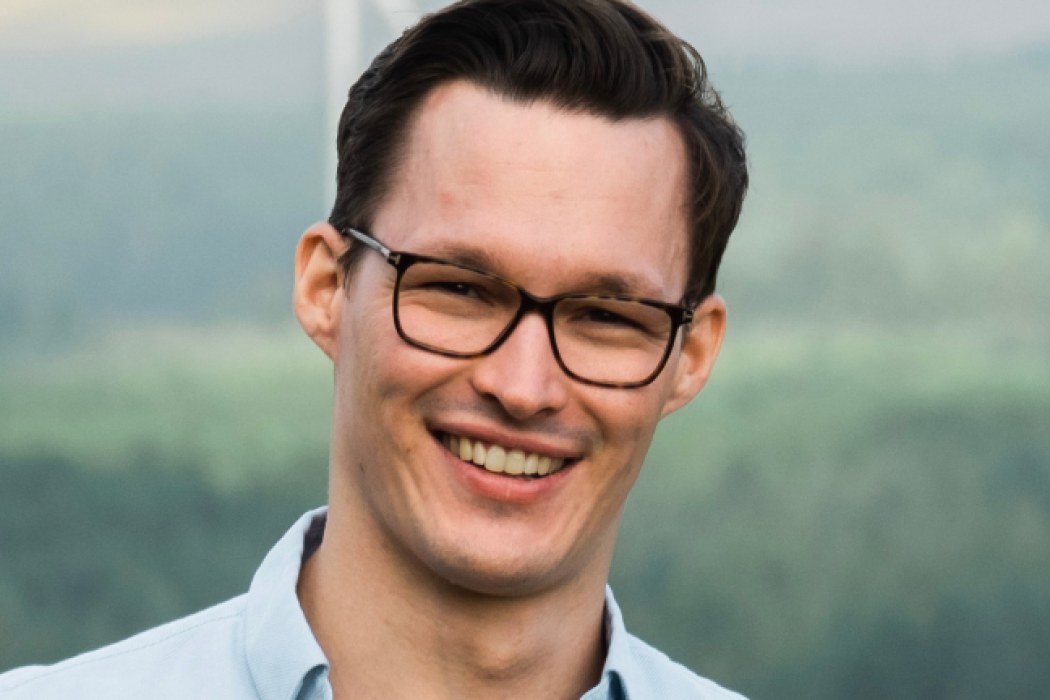
Grzegorz Marecki is the co-founder and CEO of Continuum Industries, an Edinburgh-based company whose AI platform Optioneer helps engineers design linear infrastructure - power lines, pipelines, cables and rail - in a fraction of the usual time. A civil engineer by training who grew frustrated with slow traditional practice, he channelled that impatience into a student hyperloop project and then into a software business that iterates through millions of routing options to find better, cheaper, more sustainable designs. The company has assessed tens of thousands of kilometres of infrastructure and raised roughly $15.5 million, including a $10 million Series A led by Singular in 2023.

James Boyle
James (Jim) Boyle is the founder and CEO of Sustainability Roundtable, Inc. (SR Inc), a Boston-based public benefit corporation and certified B Corp that advises global companies such as Akamai, Biogen, Cisco, Thermo Fisher Scientific, and Wayfair on corporate sustainability governance, renewable energy procurement, and organizational resilience. A former attorney and aide to U.S. Senator John Kerry who moved through commercial real estate before founding SR Inc in 2009, Boyle built a shared-cost research and advisory model that has helped nearly 100 Fortune 500 and growth companies pursue more sustainable high performance. In 2026 he published Dignity First Leadership, a framework arguing that companies should place human dignity at the center of value creation in an age of climate breakdown and technological upheaval.

Zlatan Menkovic
Zlatan Menkovic is the CEO and co-founder of Scaler, an ESG data platform helping real estate managers measure, report, and cut the carbon footprint of their buildings. A Dutch product designer turned repeat founder, he built Scaler after years shaping products at Uber and Uber Freight and an earlier startup, PeerReach. Scaler now serves roughly 30 clients overseeing more than $350 billion in assets and raised a $10M Series A in 2024 led by Plural. Menkovic's pitch is blunt: if you want global impact, start with the buildings we already live and work in.

Ian Rogoff
Ian Rogoff is the CEO and a board member of NevadaNano (Nevada Nanotech Systems), a Sparks, Nevada company building semiconductor-based gas sensors and IoT emissions-monitoring systems used by some of the world's largest industrial operators. A former Microsoft Consulting Services VP turned climate-tech operator and investor, he co-founded Sierra Nevada Partners and chairs New Energy Nexus (the California Clean Energy Fund). Under his leadership NevadaNano raised a $30M Series C in 2023 led by Honeywell Ventures and Emerson Ventures, and its MethaneTrack platform won Best Industrial and IIoT Solution at Sensors Converge 2026.
James Macnaghten
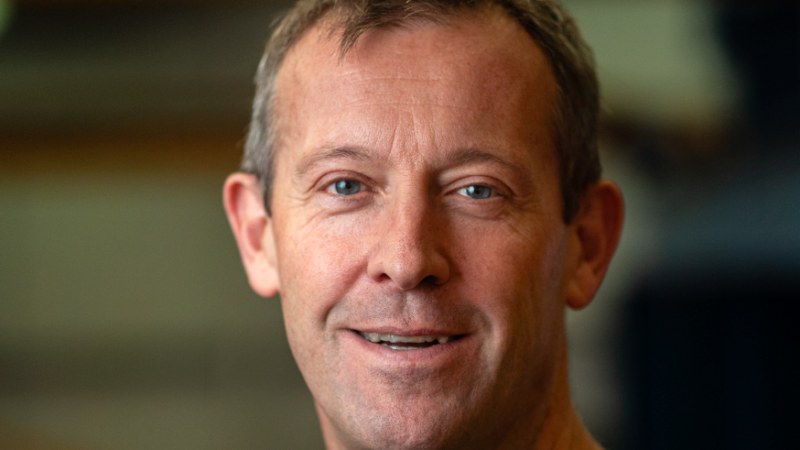
James Macnaghten is the co-founder and CEO of Caldera, a Hampshire-based climate-tech company turning cheap renewable electricity into stored industrial heat using blocks of volcanic rock and recycled aluminium. A Cambridge-trained mechanical engineer with 25+ years in business and 20+ patent families to his name, he spent a decade running grid-storage pioneer Isentropic before founding Caldera in 2017. He also owns Scudamore's Punting Co, Cambridge's largest tourist business. In 2025 Caldera closed a Series A backed by Germany's GEA Group and landed its first major order, a 10 MWh storage boiler for an NHS hospital.
Eric Faurot
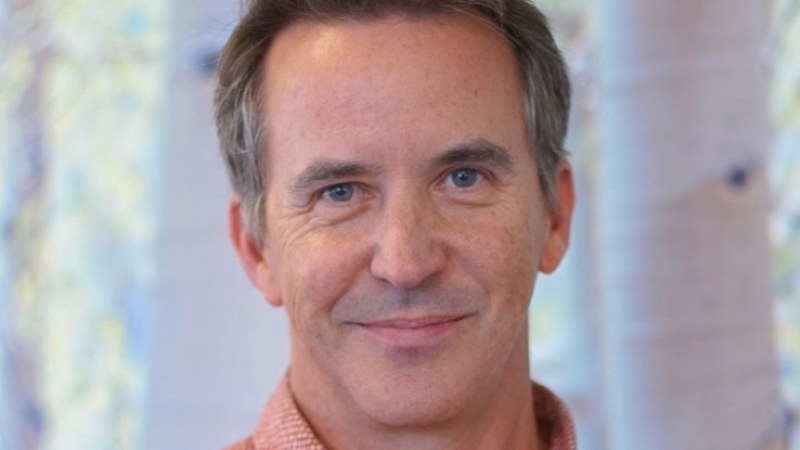
Eric Faurot is the long-serving CEO of Trellis Group (formerly GreenBiz Group), a B2B media company headquartered in Oakland, California that runs flagship sustainability conferences including VERGE, BLOOM, GreenFin, and Circularity. Over 14 years at the helm, he built GreenBiz into a leading platform for sustainability professionals - combining editorial media, peer networks, and live events - before transitioning to a Growth Leader role in July 2024 when Hana Kajimura succeeded him as CEO. His career traces an arc from tech media event production (COMDEX, INTEROP, Black Hat) to climate and sustainability, making him a rare figure who bridged Silicon Valley-era conference culture with the emerging sustainability economy.
Joe Garcia
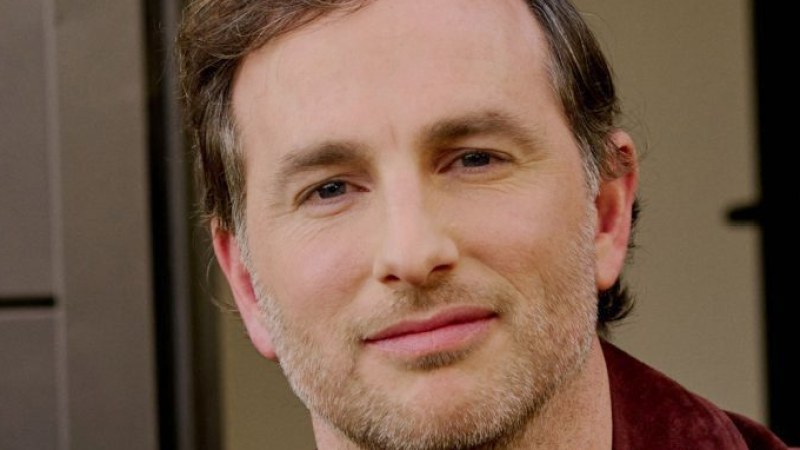
Joe Gebbia co-founded Airbnb in 2008 out of a San Francisco living room - air mattresses, breakfast included - and turned a half-crazy idea into an $85B company. His current venture, Samara, builds factory-assembled, solar-ready backyard homes (ADUs) that go from permit to move-in in under seven months. In early 2025 he became America's first Chief Design Officer, tasked with redesigning the federal government's 27,000 websites. A Rhode Island School of Design graduate with dual majors in graphic and industrial design, Gebbia approaches every problem - housing affordability, government UX, refugee shelter - through the lens of democratic, empathetic design.

Pete May
Pete May is President and Co-Founder of Trellis Group (formerly GreenBiz Group), the leading media, events, and peer-network platform for corporate sustainability professionals. In 2006, he and Joel Makower purchased GreenBiz.com and built it from a niche newsletter into a global sustainability intelligence brand with flagship conferences, digital media, and professional communities. Drawing on over two decades of B2B publishing leadership at Primedia, CMP, and Miller Freeman, May brought seasoned media-industry discipline to a space that desperately needed it — transforming green business from fringe conversation to boardroom imperative.

Shashank Samala
Shashank Samala is the CEO and Co-Founder of Heirloom, the company operating America's first commercial direct air capture facility. A serial entrepreneur who previously co-founded Tempo Automation (raising $100M+ for aerospace-grade electronics manufacturing), he pivoted to carbon removal after a stint as Entrepreneur in Residence at Carbon180. At Heirloom, he's building limestone-based DAC technology to remove one billion tons of CO2 from the atmosphere by 2035, targeting a cost of $50 per ton. The company has raised $354M total, including a $150M Series B in December 2024, and is building two new DAC facilities in Louisiana with combined annual capacity of nearly 320,000 tons.

Zack Bloom
Zack Bloom is a co-founder of Heirloom Carbon Technologies, the company behind America's first commercial direct air capture facility in Tracy, California. A software engineer turned climate entrepreneur, Bloom previously co-founded Eager - a cloud app marketplace acquired by Cloudflare in 2016 - and served as Director of Product at Cloudflare overseeing Workers, Storage, and Tunnel. In 2020, he pivoted from internet infrastructure to atmospheric infrastructure, co-founding Heirloom alongside Shashank Samala and Noah McQueen. The company has since raised over $354M in total funding, opened its first facility, and secured contracts with Microsoft, Stripe, Shopify, Meta, and JPMorgan.

Enrico Carbone
Enrico Carbone is a Brazilian-born General Partner at Reaction, a Palo Alto-based impact venture fund co-founded by 150+ Stanford alumni across 45 countries, focused on improving one billion lives within a decade through health technology and climate innovation. After a 22-year career in global investment banking at firms including Credit Suisse, Merrill Lynch, and BR Partners, he transitioned to venture capital and now also serves as Founding Managing Partner of Irukandji Capital (IKJ Capital), an early-stage healthcare technology fund. He is a Stanford Executive Program (SEP '18) graduate, a recognized GSB Centennial Alumni Catalyst, and a board member of Health in Harmony, an NGO serving indigenous communities in Indonesia, Madagascar, and Brazil.

Jane Ren
Jane Ren is the Co-Founder and CEO of Atomiton, a Santa Clara-based industrial IoT and sustainability software company she co-founded in 2013. With a rare combination of a medical degree from Peking Union Medical College and an MBA from UC Berkeley Haas, she bridges the gap between operational technology and enterprise sustainability. At Atomiton, she leads a 33-person team building AI-powered platforms that help data centers, manufacturers, and buildings reduce energy costs, optimize water use, and hit their carbon targets - work that earned the company the 'Most Innovative Platform in Energy and Sustainability 2025' award from Energy Business Review Magazine.

Kathleen Alexander
Kathleen Alexander is co-founder and CEO of Savor, a San Jose-based food-tech startup that makes butter, palm oil, and cocoa butter alternatives from carbon dioxide, hydrogen, and oxygen - no animals, no plants, no farmland. Backed by Bill Gates' Breakthrough Energy Ventures and Synthesis Capital with $33 million raised, Savor commercially launched its carbon-synthesized butter in March 2025 and was recognized in TIME's Best Inventions of 2025. Alexander holds a PhD in Materials Science & Engineering from MIT and is a 2013 Hertz Fellow who grew up in Corvallis, Oregon - famously starting college at 16, dropping out, attending community college, and ultimately earning her doctorate at MIT.

Mark Chung
Mark Chung is the co-founder and CEO of Verdigris Technologies, a Mountain View-based AI company that provides circuit-level electrical intelligence for mission-critical data centers and commercial buildings. A Stanford-trained electrical engineer who spent 15 years designing chips at AMD, PA Semi (Apple), and NetLogic (Broadcom), Chung founded Verdigris in 2011 after a $560 electricity bill sparked an obsession with making buildings as transparent as spreadsheets. Today, Verdigris monitors 2+ gigawatts of peak demand across 20 million square feet of facilities for clients like T-Mobile, Verizon, NVIDIA, and Google, using 8kHz waveform sensors that detect equipment failures up to 21 days before they cause outages.

John Mern
John Mern is the Co-Founder and CEO of Terra AI, a Khosla Ventures-backed startup using generative AI and probabilistic modeling to transform how humans find and develop critical minerals and energy resources underground. A Stanford PhD in aerospace engineering and alumnus of Boeing Phantom Works and KoBold Metals, Mern built Terra AI's platform to cut mine development timelines in half - running geophysical simulations 125,000x faster than traditional methods, achieving 40% reductions in drilling costs, and helping partners unlock over $100 million in investments. His work sits at the intersection of deep reinforcement learning, geoscience, and the urgent global race to secure the copper, lithium, and cobalt the energy transition demands.