mit
(11)
Ikigai bets the business on a better spreadsheet
The MIT-born company built AI for messy tables, uncertain demand, and the people who must make the call. Its move into Celonis shows why forecasting needs a place inside the machinery of a business.

Apollo Atomics
Apollo Atomics is a Cambridge, Massachusetts nuclear startup building the most power-dense pressurized water reactor. By redesigning the steam generator - the bulkiest part of a conventional plant - into a proprietary Compact Steam Generator, the company shrinks a proven reactor design by roughly an order of magnitude, turning a decade-long construction project into a factory-built machine that fits on a truck and deploys in under 24 months. Founded by MIT nuclear PhD Assil Halimi and operator Drew Walker, Apollo is in Y Combinator's Spring 2026 batch and is testing its design in collaboration with MIT.

Sensei Robotics
Sensei Robotics (YC S24) is a San Francisco startup building the data layer for robot learning. It pairs a sub-$300 sensorized exoskeleton arm with a distributed network of trained human operators - 'Senseis' - who perform real-world manipulation demonstrations on demand. Robotics and AI teams submit a task like folding cloth or loading a dishwasher, and Sensei returns curated, labeled human-demonstration data. The company positions itself as 'the Scale AI for robotics training data,' claiming roughly a tenth of the cost and twice the speed of conventional teleoperation setups.
Intelmatix
Intelmatix is a deep-tech enterprise AI company founded by MIT-trained technologists that builds EDIX, an Enterprise Decision Intelligence Platform designed to act as a 'digital brain' for organizations. Using context-aware AI agents, knowledge graphs and generative AI, EDIX lets companies sense, learn, decide and act across functions like demand forecasting, inventory, workforce planning and site selection - without needing an in-house data science team. Headquartered in Riyadh with offices in London and Boston, Intelmatix focuses on the MENA region, training on local context data that global platforms overlook. It raised a $20M Series A in 2024 - the region's largest AI Series A of its kind - and in 2025 became the first Saudi and MENA AI company named a World Economic Forum Technology Pioneer.
Humatics
Humatics is a Waltham, Massachusetts technology company building microlocation systems - hardware and software that pinpoint the position of people, vehicles, and machines to millimeter and centimeter precision. Combining industrial-grade ultra-wideband radio with inertial sensors, GNSS, and analytics software, its platform serves two markets: industrial automation and robotics through the Milo Microlocation System, and rail and transit through the Humatics Rail Navigation System. Founded in 2015 by MIT professor David Mindell and industry veteran Gary Cohen, the company works with partners including Siemens Mobility and Hitachi Rail on projects such as the New York MTA subway signaling upgrade.
Fundamental Research Labs
Fundamental Research Labs (formerly Altera) is a San Francisco applied AI research company building autonomous, socially intelligent agents - what it calls 'digital human beings.' Founded by former MIT computational neuroscientist Dr. Robert Yang, the company ships consumer and prosumer products including Shortcut (a superhuman Excel agent) and Fairies (a general-purpose AI assistant), and raised a $33M Series A in August 2025 led by Prosus Ventures.
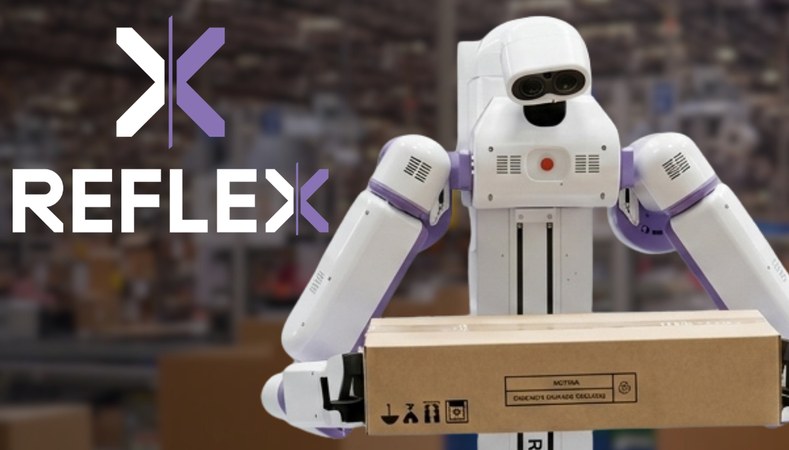
Reflex Robotics
Reflex Robotics builds a wheeled, general-purpose humanoid that does real work on warehouse floors. Founded by MIT alumni with hardware chops from Tesla, Boston Dynamics, Anduril and Oculus, the company designs and ships affordable humanoids that start with a human-in-the-loop and learn their way to autonomy. Their robots are deployed in pilots with GXO and other Fortune 100 logistics operators, with a manufacturing footprint planned in Nuevo Leon, Mexico.
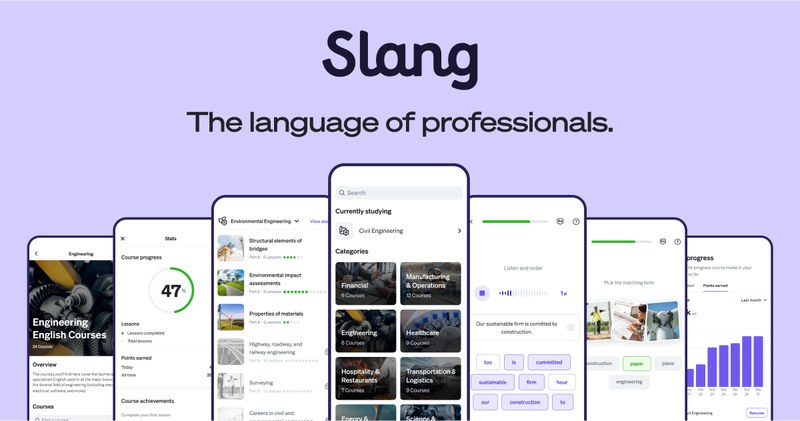
Slang
Slang is a B2B edtech company that teaches professional, industry-specific English to the global workforce. Born as an MIT research project on using AI and NLP to accelerate language learning, Slang now runs the largest catalog of specialized professional English courses in the world - 200+ paths spanning fields from engineering and finance to healthcare and logistics - delivered through a mobile-first platform used by companies and universities to build hyper-personalized learning journeys by role and industry.
Metrika
Metrika is a Cambridge, Massachusetts SaaS company that built the first operational intelligence and risk management platform for blockchains and digital assets. It collects, analyzes, and visualizes the health of decentralized networks in real time - tracking hundreds of risk indicators across protocols, smart contracts, and market conditions - so that protocol teams, financial institutions, and regulators can monitor performance, detect issues early, and meet compliance obligations.
Pienso
Pienso is a no-code AI platform that lets domain experts - not just engineers - train, fine-tune, and deploy their own machine learning and large language models without writing a single line of code. Founded by MIT Media Lab alumni Birago Jones and Karthik Dinakar, Pienso keeps humans in the loop and data in the customer's control, with cloud or on-premise deployment for governments, media companies, and regulated enterprises.

Instabase
Instabase is an enterprise agentic automation platform that transforms complex, unstructured document workflows into reliable, verifiable AI-driven outcomes. Founded in 2015 by MIT PhD student Anant Bhardwaj, the company's AI Hub platform enables organizations across financial services, insurance, healthcare, and government to automate document-heavy processes — from loan origination to KYC compliance — using packet-aware AI agents with deep document understanding and full auditability. With $322M in total funding, a $1.24B valuation, and customers like NatWest, Rocket Mortgage, AXA, and MetLife, Instabase has positioned itself as the backbone infrastructure for enterprise document intelligence.