maternal-health
(16)
Jones & Daughter Built a Small Company Around One Very Large Question
A mother, a daughter, and more than 1,000 pregnancy topics turned expertise into books, brand work, and a 704-page answer to the anxious question: what happens next?

The Pregnancy Test That Could Catch a Killer Before the Doctor Does
Preeclampsia kills tens of thousands of mothers a year, mostly because no one catches it in time. A team that started as classmates in Durham and Kampala wants to move that first warning from the hospital lab to the bathroom shelf.

Delfina
Delfina is a San Francisco-based maternal health company that pairs an AI-powered clinical platform with a consumer pregnancy app to make prenatal care proactive rather than reactive. Its predictive models flag rising risk - preterm birth, hypertensive disorders, gestational diabetes - while patients track vitals from home and connect around the clock with bilingual virtual doulas, dietitians, and mental health support. Founded in 2021 by physician-scientist Dr. Senan Ebrahim and his co-founders, Delfina sells to health plans, providers, and employers, and has raised roughly $22M to date, including a $17M Series A in January 2025.

Lōvu Health
Lōvu Health is a Cupertino-based digital maternal health company that follows mother and baby from pre-conception through two years postpartum. It pairs connected home devices - a blood pressure monitor, smart scale and fetal Doppler - with a pregnancy navigator, an OB-facing dashboard, and a marketplace of 50+ specialty vendors, using real-time remote patient monitoring and AI to catch complications like preeclampsia and perinatal depression earlier.

Materna Medical
Materna Medical is a Mountain View, California women's health company building FDA-cleared medical devices for pelvic health across a woman's life. Its consumer product, Milli, is the first vaginal dilator that expands one millimeter at a time to treat vaginismus and painful intercourse; its clinical-stage Ellora obstetrical system is designed to pre-stretch pelvic floor muscles during labor to reduce childbirth injury. Led by CEO Tracy MacNeal, the company has raised roughly $82.6M to date.
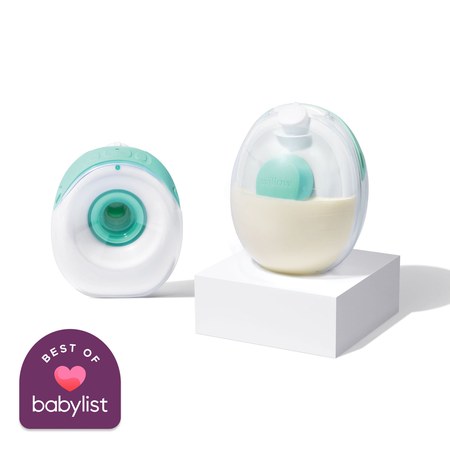
Willow Innovations, Inc.
Willow Innovations is a U.S. femtech company that invented the first all-in-one, in-bra wearable breast pump, freeing new mothers from cords, tubes and the pumping room. Founded in 2014 out of Josh Makower's ExploraMed incubator, Willow now sells app-controlled, leak-proof pumps (Willow 360, Willow Go, Willow Sync and the manual Willow Wave) along with a growing line of feeding and postpartum accessories. In 2025 it acquired UK rival Elvie to build a scaled maternal-health platform.

Bloom Care
Bloom Care is a Brazilian femtech building the country's largest virtual clinic for women's and family health. Founded in 2017 by three women, its app pairs members with gynecologists, obstetricians, pediatricians, psychologists and nutritionists for continuous, evidence-based care across the full life journey - from menstrual health and fertility through pregnancy, postpartum, parenting and menopause. Sold mostly through employers and health plans on a B2B2C model, Bloom counts partners like Sanofi, SulAmérica, Natura and Nestlé, and was named to CB Insights' Digital Health 150.

Lilu, Inc.
Lilu is a New York femtech company building smart technology for new mothers. Its flagship Massage Bra is a hands-free wearable that uses patented pneumatic compression to mimic hand massage during pumping, helping mothers express more milk in less time, while its MilkSense app tracks feeding, pumping, and milk stash with AI-driven, personalized lactation insights. Founded by MIT- and Penn-trained engineers Adriana Vazquez and Sujay Suresh Kumar, Lilu aims to make postpartum care more comfortable, efficient, and pain-free.

Noora Health
Noora Health is a nonprofit that treats families as an untapped part of the care team. By training patients' relatives with practical, condition-specific health skills while they wait in hospital wards - then reinforcing that training after discharge through WhatsApp, voice calls, and live chat - its Care Companion Program has reached tens of millions of caregivers across India, Bangladesh, Indonesia, and Nepal, cutting newborn readmissions and post-surgical cardiac complications.

Bloomlife
Bloomlife is a San Francisco maternal health company that pairs FDA-cleared wearable sensors with a connected-care platform so high-risk pregnancies can be monitored from home. Born from a co-founder's own NICU experience, the company shifts prenatal care out of the clinic and into the living room - tracking fetal heart rate, blood pressure and glucose, then feeding the data to clinicians through risk-stratification tools meant to catch complications earlier.

Mirvie
Mirvie is a South San Francisco biotech using cell-free RNA signatures and machine learning to predict pregnancy complications - preeclampsia, preterm birth, fetal growth restriction - months before symptoms appear. Its flagship product Encompass is a blood test built on a foundational study of nearly 11,000 pregnancies.
Maternova, Inc.
Maternova is a woman-owned, woman-run social enterprise based in Providence, Rhode Island that curates, evaluates, and distributes evidence-based medical devices and diagnostics for maternal, neonatal, and reproductive health in low- and middle-income countries. Founded in 2009 as the first e-commerce marketplace for global health technologies, it connects inventors and manufacturers who lack distribution with the governments, NGOs, hospitals, and clinicians who need life-saving tools - aggregating small orders to unlock manufacturing runs and accelerate access to innovations that prevent maternal and infant deaths.

Novocuff, Inc.
Novocuff, Inc. is a clinical-stage maternal health medical device company based in Mountain View, California, building the Novocuff Cervical Control System (CCS) - a device designed to stabilize and close the cervix, retain amniotic fluid, and extend pregnancy in cases of preterm prelabor rupture of membranes (PPROM) and cervical shortening. Founded in 2021 by Amelia Degenkolb and Donald Lee, the company raised an oversubscribed $26M Series A in 2024 (about $28M total) to fund its U.S. multicenter pivotal RETAIN trial, for which it secured FDA IDE approval in September 2025.

Sibel Health
Sibel Health is a Chicago-based digital health company spun out of Northwestern University that builds clinical-grade, fully wireless wearable sensors paired with AI analytics and a cloud platform. Its flagship ANNE One system continuously tracks vital signs - heart rate, respiratory rate, temperature, SpO2, pulse and more - for patients from neonates to adults, in hospitals, at home, and in low-resource settings around the world. The mission is to deliver 'Better Health Data for All.'

Raydiant Oximetry, Inc.
Raydiant Oximetry is a clinical-stage medical device company building Lumerah, a noninvasive, transabdominal fetal pulse oximeter that measures a baby's blood-oxygen levels during labor. By giving obstetricians a direct read on fetal oxygenation - rather than the coin-flip guesswork of conventional fetal heart-rate monitors - the company aims to cut unnecessary C-sections and reduce maternal and neonatal harm. It holds FDA Breakthrough Device designation and is partnered with GE HealthCare.

SimpliFed
SimpliFed is a virtual maternal health company based in Ithaca, New York, that helps families through pregnancy, postpartum, and baby feeding. Founded by biomedical engineer Andrea Ippolito in 2019, it began as insurance-covered virtual lactation support and has grown into a broader 'Maternal Health Operating System' (mOS) that pairs IBCLC lactation consultants and care navigators with prenatal and postpartum virtual OB services. Working in-network with most major commercial plans and Medicaid in multiple states, SimpliFed partners with health systems and OB clinics to extend judgment-free, evidence-based care into the home.