manufacturing-execution-system
(8)
Leucine and the surprisingly expensive life of a paper record
A medicine can be finished before its paperwork is. Leucine sells pharmaceutical manufacturers a way to close that gap, connecting the shop floor to the people who must prove what happened there.

Ratna Global Tech and the art of making software cooperate
A patient portal, a factory console and an AI testing platform make an unlikely trio. Ratna Global Tech’s wager is that the real business of enterprise technology lives in the connections between them.
Plex puts the factory floor on the balance sheet
A factory can survive a broken machine. A number nobody trusts is harder to repair. Plex by Rockwell Automation connects production, inventory and finance so the people making the goods and the people counting the money can agree.

The Machine Shop That Fired Its ERP - Then Sold the Shop to Build a Better One
ProShop began as a survival tool inside a growing CNC business. Now more than 700 manufacturers use its all-in-one system to quote work, guide the floor, prove quality and remember what their best machinists know.

The Factory Software Behind Fighter Jets Has a New Assignment: Make AI Auditable
iBASEt spent four decades turning aerospace shop-floor paperwork into a digital record. Now it is betting that the same governed data can make factory AI useful without asking engineers to trust a black box.

Altizon Gave the Factory Floor a Brain That Talks Back
A Princeton-and-Pune software company spent a decade wiring up shop floors. Now it is betting the most useful worker in the plant will be a piece of software you can talk to.

Amper Technologies
Amper Technologies is a Chicago-based industrial IoT company that helps manufacturers see and improve what happens on their shop floors in real time. Its FactoryOS platform pairs non-invasive sensors that clip onto any machine - regardless of age or brand and install in about ten minutes - with AI-driven analytics that track machine utilization, OEE, downtime, labor and job performance. Founded in 2016, Amper turns legacy factory equipment into a source of live production data without expensive retrofits or complex IT integrations, and was acquired by ECI Software Solutions in December 2025.
Tulip Interfaces
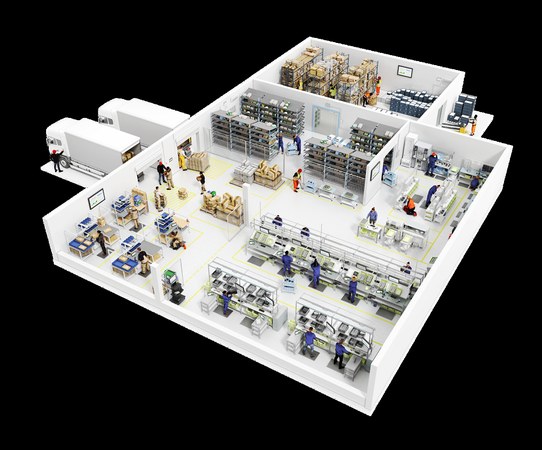
Tulip Interfaces is a Boston-area software company that gives factory-floor workers a no-code platform to build the apps, dashboards, and connected-machine workflows that run modern operations. Spun out of the MIT Media Lab in 2014, Tulip treats human operators as the most valuable resource on the shop floor rather than something to automate away. Its composable platform stitches together people, machines, sensors, and AI into 'frontline operations' apps used by more than 200 manufacturers across pharma, medical devices, aerospace, and consumer goods. In January 2026 the company raised a $120M Series D led by Mitsubishi Electric at a $1.3B valuation, crossing into unicorn territory.