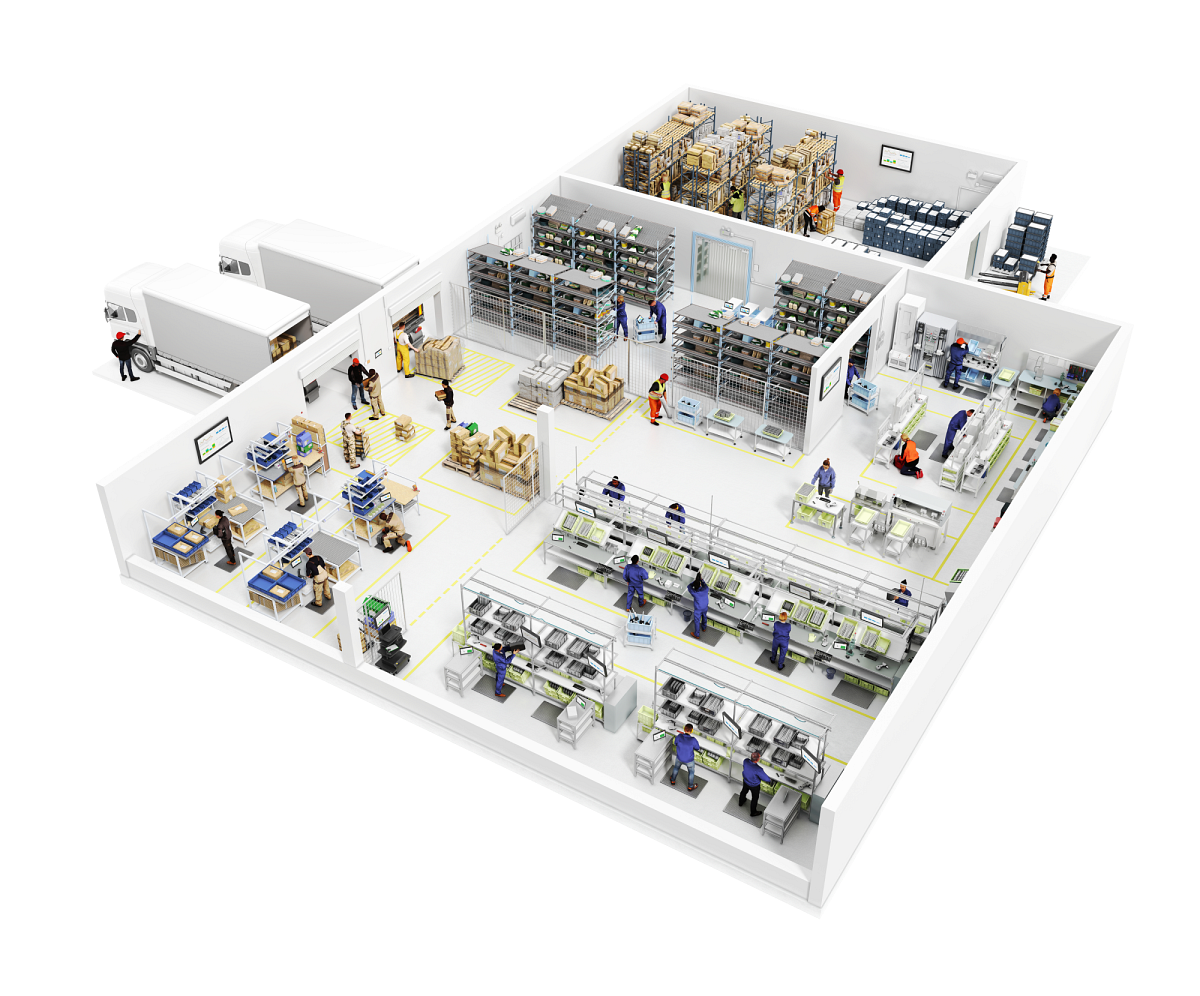
Walk onto a shop floor running Tulip and the first surprising thing is what you don't see. No clipboard chained to a workstation. No three-ring binder of laminated instructions, curling at the corners. No supervisor squinting at a spreadsheet that was already wrong by lunch. Instead there is a screen at the work cell, an operator tapping through a sequence built for the exact job in front of them, and a quiet stream of data going somewhere useful. The machines are still loud. The people are still the point.
That is Tulip Interfaces in 2026: a manufacturing software company that decided the frontline worker was an asset to equip, not a cost to engineer out. It is a stubborn position. It is also, as of January, a billion-dollar one.
The floor that software forgot
For decades, enterprise software treated the factory as a place to report on, not a place to help. The big systems - ERP, traditional MES - were built for planners in offices, not the person torquing a bolt. They were rigid, expensive, and took years to deploy. By the time IT finished a custom rollout, the process had changed and the workaround was already taped to the side of the monitor.
Meanwhile the most valuable knowledge in the building lived in the heads of the people doing the work, and it walked out the door at the end of every shift. Manufacturers had two bad options: automate the human away, or leave them stranded with paper. Tulip's founders thought there was a third.
A Media Lab thesis with a hard hat
Tulip started where a lot of unlikely ideas start: the MIT Media Lab. Natan Linder and Rony Kubat met in the Fluid Interfaces group, which spent its days on a deceptively simple question - how do you remove the barrier between people and the technology they use? In 2014, as Linder wrapped up his PhD, the two turned that question on the least glamorous, most enormous target they could find: the manufacturing floor.
The bet was that if you gave operators tools as flexible as a web app and as easy to change as a slide deck, they would build better processes than any consultant could hand them. No code. No six-month IT ticket. Just the person closest to the problem, building the fix.
It was a contrarian thing to say in an industry that had spent a generation chasing lights-out factories. Linder became CEO, Kubat the technical conscience as CTO, and they staffed up with people from Formlabs, Autodesk, SolidWorks, Markforged, and Rethink Robotics - the kind of crowd that had, in the platform's own phrasing, felt the pain.
What you can actually build
Tulip calls itself a frontline operations platform, which is a tidy phrase for a sprawling toolbox. At its core is a no-code app builder. An engineer - or, pointedly, a line lead with no software background - drags together steps, forms, logic, and live data into an app that runs at the workstation. Around that core, Tulip wires in the rest of the floor: machines, sensors, cameras, and edge devices that turn a dumb machine into a connected one.
The result is composable. You assemble exactly the manufacturing execution system you need, app by app, instead of buying a monolith and bending your process to fit it. Then you layer on the modern stuff: computer vision that checks a part, AI that drafts an app or points at the root cause of a defect, dashboards that show a plant manager what is happening right now instead of last week.
Tulip Platform
No-code app builder, integrations, and real-time analytics for the shop floor.
Composable MES
Execution capabilities assembled app-by-app for discrete, pharma, medical device, and aerospace work.
Connected Worker
Digital work instructions and training that error-proof manual processes.
Quality Management
Inspection, non-conformance, and digital audit trails for regulated, GxP environments.
Edge Devices & Machine Kit
Hardware that connects machines and sensors into apps in an afternoon.
Tulip AI & Vision
AI vision for quality, AI Composer for building, analytics that surface root cause.
The short version
Numbers that survived contact with a real plant
Manifestos are cheap. Defect rates are not. When DMG MORI - a machine-tool maker serving 79 countries - put Tulip on its spindle assembly line in Pfronten, the digital work instructions did something binders never could: they reported back. The result was a 62% reduction in reported defects, a 20% increase in production, and a four-week time to value. Not four quarters. Four weeks.
Stanley Black & Decker took the other approach - scale. It standardized best-in-class quality inspection apps across more than 100 facilities, putting the same control over quality in every plant. More than 200 manufacturers now run Tulip daily, across pharmaceuticals, medical devices, aerospace and defense, luxury goods, and the lab.
The DMG MORI spindle line, before vs. after
People as a feature, not a line item
Strip away the product names and Tulip is selling one idea, repeatedly, to an industry that keeps forgetting it: the person on the floor is the most valuable resource in the building. Everything else - the no-code builder, the edge devices, the AI - exists to make that person faster, surer, and harder to error-proof out of a job.
That framing is why the Mitsubishi Electric deal reads as more than a check. A company that builds the robots signing a strategic alliance with a company that builds for the humans alongside them is the whole thesis in one handshake. The automation future and the human future, it turns out, were never supposed to be a choice.
The next shift
Manufacturing is staring down a labor crunch, a knowledge-retirement cliff, and supply chains that demand traceability down to the batch. Each of those problems is, underneath, a problem of getting the right information to the right person at the right second. That is precisely the seam Tulip works. As AI moves from demo to default, the company's bet is that the winning model is not the autonomous factory but the augmented operator - someone with a Media Lab's worth of technology in their hands and the judgment that no model has yet replaced.
So walk back onto that floor. The screen at the work cell is still there. The operator still taps through the sequence. But now the app knows when a step was skipped, the camera catches the defect before it ships, and the knowledge that used to leave at quitting time stays in the system for the next shift. The machines are still loud. The people are still the point. Tulip just made sure the software finally agreed.