drug-development
(105)
Vir Biotechnology’s Second Act Comes With a Mask
After COVID antibodies and a failed flu trial, Vir is betting on hepatitis delta and cancer drugs designed to switch on inside tumors. Its comeback has partners and cash. The decisive clinical tests are still ahead.
Sensyne Health’s £60 Million Bet on NHS Data
Sensyne offered hospitals a share of the proceeds from AI research. A cash crisis forced a rescue, a new name and a smaller business - while its pregnancy-diabetes app found a life of its own.

The Company That Watches the Drug and Runs the Trial
Perceptive can trace a molecule in a scanner, standardize images across hundreds of hospitals, and keep the right study drug moving to the right patient. Its wager is that the handoffs between those jobs matter as much as the jobs themselves.
Bausch Health Built a $10 Billion Medicine Cabinet - Now It Has to Outrun a $20 Billion Hangover
Its products sit in pharmacies, dental offices, GI clinics and aesthetics practices across roughly 100 countries. The hard part is not selling medicine - it is turning a sprawling acquisition legacy into a focused healthcare company before debt, patents and price controls set the pace.
Altasciences Bet the Drug Lab on One Idea: Fewer Handoffs, Faster Answers
The Montreal-area CRO escaped the commodity economics of generic-drug testing by stitching labs, clinics and manufacturing into one early-development platform. Its wager is simple: the science need not move recklessly for the program to move faster.
Klotho Therapeutics Raised $10 Million to Bottle a Longevity Protein. The Hard Part Is Still Human Proof
Klotho Therapeutics has a patented protein, a myth-sized ambition and a very human bottleneck: animal evidence is intriguing, but patients need manufacturing, dosing and trials - not mythology.
Orbus Bet $71 Million on One Brain-Cancer Trial - Then the Definition of the Disease Changed
A tiny Palo Alto biotech took an old molecule into a global Phase 3 trial. The broad result failed, but a new molecular map of brain cancer revealed where the drug may actually work - and offered a playbook for anyone building in a market whose definitions move mid-experiment.
Peroxitech Put $25 Million Behind a Nine-Amino-Acid Bet on Saving Injured Lungs
The Philadelphia spinout is trying to stop acute lung injury before oxidative damage snowballs. Its unusually small peptide has survived mice, pigs and a $25 million financing - but the decisive human test still lies ahead.

Incyclix Bio Is Betting One Precise Brake Can Stop Cancer's Second Escape Route
A 13-person North Carolina biotech licensed an overlooked CDK2 program, narrowed the patient target and pushed one oral drug into the clinic. Early data offer a reason to keep going - and a useful blueprint for building around a precise scientific thesis rather than a sprawling pipeline.
The $185 Million Bet That Spirulina Can Make Biologic Drugs Cheap Enough to Swallow
Lumen survived a biofuel bust and a pigment-price collapse by turning stubborn green microbes into miniature drug factories. Now its oral biologics face the test that matters: whether an elegant manufacturing trick can survive large clinical trials and the economics of medicine.
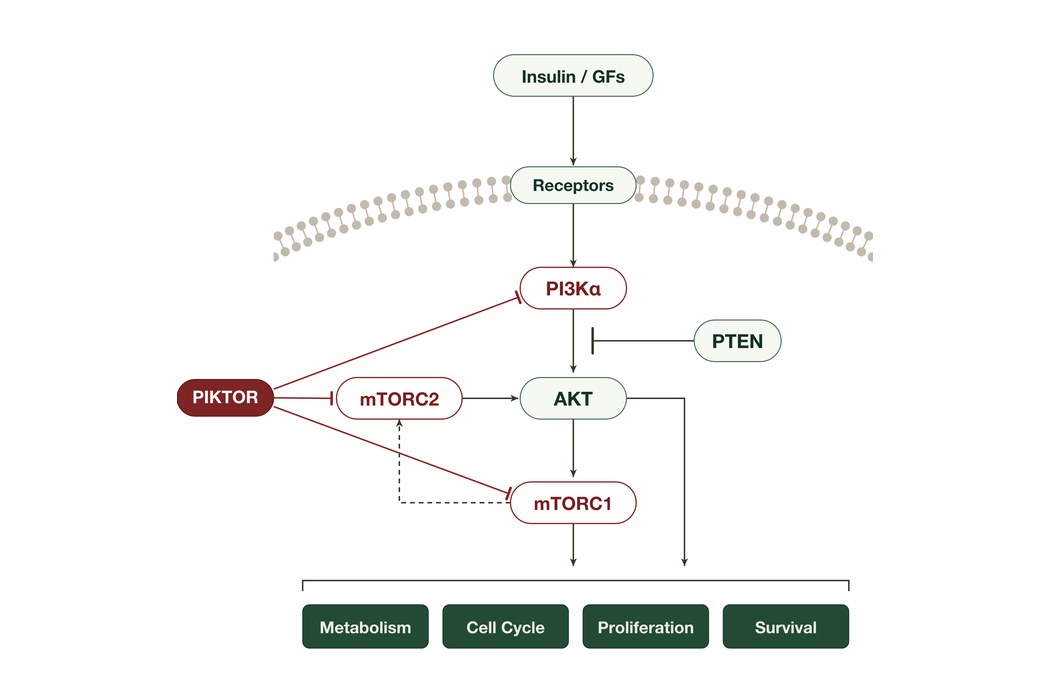
Faeth Bet $92 Million That Cancer’s Escape Route Can Be Blocked
Single-target cancer drugs can teach tumors how to route around them. Faeth’s answer is PIKTOR - two oral medicines, three pathway nodes and a public-company-sized test of whether deeper blockade can stay tolerable.
Conquest Research Found Drug Development's Most Human Bottleneck: The Patients
Drug makers can design a promising study and still lose years waiting for the right people to enroll. Conquest Research built a local, patient-facing machine to make that slow middle move faster - then took it across three states.
AllRock Bio Bet $50 Million That Two ROCKs Are Better Than One
Most pulmonary-hypertension drugs help blood flow. AllRock Bio wants to change the diseased tissue itself - and its $50 million wager now rests on a small, open-label trial.
The COPD drug you breathe from a mist, not a puff
A three-person startup out of San Diego is betting that millions of COPD patients can't work an inhaler - and that a mist they can simply breathe will win a market the pharma giants keep buying up.
The Durham Investor That Treats Venture Capital Like a Clinical Program
Pappas Capital has spent three decades turning laboratory risk into investable milestones. Its edge is less about chasing crowded hubs than combining drug-development judgment, company-building work and patient capital from a base in Research Triangle Park.
Inside the Company That Takes a Drug From Sketch to Syringe
Curia rarely puts its name on the medicine. It does the chemistry, scale-up and sterile manufacturing that can get somebody else’s molecule into a patient’s hands.
The $16.3 Billion Company Quietly Running Modern Medicine’s Back Office
IQVIA sits in the machinery between a molecule and a medicine cabinet - running trials, organizing health data and helping drugmakers decide what happens next. Now it is turning that unusually broad view of healthcare into an agentic AI platform.
The 245-Year-Old Drugmaker Betting Its Next Act on Six Big Swings
Takeda began as a medicine shop in Osaka in 1781. Now a new CEO must turn a sprawling global portfolio, a $30 billion-plus revenue base and six late-stage programs into the company’s next generation of growth.

GSK
After spinning off toothpaste and painkillers, GSK placed a sharper bet on the immune system. Its next chapter is being written in vaccine vials, long-acting HIV medicine and a newly enlarged cancer pipeline.
Genmab
A Danish antibody specialist turned one licensed molecule into a multibillion-dollar royalty engine. Now Genmab is spending that advantage on a harder act: becoming the company that carries more of its own cancer medicines from lab bench to patient.
Medpace
The Cincinnati CRO built a $2.5 billion business by taking on clinical trials that young biotechs cannot run alone - and by keeping the scientists, software, labs and logistics under one roof.
UCB
UCB spent decades shedding its industrial past to become a specialist in the brain and immune system. Now five medicines, two ambitious acquisitions and a new Georgia factory are testing whether focus can scale.
Alnylam Pharmaceuticals
Alnylam spent 16 years teaching a fragile strand of RNA to reach the right cells. Now its gene-silencing medicines are a multibillion-dollar business - and the next test is whether the same platform can move from rare diseases into the medical mainstream.
Alkermes
Alkermes spent decades teaching medicines to last longer. Now the neuroscience company is trying something harder: building a business around the brain's switches for addiction, psychosis and wakefulness.

Atisama Therapeutics
Atisama Therapeutics (formerly Rage Bio) is a Melbourne-based clinical-stage biotech developing precision splice-switching oligonucleotide (SSO) therapies for chronic inflammatory disease. Its lead asset, RB042, is an inhaled RNA drug that targets the RAGE receptor to treat chronic obstructive pulmonary disease (COPD) - a condition affecting hundreds of millions worldwide with few disease-modifying options. Spun out of a collaboration between IP Group Australia, Monash, Murdoch and the University of Western Australia, the company raised a $29M Series A in 2025 and advanced RB042 into Phase 1 clinical trials in 2026.
Enjamb
Enjamb (YC P26) builds full-stack AI agents for biopharma R&D that run a drug program from discovery through FDA approval. Its agents sit on top of legacy pharma systems - Benchling, Veeva, Medidata, SAS - with no migration, doing the work across clinical evidence, trial design, statistical programming, and regulatory submissions while keeping a visible source-to-submission trail. Founded in 2025 by Rayan Mubarak and Maadhav Deekshitha, the San Francisco company raised a $650K pre-seed and says its platform was used by 500+ employees at major pharma firms within weeks of launch.
BostonGene
BostonGene is a Waltham, Massachusetts biotechnology company that applies AI-driven multiomics to cancer. Its Tumor Portrait platform integrates DNA and RNA sequencing with immune and tumor-microenvironment analysis into a single test, producing molecular profiles that help oncologists select therapies and help pharmaceutical partners design trials, identify biomarkers, and accelerate drug development. Founded in 2015 and led by CEO Andrew Feinberg, the company reached unicorn status in 2022.
City Therapeutics
City Therapeutics is a Cambridge, Massachusetts biotechnology company engineering the next generation of RNA interference (RNAi) medicines. Founded by pioneers of the RNAi field, including former Alnylam CEO John Maraganore and Nobel-adjacent academic scientists, the company designs novel siRNA trigger molecules and targeting ligands intended to make RNAi drugs more potent, more specific, and able to reach tissues beyond the liver. Launched in October 2024 with a $135M Series A and backed by a further $99.5M Series B in 2026, City is advancing a pipeline led by CITY-FXI for thromboembolic disease and CITY-RBP4 for Stargardt disease, alongside research collaborations with Biogen and Bausch + Lomb.
CORXEL Pharmaceuticals
CORXEL Pharmaceuticals is a clinical-stage biopharmaceutical company developing innovative therapies for cardiometabolic diseases worldwide. Spun out of RTW Investments in 2019 (formerly JiXing Pharmaceuticals) and dual-based in Berkeley Heights, New Jersey and Shanghai, CORXEL is advancing a pipeline led by CX11, a differentiated oral small-molecule GLP-1 receptor agonist for obesity and type 2 diabetes, alongside JX10 for acute ischemic stroke and JX09 for hypertension. In January 2026 the company raised up to $287 million in Series D1 financing to push these programs through late-stage clinical trials.
Dandelion Health
Dandelion Health is a New York-based clinical AI and real-world data company that turns de-identified patient records from a network of U.S. hospitals into research-ready datasets and software for drug developers and AI teams. Its multimodal platform combines structured records, clinical notes, medical images, and raw biological signals such as ECG waveforms across roughly 15 million patients, helping pharmaceutical companies design smarter trials, discover biomarkers, generate real-world evidence, and validate healthcare algorithms against diverse populations.